Robin Goodfellow’s racing tips: Best bets for Thursday, February 23
Sportsmail's racing expert Robin Goodfellow delivers his tips for Thursday's racing from Newcastle, Sedgefield, Southwell and Huntingdon.
The New York Racing Association, Inc. (NYRA) will host a Cross Country Pick 5 on Saturday, featuring stakes action from Aqueduct Racetrack and Kentucky Derby and Kentucky Oaks qualifiers from Oaklawn Park.
The Cross Country Pick 5 requires bettors to pick the winner of five select races from tracks across the country. The minimum bet for the multi-track, multi-race wager is 50 cents. Wagering on the Cross Country Pick 5 is available on ADW platforms and at simulcast facilities across the country with each week featuring a mandatory payout of the net pool. The Cross Country Pick 5, boasting a low 15 percent takeout, will continue each Saturday in February and March, offering sequences with races from Aqueduct Racetrack and partner tracks across the country.
Saturday's sequence kicks off in Race 7 at Aqueduct Racetrack [3:55 p.m. Eastern] as Yo Cuz, a three-time stakes winner at the Big A, leads a field of nine older fillies and mares in a 6 1/2-furlong allowance sprint. Trained by Hall of Famer Bill Mott, the New York-bred and sired Laoban bay captured the seven-furlong $500,000 NYSSS Fifth Avenue in December 2021 ahead of state-bred scores last year in the one-turn mile Maddie May and seven-furlong East View. She will look to get back to winning ways after failing to hit the board in her last three outings.
A competitive field includes the David Duggan-trained Kant Hurry Love, who enters from a pair of open-lengths scores against fellow state-breds; and the improving Bruce Levine trainee Kitten's Appeal, a Kentucky-bred, who garnered a career-best 80 Beyer Speed Figure last out when runner-up in a six-furlong allowance sprint that featured five returning rivals.
Action switches to Oaklawn for the second leg with graded-stakes winners Pretty Birdie and Yuugiri squaring off in the $150,000 Carousel [Race 7, 4:06 p.m.], a six-furlong sprint for older fillies and mares.
Trained by Norm Casse, Pretty Birdie made the grade at second asking in the Grade 3 Schuylerville at Saratoga Race Course. She's won 2-of-3 starts at Oaklawn, including the Purple Martin in March and the Poinsettia last out on December 17.
Yuugiri is also 2-for-3 at Oaklawn for trainer Rodolphe Brisset, including a neck score over Beguine in the 1 1/16-mile Grade 3 Fantasy in April and a six-furlong allowance win last out on December 30. The multiple graded-stakes placed Samurai Charm ships in from Santa Anita for trainer Peter Miller while Mercy Warren arrives from a 16-length optional-claiming score at Fair Grounds for trainer Cherie DeVaux.
The middle leg will see a field of six travel a one-turn mile in the $125,000 Stymie [Race 8, 4:26 p.m.] at the Big A led by the streaking Repo Rocks, who enters with a trio of stakes wins for trainer Jamie Ness.
Last out, the 5-year-old Tapiture gelding garnered a 111 Beyer for his 8 1/2-length romp in the seven-furlong Grade 3 Toboggan here, which came on the heels of stakes scores at Parx in the 6 1/2-furlong Let's Give Thanks and six-furlong Blitzen.
Grade 1-placed Miles D will look to get back on track for trainer Chad Brown following a seventh-place finish last out in the Grade 3 Fred W. Hooper on January 28 at Gulfstream Park. The 5-year-old Curlin bay finished third in the 2021 Grade 1 Travers two starts before completing his sophomore season with a half-length score over eventual Grade 1-winner Speaker's Corner in the nine-furlong Discovery here. Another threat is the Todd Pletcher-trained Bourbonic, who captured the 2021 Grade 2 Wood Memorial presented by Resorts World Casino and enters from a strong optional-claiming win on February 5 in which he added blinkers.
The sequence concludes with a pair of graded tilts from Oaklawn, starting with the Grade 3, $300,000 Honeybee [Race 10, 5:43 p.m.], a 1 1/16-mile test for sophomore fillies offering 50-20-15-10-5 Kentucky Oaks qualifying points to the top-five finishers.
The 12-horse field is topped by Godolphin's Kentucky homebred Wet Paint, a Brad Cox trainee, who bested four of her returning rivals last out in the Martha Washington going the Honeybee distance at Oaklawn.
A fresh challenge will be provided by the Norm Casse-conditioned Effortlesslyelgant, a $475,000 Keeneland September Yearling Sale purchase, who graduated last out at Oaklawn; three-time winner Towhead for trainer Mike Maker; Grade 2-placed New York-bred Gambling Girl for Pletcher; and Grade 3-placed Grand Love for Hall of Fame trainer Steve Asmussen, who recently secured his 10,000th win in North America.
Closing out the wager is the Grade 2, $1 million Rebel [Race 11, 6:23 p.m.], a 1 1/16-mile test for sophomores offering 50-20-15-10-5 Kentucky Derby qualifying points to the top-five finishers.
Cox will saddle a pair of strong contenders in the 11-horse field led by 2-1 morning-line favorite Verifying and 5-2 second choice Giant Mischief. By Justify, Verifying is a half-brother to multiple Grade 1-winning multi-millionaire Midnight Bisou. He finished second in the Grade 1 Champagne in October at the Big A and enters from a 5 1/4-length optional-claiming score traveling one mile on January 14 at Oaklawn.
Giant Mischief, by Into Mischief, is out of multiple graded-stakes winner Vertical Oak. He won his first two starts, including an optional-claiming score in November at Keeneland ahead of a close second as the odds-on favorite in the Springboard Mile in December at Remington Park.
Steep opposition will come from a trio of Asmussen trainees in Grade 1-placed Red Route One, stakes-winner Powerful, and two-time winner Gun Pilot; as well as recent Grade 3 Sham-winner Reincarnate for trainer Tim Yakteen.
Free Equibase past performances for the Cross Country Pick 5 sequence will be available for download at https://www.nyra.com/
America's Day at the Races will present live coverage and analysis of the Aqueduct winter meet on the networks of FOX Sports. For the broadcast schedule and channel finder, visit https://www.nyra.com/
NYRA Bets is the best way to bet every race of the Aqueduct Racetrack winter meet. Available to horse players nationwide, the NYRA Bets app is available for download today on iOS and Android at www.NYRABets.com.
Cross Country Pick 5 – Saturday, February 25
Leg A: Aqueduct Racetrack -Race 7, ALW (3:55 p.m. Eastern)
Leg B: Oaklawn Park -Race 7, $150K Carousel (4:06 p.m.)
Leg C: Aqueduct Racetrack -Race 8, $125K Stymie (4:26 p.m.)
Leg D: Oaklawn Park -Race 10, G3 Honeybee (5:43 p.m.)
Leg E: Oaklawn Park -Race 11, G2 Rebel (6:23 p.m.)
The post Saturday’s Cross Country Pick 5 Features Stakes Action From Aqueduct, Oaklawn appeared first on Horse Racing News | Paulick Report.
Norwegian playwright Henrik Ibsen believed the strongest man in the world is one who stands alone.
“My father never wanted to complicate things, so he never really wanted another partner,” explained Tim Cohen of his beloved father Jed, the much-missed scion of the Cohen clan, whose paprika-dusted silks have been carried with rare aplomb in recent years under the family's Red Baron's Barn and Rancho Temescal banner.
“I'd have clients at the farm or friends, and they'd go, 'Gosh man, you're doing great. Can we buy into a horse with you?' And I'm like, 'Love to, but I can't,'” he added, highlighting the stable's winning formula, honed to an audacious point, of purloining horses with latent talent from across the pond.
But as Cohen sees it, the industry's economics are putting the monolithic ownership experience on an unrealistic trajectory, making the collaborative one its increasingly inevitable alternative.
That, and Ibsen with his tufty-white mutton chops was never exactly known as the life of the party.
“The intent is to really get people into a marketplace that they would otherwise find very hard to enter or duplicate,” said Cohen, about why he is sunsetting the family's nom de course and replacing it with Rancho Temescal Thoroughbred Partners (RTTP), a bespoke ownership venture, formally unveiled last week, in tandem with his long-time associate, Kentucky-based bloodstock agent Joe Miller.
When it comes to launching new ventures, Cohen's muscle memory should stand him in good stead.
More than 20 years ago, his family purchased a 6,000-acre plot of land in California's Ventura County, transforming a cattle ranch and oil field into a sprawling tangle of fruit groves, emerald pastures and a horse farm.
A former luxury hotel manager, Cohen was plunged into an agrarian crash-course of soil management, growing cycles, climate and water conservation.
Cohen's new partnership shouldn't require the same degree of autodidacticism–yes, that is a word–nor the same amount of dirt beneath the fingernails. But it hardly follows the typical syndicate blueprint.
At $100,000 a pop, Cohen is selling a maximum 30 shares in a Limited Liability Company (LLC), an upfront payment that covers all purchase costs and training fees. Roughly three years later, the LLC will be dissolved with proceeds distributed accordingly. A new LLC will launch every year.
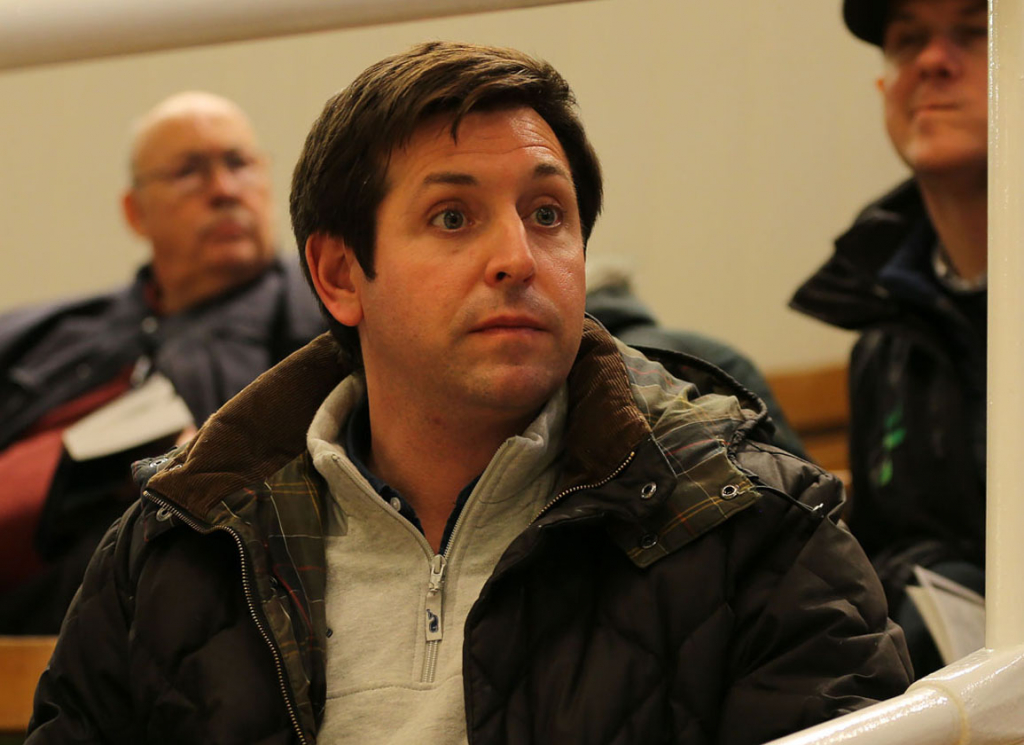
Joe Miller | Tattersalls
“You're not buying into a horse, you're buying into a company,” said Cohen. “That company is going to acquire the horses.” No more than ten horses per LLC in fact.
Twenty shares have already been snapped up. With the bulk of the investors so far West Coast-centric, Cohen said to expect continued patronage of the stable's current pool of Californian training talent, the likes of Jeff Mullins, Mark Glatt, Bob Hess, Leonard Powell. But the venture has its eyes on nationwide horizons.
“It's not a dictatorship, it's collaborative,” he said. “Right now, nobody's excluded. I think if one trainer had a bunch of clients jump in, then obviously some of those horses would be going their way.”
Cohen stressed the residual benefits to an up-front payment model. No excessive mark-ups, for one. The team can also wield financial elasticity when scouting for talent, a useful shield against the hot flames of a bidding war.
“When a horse becomes available, you need to be able to purchase it right away,” said Cohen. “You can't wait to purchase it then raise the money and hope the horse is still available.”
Miller agrees. “A lot of times we've made offers on horses minutes after they run,” he said.
One that comes to mind, said Miller, is Quattroelle (Ire) (Mehmas {Ire}), who cut a Moses-like swath through the field to claim the GIII Megahertz S. at Santa Anita earlier this month.
“Tim and I made an offer on her within 10 minutes of her crossing the finish line when she ran third,” said Miller, of the horse's debut at Leopardstown in August of 2020.
Cohen and Miller's forays into European sales rings have historically yielded results. The stable's Grade I winner River Boyne (Ire) (Dandy Man {Ire}), for example, was purchased for five figures at Tattersalls Autumn Horses in Training sale in 2017. Looking ahead though, private sales, it seems, will likely constitute the team's phalanx of attack.
Miller lauds “a very good network of trainers that I speak with very frequently” as a backbone of this strategy, supplemented by a network of busy bees.
“We really do our due diligence, a lot of research, spending time with the horses before buying them privately, watching them train,” said Miller, championing the working relationships he's forged with Euro-based bloodstock agents Alastair Donald and Charlie Dee.
That said, “if an outside agent finds a horse that they think would suit us, they're welcome to present us with that horse,” he said. “There are a lot of great agents out there with a great eye.”
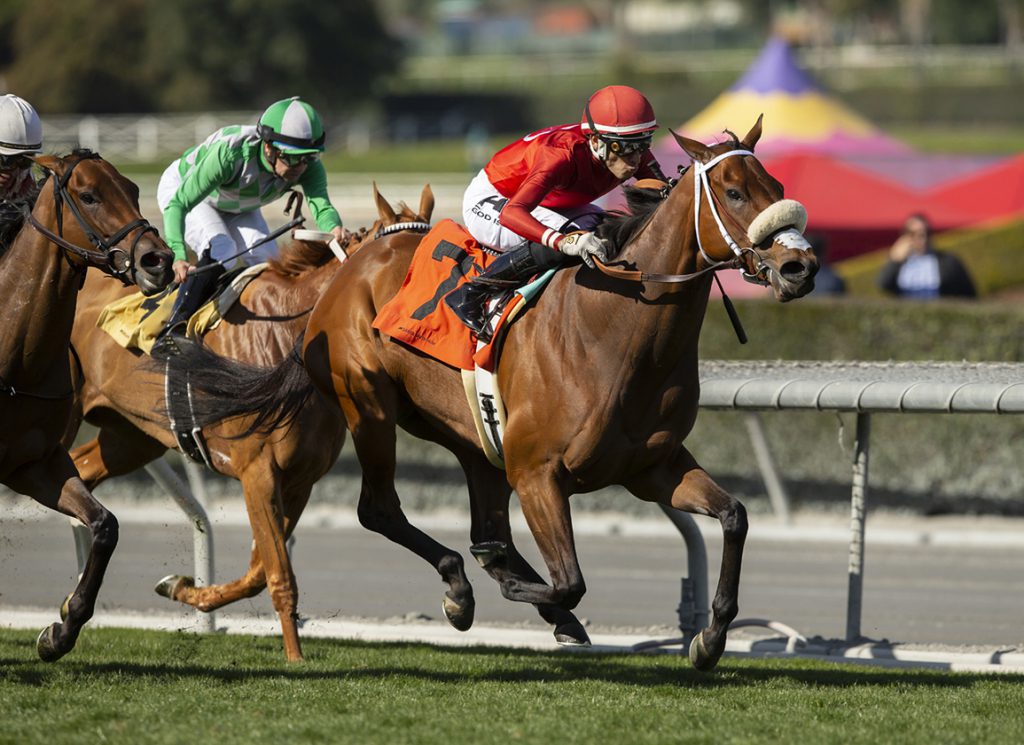
Quattroelle won Santa Anita's Megahertz Feb. 4 | Benoit
So, what type of horse gets the blood pumping? For one, “fillies with a little bit of pedigree, with a little bit of residual value,” said Miller. “If they're the right physicality, they can have a lot of value at the end of their career to go on to be a broodmare.”
Runners without the necessary on-track seasoning don't typically cut the mustard. “We like to see them run several times and show progression in the right direction.”
In terms of physicality, “we specifically like very good-looking horses that are going to go on firm ground, what we think are on the improve, and have a turn of foot,” he said.
They also need the constitution and fortitude to train “day in, day out” over America's deep dirt tracks, he said. Horses with a strong hind-end are desirable. “And you need a hip to it,” he said, “a bit of a shoulder.”
Smaller horses aren't necessarily looked over. “But they have to be very, very well balanced,” he said. “And they have to have some scope.”
If the horse couldn't cut it as a yearling, said Miller, “a lot of times we're not really going to want to buy it as a racehorse either, no matter what their record is.”
When it comes to RTTP's one-and-your-done payment method, Miller has had prior experience in other syndicates built around a similar model.
“It seems to work for people who don't want a monthly bill. You write one check and you get a check back at the end,” he said. “It wasn't for everybody, but it did seem to work for a lot of people.”
Goals are lofty–or rather, they remain so.
Front and center of last week's press release was an impressive set of numbers illustrating Red Baron's Barn and Rancho Temescal's recent big race clout: over the last three years, 27 of the stable's horses have either won or placed in stakes company.
“We want to keep winning stakes. We want to get people in the winner's circle at Santa Anita, Del Mar. Really, everywhere,” he said.
Another key aim of the partnership, said Miller, is to remove so many of the obstacles littering the way to the winner's circle.
“People always have setbacks. It's just not easy to get your horse to the races,” he said, calling the long road to the racecourse “the hardest part” for owner-breeders especially.
“Our horses have already made it to the races, and we have a very reasonable expectation that they are going to be running right off the plane for us. Most of the time they do so successfully,” said Miller.
“We just want people to have a lot of fun, some immediate action,” he added. Immediate action, and–in news welcome to any frugal investor with one eye on their checkbook–“we do want to be fiscally responsible about it.”
The post Cohen, Miller Ownership Venture “Fun, Immediate Action” appeared first on TDN | Thoroughbred Daily News | Horse Racing News, Results and Video | Thoroughbred Breeding and Auctions.
To The Editor:
On Saturday, Feb. 18, 2023, my first-time starter, a filly named Royal Blood, was scratched by the Gulfstream Park veterinarian for unknown reasons. Immediately after I heard this troubling information that she was scratched, I personally requested my attending vet to check on the filly in the receiving barn at Gulfstream. After carefully examining her, he could find nothing wrong with her so we shipped her back to Palm Meadows training center where I currently stable my horses.
The following day I asked two different vets to check Royal Blood to get more educated opinions about her soundness, yet again both found that she was fine. After consulting with the third different veterinarian, we decided that in order to be 100 percent sure of her soundness we should take some diagnostic images and ultrasound views. After those images were examined, vet number 3 saw nothing telling in the X-rays and ultrasound pictures. So I decided to send the images to one of most renowned and respected vet in the world, one who does not practice on the racetrack. After this veterinarian did not find anything out of the ordinary I decided that I needed to speak up because this is not right.
Royal Blood has 17 registered, official workouts, including five at Palm Meadows, one at Gulfstream, the remainder at Churchill Downs and other tracks in Kentucky. Under the current rules, prior to a workout horses must be examined and signed off on by a veterinarian. So this filly with no history of any issues has been examined by licensed veterinarians over 20 times during the last six months and only one of them has found any issue, an issue I may add that four other veterinarians do not agree exists on this horse. I left numerous calls and text messages with the Gulfstream Park vet yet it was several days before a response was made. He gave no specific reason for why the filly was scratched.
Basically, Gulfstream Park is letting their track veterinarian operate with impunity, little or no oversight and contrary to the benefit of the track, the horsemen and owners and, most importantly, the horses. This attitude is destroying the little guys, killing the spirit and soul of smaller trainers and owners, and unchecked power in the hands of a few will do nothing but chase away the people that pay to put on the show. Very few owners will be willing to sustain the daily charges of a horse who is placed on a vet list for 14 days before that horse is even allowed to breeze again even if there is no unsoundness found.
In order to get off the vets list not only do you have to work for the track vet in a designated time but they take samples to be sent off for testing that can sometimes take two or three weeks to get the results back. So essentially when the track vet makes a relatively arbitrary decision to scratch a horse, you are forced to miss training time and likely miss several potential races, depending on the results of the tests. So a horse, that in your professional opinion and the opinion of your practicing veterinarians was fit and ready to run, is forced to miss at least a month and maybe more.
We hear a lot about safety and I agree that it's vitally important but it's also important to maintain a healthy working relationship between those in regulatory positions and the horsemen who are often placed in difficult situations. If tracks can pay for entertainment and concerts and other non-racing expenditures, why not at least spend some money installing a local laboratory to do limited testing of samples for horses placed on vets lists so that there is no wait time and those horses can get back to racing? Perhaps do more random testing of suspect characters' horses too?
The economics of racing horses are bad and getting worse. Many trainers can hardly keep their heads above water with their a daily rate, so the only way that they can survive is through purse earnings. Purses need to improve as well and without sufficient entries and healthy field size that won't happen, especially at places like Gulfstream where the purse enhancement from the Calder casino has been lost.
We hear about problems that tracks and racing commissions have in not being able to find enough veterinarians to take these regulatory positions. After seeing some in action, I'm wondering about the quality as much as the quantity. I also wonder if some don't hold personal grudges against certain trainers that may not always agree with their assessments. I realize that by writing this I may be putting myself in the category of them having a grudge against me, but I'd hope that by speaking up perhaps some of these policies and the people in charge of enforcing them can be reviewed so that we can have a system that protects horses but doesn't overzealously cause financial hardship for no good reason.
I know HISA is supposed to handle all these issues eventually, but I don't know how it's all going to play out. I have personal knowledge of several horses that weren't allowed to run at Gulfstream that shipped out of town and won races.
I believe that most of Gulfstream Park management truly has the interests of racing at heart. Aidan Butler, Steve Screnci, Mike Lakow and Billy Badgett are all accessible to speak to horsemen about issues and try to find reasonable solutions. Others in the organization don't seem to be willing to do the same.
I wish I was a bit younger but I'm getting older and sometimes feel too tired to keep fighting. However, at the end of the day, I will keep standing up for those who cannot fight and can't speak up for fear of retribution.
If that makes me the bad guy in the eyes of some, well, so be it.
I've been called worse.
— Carlo E. Vaccarezza
Lexington, Kentucky
If you'd like to submit a letter to the editor, please send it to info @ paulickreport.com along with your name, home state, and relationship to horse racing (owner, fan, horseplayer, etc). We will request consent before publication.
The post Letter To The Editor: Regulatory Veterinarians Shouldn’t Act With Impunity appeared first on Horse Racing News | Paulick Report.
