Despite all the obvious popularity of games of dice among the majority of social strata of various nations during several millennia and up to the XVth century, it is interesting to note the absence of any evidence of the idea of statistical correlations and probability theory. The French humanist of the XIIIth century Richard de Furnival was said to be the author of a poem in Latin, one of fragments of which contained the first of known calculations of the number of possible variants at the chuck-and luck (there are 216). Earlier in 960 Willbord the Pious invented a game, which represented 56 virtues. The player of this religious game was to improve in these virtues, according to the ways in which three dice can turn out in this game irrespective of the order (the number of such combinations of three dice is actually 56). However, neither Willbord, nor Furnival ever tried to define relative probabilities of separate combinations. It is considered that the Italian mathematician, physicist and astrologist Jerolamo Cardano was the first to conduct in 1526 the mathematical analysis of dice. He applied theoretical argumentation and his own extensive game practice for the creation of his own theory of probability. He counseled pupils how to make bets on the basis of this theory. Galileus renewed the research of dice at the end of the XVIth century. Pascal did the same in 1654. Both did it at the urgent request of hazardous players who were vexed by disappointment and big expenses at dice. Galileus’ calculations were exactly the same as those, which modern mathematics would apply. Thus, science about probabilities at last paved its way. The theory has received the huge development in the middle of the XVIIth century in manuscript of Christiaan Huygens’ “De Ratiociniis in Ludo Aleae” (“Reflections Concerning Dice”). Thus the science about probabilities derives its historical origins from base problems of gambling games.
Before the Reformation epoch the majority of people believed that any event of any sort is predetermined by the God’s will or, if not by the God, by any other supernatural force or a definite being. Many people, maybe even the majority, still keep to this opinion up to our days. In those times such viewpoints were predominant everywhere.
And the mathematical theory entirely based on the opposite statement that some events can be casual (that is controlled by the pure case, uncontrollable, occurring without any specific purpose) had few chances to be published and approved. The mathematician M.G.Candell remarked that “the mankind needed, apparently, some centuries to get used to the idea about the world in which some events occur without the reason or are defined by the reason so remote that they could with sufficient accuracy be predicted with the help of causeless model”. The idea of purely casual activity is the foundation of the concept of interrelation between accident and probability.
Equally probable events or consequences have equal odds to take place in every case. Every case is completely independent in games based on the net randomness, i.e. every game has the same probability of obtaining the certain result as all others. Probabilistic statements in practice applied to a long succession of events, but not to a separate event. “The law of the big numbers” is an expression of the fact that the accuracy of correlations being expressed in probability theory increases with growing of numbers of events, but the greater is the number of iterations, the less frequently the absolute number of results of the certain type deviates from expected one. One can precisely predict only correlations, but not separate events or exact amounts.
A Quarter Horse trainer in New Mexico has been suspended for one year and fined $10,000 after one of his trainees returned a positive test for the metabolites of the prescription ADHD medication Ritalin, a Class 1 drug violation.
Class 1 drugs have no generally accepted medical use in the racing horse and their pharmacologic potential for altering the performance of a racing horse is very high.
According to a ruling posted on the Association of Racing Commissioners International website, the New Mexico Horse Racing Commission suspended trainer Cervando Garcia-Solis from (retroactive from summary suspension) September 15, 2022, through September 14, 2023, inclusive.
Garcia-Solis accumulated “6” points in connection with this ruling for a total of “6” points under the multiple medication violation point system. Under the multiple medication violation point system, Garcia-Solis is suspended an additional penalty of 30 days (Sept. 15, 2023, through Oct. 15, 2023) pursuant to section 15.2.6.9 (O)(7) of NMAC.
Garcia-Solis is a multiple stakes-placed trainer with 22 wins from 298 starts in a career stretching back to 2010.
The ruling is in response to Garcia-Solis' trainee Confidential Dash, who won the seventh race, a maiden special weight, at the Downs at Albuquerque on Aug. 27, 2022. The 3-year-old had not finished better than fourth in five previous starts; for his Aug. 27 victory, Confidential Dash paid $27.80.
For his first five career starts, from Aug. 21, 2021, through June 24, 2022, Confidential Dash raced under the name of his breeder, Gregg Sanders, as trainer and co-owner. The Aug. 27, 2022-race was the gelding's first start for Garcia-Solis.
Industrial Laboratories reported findings of both methylphenidate and ritalinic in Confidential Dash's post-race blood sample, also confirmed via split sample. Methylphenidate is the generic name for Ritalin, and ritalinic is a metabolite of the same.
According to the ruling, Ritalin is a zero tolerance drug in New Mexico. It is a stimulant which has the potential to affect performance, and it is not approved by the FDA for use in horses and is not commercially available in the United States.
Confidential Dash was disqualified from his win and all purse monies ordered redistributed. Confidential Dash must pass a commission-approved examination and test clean in blood before becoming eligible to enter another race. He may not be tested until on or after May 14, 2023.
“Kentuckians are a peculiar people and their like cannot be found elsewhere in the new world or old.”—a 1905 article in the Nashville Banner on some notable Kentuckians
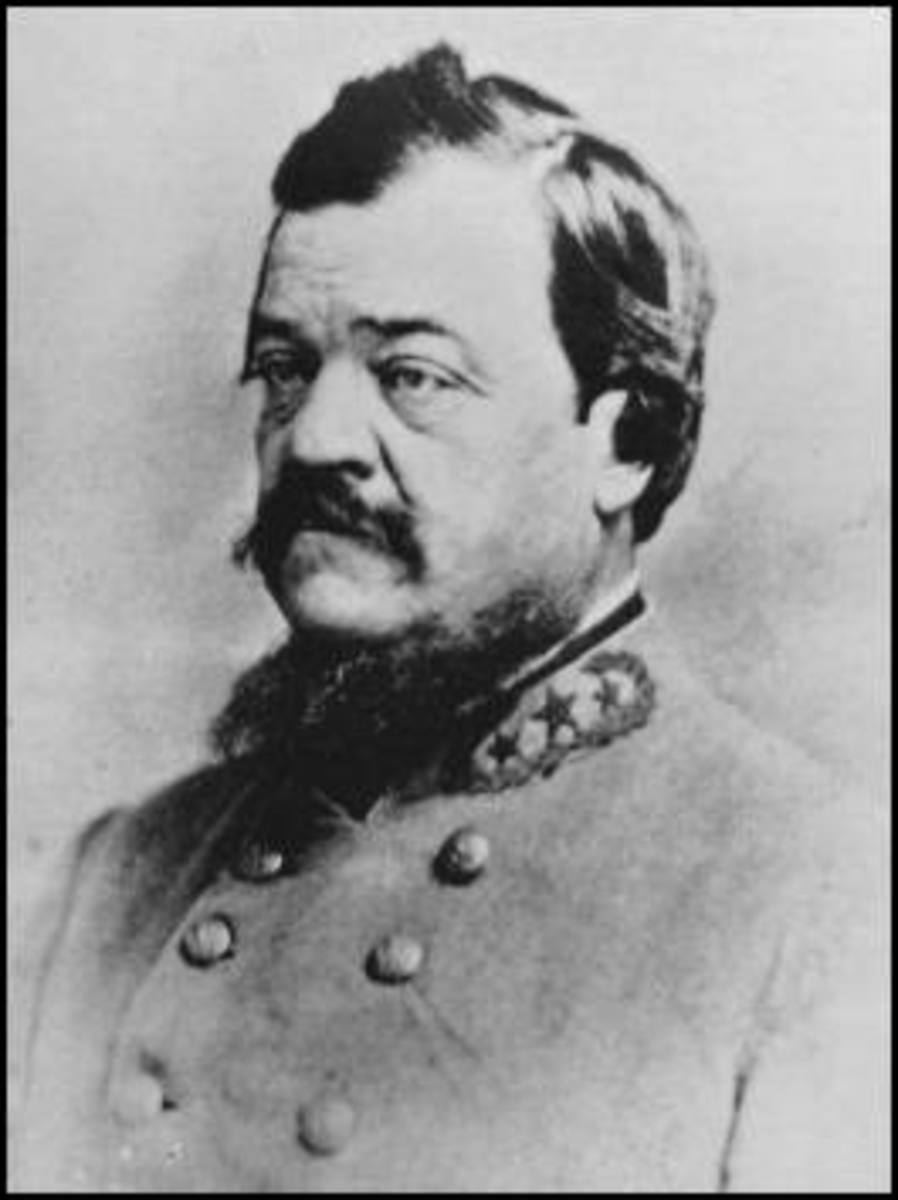
Brig. Gen. Abe Buford, a superior soldier, public servant, distinguished gentleman, brawler, and an authority on all matters pertaining to the Thoroughbred during the 19th century, was one such son of the Bluegrass.
Buford was perhaps best known as master of Bosque Bonita, a magnificent Woodford County farm that in 1979 became part of the Farish family's expansive Lane's End near Versailles.
Having gained fame as the owner and breeder associated with star Thoroughbreds including Lexington, Enquirer, *Leamington, Longfellow, Mannie Gray, and Nellie Gray in the decades before and after the Civil War, Buford served on the battlefield with the U.S. Army during the Mexican War then later as a cavalry commander in the Confederate Army.
In military life, Buford met adventure with daring courage, but later as a gentleman farmer he was faced with devastating circumstances he could not overcome—the loss of his family, fortune, beloved farm, and all his horses.
Brought up as part of the large Buford clan in Central Kentucky, the general was a tempestuous man of immense size who cast a mighty shadow at six-feet tall and 350 pounds. He enjoyed an abundance of wealth but at times could not control his combative instincts after retiring from the military.
Records and lore indicate he was guilty of a number of audacities in public. In an incident in the 1850s at the Lexington Fair and during a gunfight, he scalped a man in defense of his brother Tom, who also became a Confederate officer, holding the rank of colonel. Years later, the Nashville Banner headlined a story about the episode as the “Last Scalp Taken In Kentucky”.
Brig. Gen. Abe Buford
Woodford County tradition holds that Abe and Tom Buford and their brother Henry spent a summer afternoon on street corners Versailles shooting at each other.
An 1841 graduate of the U.S. Military Academy at West Point, Abe Buford was skilled in weapons of war and small firearms. Four decades later, after mounting debts forced him into bankruptcy, destitution, and homelessness, he put a .32 revolver to his head and brought conclusion to the life he mostly dedicated to his land and horses. He was 64.
Despite his tempestuous nature, Buford was noted for his kindliness and was greatly respected in Woodford County, where he was born in 1820. After his death, the sword he wore throughout the Civil War was presented to the citizens of Versailles, with a note from an unidentified person describing it as the “solitary relic of a once great estate and brilliant and sad career.”
Little more than 150 years ago, Buford enjoyed the lifestyle of a well-born, moneyed landowner. He campaigned Enquirer, the son of *Leamington who was undefeated champion 3-year-old of 1870 and the sole seasonal conqueror of Belmont Stakes winner Kingfisher, and Bosque Bonita was described as the most princely estate in the Bluegrass.
Enquirer
Situated along the Versailles-Midway Road, Bosque Bonita had long been an annual gathering place for the county's prominent citizens, national politicians, and sporting men. And Buford was known as the most genial host.
Neighboring horsemen and friends raced their horses over the farm's one-mile training grounds, settling the outcomes with nothing more than a refreshing julep.
Bosque Bonita, meaning “beautiful woods” in Spanish, was a name Buford brought from the Mexican War when he served under U.S. President Zachary Taylor.
The farm's elegant Italiante-style residence, located about a quarter mile from the road, was nestled in a woodland park that included ash, black walnut, burr oak, elms, and honey locust, and was described as incomparably stunning for the area. Decades later, when subsequent owners sought the riches from the new tobacco economy, most of trees were cut down to make way for planting.
Buford was one of 13 children of William “Colonel Billey” Buford, who married his cousin Frances Kirtley and came to Kentucky from Culpepper County, Virginia, in 1789 with his father, Revolutionary War veteran Simeon Buford, and other family members.
Simeon's military service record took him to the rank of captain, and he fought within a company commanded by this older brother, Col. Abraham Buford, as well as under the famed Major Henry “Lighthorse Harry” Lee, the father of eventual Confederate Gen. Robert E. Lee. Both Simeon and his brother raced horses in Kentucky, as did many war veterans.
William Buford stood several stallions at his Tree Hill Farm in Woodford County that were influential in the early development of Kentucky's breeding business, including Medoc, a son of American Eclipse, and Sumpter, a son of Sir Archy. He had purchased the property from the father of Woodburn Stud owner Robert A. Alexander, and eventually the land became part of that great breeding establishment.
At Tree Hill, William Buford built Woodburn House, the now stately white brick landmark where Abe Buford was born and raised. In 1826, “Colonel Billey” was among the founders of the Kentucky Association racetrack in Lexington.
Abe, named for his great uncle, studied at Centre College in Danville, Ky., before entering West Point in 1837. Following graduation, he joined the army and served on the American frontier in Indian Territory under Daniel Boone's son, Col. Nathan Boone.
During that time, Abe Buford witnessed the amazing prowess of a legendary wild stallion—all white except for black ears—known as the “great white horse of the Western plains” as the animal commanded a battle between his herd and hungry wolves.
In June 1843, Buford was among about 90 U.S. dragoons camped along the Arkansas River near Walnut Creek in what is now Barton County, Kansas, when distant sounds of neighing and snorting, barking and baying were heard.
The next morning, Boone dispatched Buford and two other officers to investigate as the sounds continued and to capture a couple of the wild horses.
“We saw the battle raging,” Buford recalled during a lecture he gave later in Louisville. “The herd of horses was about 150 strong and the most prominent among them was the great white stallion of the plains. … He seemed to be the commander and had formed the mares in a circle with their heels to the enemy, or outward. The diameter of the circle was about 100 yards, with all the foals and younger colts in the center—all the stallions, with the white horse in command, on the outside and surrounding the circle of mares, who were fighting the wolves.
Support our journalism
If you appreciate our work, you can support us by subscribing to our Patreon stream. Learn more.
After watching the horrific scene, Buford and the other officers chased away the wolves. As the horses retreated with the stallion taking up the rear guard, Buford said he made several dashes at the horse as they pursued for six or seven miles, but “the great white horse” eluded capture.
“I was mounted on a Thoroughbred horse my father gave me. He was sired by Sidi Hamet. I gave “Cid” the spur and moved directly at the white horse with pistol in hand. … (but) “Cid” was too heavily handicapped … while the white horse was without weight.”
Passing the battlefield on return to camp, Buford recalled the carnage of dead wolves and horses while relating his appreciation of the white stallion's reasoning and strategy.
“(The horse) is therefore a fit associate and companion of man,” Buford concluded.
After the expedition to the plains, Buford fought in the Mexican War alongside future President Zachary Taylor at Buena Vista in 1847. Upon the news of Santa Ana's retreat, it is said they embraced each other and wept for joy.
Years later, a visitor to Bosque Bonita who came to see Enquirer and other horses recounted Buford's hospitality and how he shared an enormous mint julep in a silver mug that he said he and Taylor would drink from in Mexico.
Upon resigning from the Army, Buford established Bosque Bonita in 1854 on property that had been owned by the heirs of Capt. Jack Ashby, who received a land grant after commanding a company of Virginia rangers during the French and Indian War.
When Bosque Bonita was founded, Woodford County was the epicenter of Central Kentucky breeding. Buford's neighbors in the area included John Harper of Nantura Stock Farm, Daniel Swigert of Stockwood Farm, Willa Viley of Stonewall Farm, and Ned Blackburn of Equira.
Opposite Bosque Bonita was a farm known as Glenartney. Coinciding with Bosque Bonita's development, temperance advocate Carrie Nation spent several years as a child there before becoming a hatchet-wielding saloon wrecker.
As Buford was establishing his farm, he became a co-owner of the great racehorse Lexington. Well-known turfman Richard Ten Broeck first bought the Boston colt, then named Darley, from breeder Elijah Warfield and formed a partnership with Buford, Willa Viley, and Junius Ward. Those three sold out to Ten Broeck before Lexington lost his epic rematch with rival Lecomte in 1854 at Metairie Racecourse in New Orleans.
Buford struck a deal with Ten Broeck to buy Lexington and stand him at Bosque Bonita, but Ten Broeck torpedoed their agreement for a better deal with Alexander.
Buford's greatest horse was Enquirer, who stood several seasons at Bosque Bonita, occupying the same log stable as his sire Leamington did in 1866 during a single season there. Leamington later sired the first Kentucky Derby winner, Aristides.
Leamington
Enquirer's most notable offspring include champion Falsetto, 1877 Kentucky Oaks winner Felicia, multiple stakes winner McWhirter, and Mannie Gray, who became dam of the great racehorse and sire Domino, the 1893 champion 2-year-old male and Horse of the Year, as well as Domino's full sister Correction, an influential broodmare who through her daughter Nature is ancestress of 1978 Triple Crown winner Affirmed. 1992 Kentucky Derby winner Lil E. Tee, and French Oaks victress Confidential Lady.
Without question, Buford's gamest horse was McWhirter, a son of Enquirer whose stakes wins included the 1877 Ohio Derby and the Clark Stakes at Churchill Downs, where he defeated Kentucky Derby winner and eventual champion Baden-Baden.
Racing in St. Louis, WcWhirter broke both front ankles, and in a gruesome display, struggled to continue as thousands of onlookers were roused to extreme anguish. After collapsing, the colt was shot to relieve his suffering and interred in the infield.
Buford wept openly at the tragedy and later said that was the moment he came to believe that horses had souls and went to heaven.
Enquirer's tomb at Belle Meade Stud.
Decades earlier, when the Civil War broke out, Buford's family, like many others in Kentucky, had divided loyalties. He gave his cousin John a handsome gray Thoroughbred that he named Gray Eagle. John Buford fought for the Union as a brigadier general and is said to have fired the first shot at Gettysburg as well as reportedly chosen the site for the momentous battle.
Abe Buford cast his lot with the South, becoming a brigadier general in the Confederate Army in 1862. Eventually he formed a new brigade from several Kentucky cavalries, then was attached to Gen. Nathan Bedford Forrest's command until the end of the war.
Buford's financial problems began following the death of his only son at age 23 in 1872, and he sold Enquirer in 1879, the year his wife died, to Tennessee Militia Gen. William Giles Harding of Belle Meade Stud near Nashville.
Conducting a horse auction at Bosque Bonita in 1874, Buford sold several Thoroughbreds to Gen. George Custer for soldiers in his 7th Cavalry. The sale was held under a sprawling ancient oak tree known as the Custer Oak.
According to renowned Kentucky horseman John H. Morris, a later owner of Bosque Bonita, Buford brought out one of his finest horses and goaded Custer to buy him.
Morris, who was at the sale, said he heard Buford call out: “Custer, you buy that horse and I'll guarantee no Indian will ever catch you.” Custer, all his men and their horses, except one, were killed at the Battle of Little Big Horn in 1876.
Major Louis A. Beard (left) and John H. Morris
The Custer Oak was blown down in a 1936 storm, and a large branch was mounted and hung in the lobby of Lexington's Phoenix Hotel, where Custer stayed. Morris also had gavels made from the famous oak.
In 1881, Buford sold all his horses to settle debts. A large portion of his fortune had been spent to defend his brother Tom, a Henry County judge who murdered a judge that ruled against their sister in a court proceeding, forcing the loss of all her property. Tom was later declared insane and committed to an asylum.
Buford's distinguished Bosque Bonita, which was heavily mortgaged, was auctioned off that year, beginning a dismal downward trajectory for its longtime proprietor.
After beginning to work as a correspondent for a Chicago racing periodical, Buford wrote in many articles that he expected to meet his racehorses in heaven. He also turned to religion and attempted to reconcile horse racing and churchgoers who looked down on the sport, and, perhaps, to find a measure of redemption for himself.
Buford traveled to different venues and lectured with great reverence on a topic he titled “The Church and Turf,” citing scripture as well as mythology and ancient history as proof horses did ascend to heaven.
His fervent wish, he said, was that he be borne to heaven in a fiery chariot behind spirited horses he hoped would be Enquirer and McWhirter.
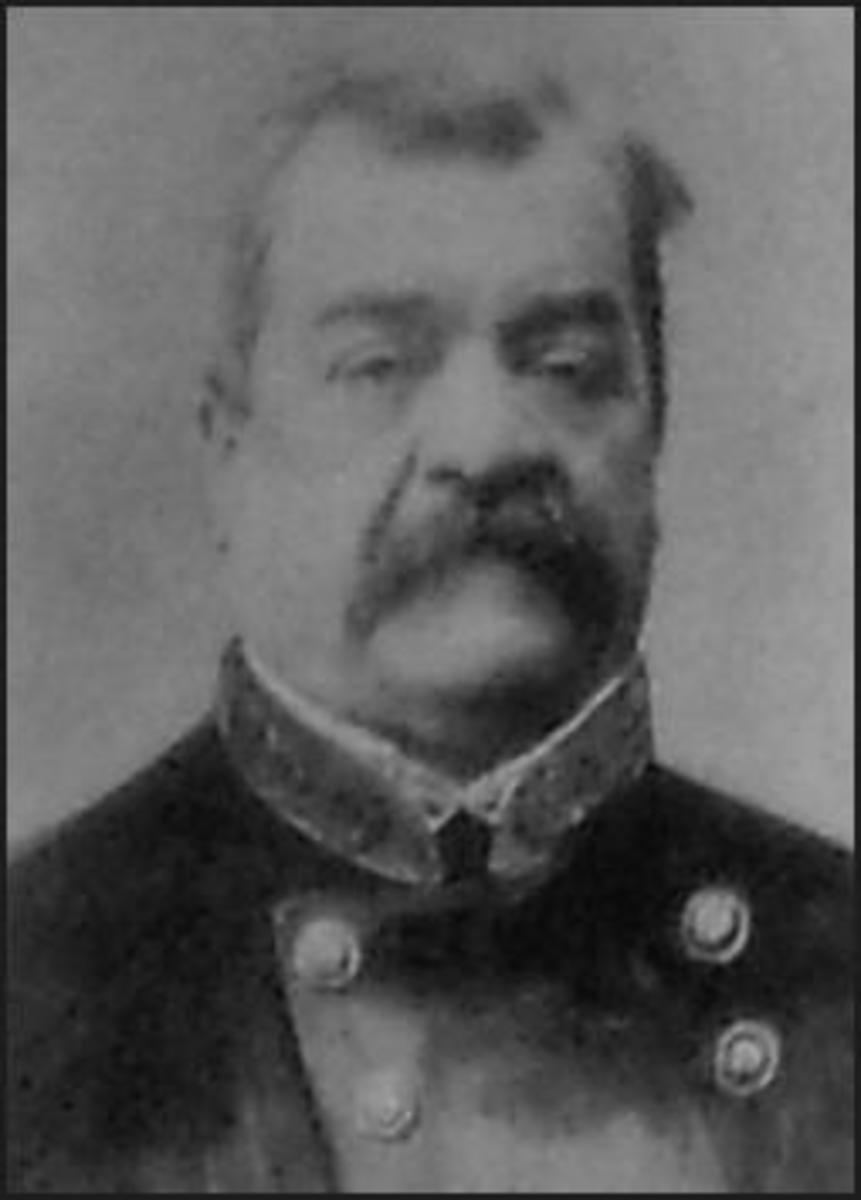
Brig. Gen. Abe Buford at an older age
Buford's brother Tom escaped from the asylum and in 1884 turned himself in to authorities. Newspapers were quick to pick up the story and recounted the family's tribulations and financial ruin during the past decade, which Abe Buford could not bear.
Visiting a nephew in Danville, Ind., at the time, Buford became despondent and fatally shot himself.
“Peace to all the world,” the old soldier and longtime breeder said in a letter he left behind as he began what he hoped would be a final journey with his horses.