The Bluegrass State is the heart of Thoroughbred country, so it's fitting that this year's TAKE2 Jet Run Awards have been won by a pair of Kentucky-breds who transitioned to second careers through Kentucky-based Thoroughbred aftercare programs.
Irbywood, who captured the 2022 Jet Run Award in the Jumper division, represents Second Stride. Located in Prospect, Ky., Second Stride was founded in 2005 by Kim Smith, a veteran horsewoman who also established Moserwood Farms, a broodmare care, foaling, breaking and lay-up facility. This year's Jet Run Award in the Hunter division, Tavish was retired through New Vocations Racehorse Adoption Program; he was also named the 2022 TAKE2 High-Score Hunter. New Vocations has rehomed more than 8,000 retired Thoroughbreds and Standardbreds since its inception in 1992. The oldest and largest racehorse adoption program in the country, it is based in Lexington, KY, and has facilities in Florida, Louisiana, New York, Ohio, and Pennsylvania.
The Jet Run Award was created to highlight the role of aftercare organizations in the successful second careers of retired racehorses. It is open to all TAKE2 Thoroughbred League members who are graduates of an aftercare program accredited by the Thoroughbred Aftercare Alliance, affiliated with a recognized horsemen's organization, and/or approved for a grant from Thoroughbred Charities of America.
Both of this year's Jet Run Award winners boast enviable pedigrees.
A repeat winner of the Jet Run Award in the Jumper division, Irbywood is by the late stallion Indian Charlie, who finished third in the 1998 Kentucky Derby, his only loss in a five-race career. Irbywood sold as a two-year-old for $625,000, going to Thoroughbred racing and breeding powerhouse Stonestreet Stables in 2011. After finishing third in his racing debut, he sustained an injury that required surgery and significant time off, returning from a layoff of more than two years to win his second start. Unfortunately for his connections, that would be his final race, but despite that early injury, he has flourished as a jumper for owners Michael and Sharon Kvistad.
Now 13, Irbywood exemplifies what retired Thoroughbreds can achieve with patience, good training, and physicality.
“He was eight years in the making,” said Anna Ford, New Vocations' Thoroughbred Program Director. “Mike and Sharon have really taken their time with him.”
Both are experienced horsepeople, and they have adopted several horses from New Vocations to show. Neither was concerned that Irbywood's injury had been surgically repaired.
“Irbywood is a perfect example of what a well-bred, athletic Thoroughbred can do,” said Ford. “Stonestreet did right by him; they took care of him when he was injured and they retired him when he needed to be retired. And we had adopters that were willing to go at the pace that suited the horse and rest him when necessary.”
Cinthia McGreevy's Black Tavish, known in the show ring as Tavish, descends from bloodstock royalty. Sired by Giant's Causeway, the 2000 Breeders' Cup Classic runner-up who earned $3 million on the track, Tavish was offered at the 2014 Keeneland September yearling sale, drawing a final bid of $165,000. He earned $167,000 during a 27-race career, running his final race for trainer Matt Shirer at Fair Grounds in New Orleans.
“Matt transitioned him through us,” said Second Stride's Smith. “Tavish came in with a bow [bowed tendon], but he was very correct and very sound. And obviously he was very attractive with that big white face. He was very desirable as an adoptee because of his looks.”
Tavish made his final appearance at the racetrack in 2018. He was given plenty of time to learn his new career before McGreevy entered him in the 2021 Retired Racehorse Project; he won the award for Best Conditioned Horse.
“It's so cool to see his success, and to watch his adopter develop him and do right by him,” said Smith. “He's such a cool horse, and now that he's won the TAKE2 High-Score Championship, he's the bomb.”
Smith's voice glows with affection when she talks about the Second Stride alumnus. She also has high praise for the TAKE2 Program.
“Industry programs like TAKE2 give horses a chance at making a name for themselves, and they educate people about what horses can do and how to handle injuries,” said Smith. “Before programs like TAKE2, a horse like Tavish would have been with us for six months, because people would have been wary of him. Now we have clients who are educated and who have complete veterinary histories of the horses they're adopting.”
She added, “The educational outreach [of Second Stride and TAKE2] is showing the riding community that when treated properly, a horse with an injury like a bowed tendon can go on to be successful.”
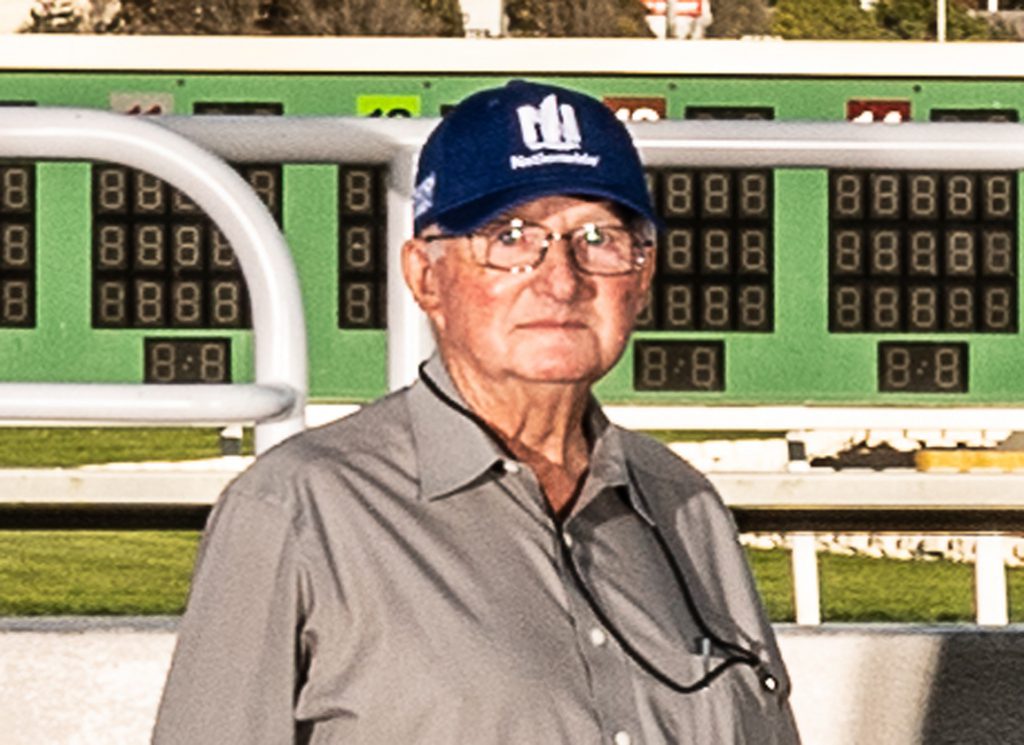
Statistically speaking, Northern Rose (Northern Causeway), a 6-year-old chestnut mare with a 4-for-32 claiming-level record, was hardly the star of the stable for trainer Duane Offield, who died Sept. 29 after a long fight with cancer. But the 82-year-old conditioner took an outsized shine to her anyway. A homebred for one of his most dedicated clients, Northern Rose had been in Offield's care since she began her career 3 1/2 years ago, and she enjoyed a prime stall under Offield's Golden Gate Fields shedrow, not far from his office so he could keep a watchful and prideful eye on her.
Offield, a kind-hearted and soft-spoken mainstay on the Northern California circuit for parts of seven decades, chiseled out a reputation as an old-ways trainer who preferred to let his horses do the talking for him. He probably would have downplayed it had he been alive to witness it, but the performance of Northern Rose in the third race at Golden Gate on Saturday spoke volumes in terms of good karma.
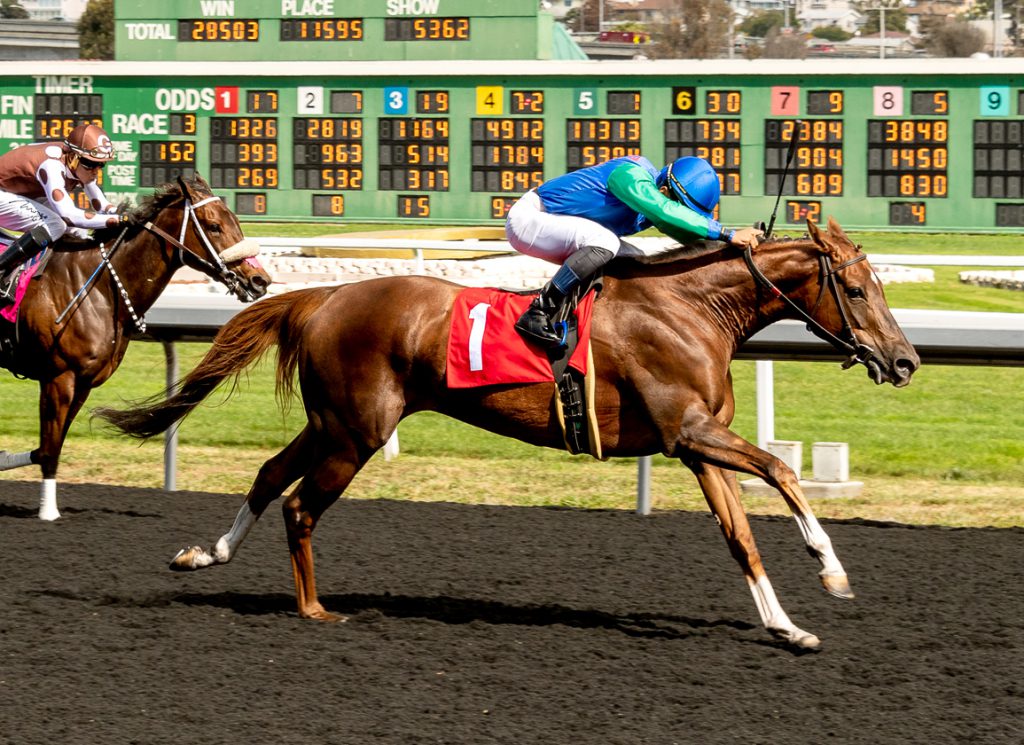
Northern Rose had been entered by Offield in the Oct. 1 $5,000 claiming route prior to his passing. He wasn't able to make it out to the track near the end of his life, but still looked forward to managing his horses. So when the darling of his barn charged home from the back of the pack to win by two lengths at 17-1, her score put a spiritual exclamation point on Offield's life as a horseman by giving him one final official victory after his death.
You could say that Northern Rose sent Offield out a winner. But those who knew him had long ago figured out Offield was all class, regardless of where his horses finished.
“I don't know that I've ever met anyone so selfless. He was a man from a different time. He just was the epitome of somebody who never put himself first,” Rozamund Barclay, Northern Rose's owner and breeder, told TDN a few hours after Saturday's emotional win.
“With Duane, everything was about the horses. It didn't matter if it was a $2,500 claimer or a stakes horse. They all got lots of attention. He felt very privileged that he got to make his living doing what he loved to do. He never forgot that. He was so grateful that his entire adult life, he got to do what he wanted–being with horses,” Barclay said.
“He loved his crew, too. That was his family. The same people worked for him for years. We were talking [Saturday] about an exercise rider, who, when he was 15 or 16, Duane helped him get special permission to gallop horses at that age. That exercise rider has got to be close to 60 now. Duane had that quality about him that made people want to work for him, and people stayed loyal and wanted to keep working for him.
Duane Offield | Vassar Photography
“He got so many young people to go through his barn. John Sadler worked for him. So did Kim and Sean McCarthy. There are probably a lot of people that worked for him that I'm not aware of. It's a rare person where nobody has anything negative to say about him,” Barclay said.
Barclay lives not far from Emerald Downs in Auburn, Washington, and also owns Northern Rose's sire, Northern Causeway. She keeps racetrack retirees at her home and her broodmares and Northern Causeway at Rancho San Miguel in California. She first began sending horses to Offield in 2014 after her previous California-based trainer took sick and recommended Offield as the person he'd want to look after his stock. Since then she's kept a stable of between 10 and 15 horses with Offield, and Barclay said they meshed well as owner and trainer because Offield treated her horses as individuals with their own development timetables.
“He liked the old-school ways. He liked horses to be hand-walked, a lot of hands-on attention, that kind of thing. And it's getting real hard to do that, as you well know. Trainers' expenses are going up and up and up, and owners can only afford to pay so much. So it's a lot to hand-walk all your horses, do them all up every day, all of that. But Duane seemed to manage to do that.”
Originally from Prosser, Washington, Offield studied animal husbandry at California State Polytechnic University prior to embarking on a racetrack career in the late 1960s, first with Quarter Horses and later Thoroughbreds. His lifetime statistics predate Equibase records that go back as far as 1976, but since that date Offield amassed 722 winners and just over $10 million in purse earnings.
Offield went nearly two decades into his career before he trained and owned a piece of a horse that might break through on the national scene as a Triple Crown candidate. In 1989, a raw speedster named Restless Con (Restless Native) won three of his first four races as a 2-year-old in NorCal. But the colt developed a life-threatening virus shortly after turning three that knocked him out of contention for the GI Kentucky Derby preps.
Offield nursed Restless Con back to health, and after winning two minor Golden Gate stakes and finishing second in the then-GII Ohio Derby, he ambitiously shipped the $17,000 KEESEP roan cross-country to Monmouth Park for the GI Haskell Invitational. Dismissed at 10-1 in the betting as a California speedball in a race laden with classy East Coast contenders, jockey Tim Doocy broke on top but then unexpectedly rated Restless Con off the pace, orchestrating a 2 1/4-length upset.
Restless Con then finished twelfth in the GI Travers S. and ninth in the then-GI Super Derby. Offield brought the colt back to his NorCal base, where Restless Con won only one more race before retiring in 1992. Offield might have pinned his hopes on developing additional top-level talent in the decades to come, but that Haskell win would stand as his one and only graded stakes victory.
Fast forward to this season. With Offield unable to attend to daily doings at the track because of his illness, his record slumped to 4-for-75 for the year going into last Saturday's race. As he knew his life was coming to a close, his concerns shifted from winning races to making sure his racetrack family was positioned to be taken care of once he died.
“That's the kind of person he was. It's kind of hard to explain,” Barclay said. “But one of the things that kept him going was that he had a wonderful crew that stayed in contact with him. He was bedridden towards the end, but he never stopped putting his energy into running the stable.
“Even the day he passed away, he was concerned about the welfare of his horses, especially some of the ones that he's campaigned for a long time, wanting to make sure they all went on to good careers. I think all horsemen try to do the best by the horses they train. But it was his nature to be more worried about the kids that worked for him and the horses than himself.”
Barclay said Northern Rose prefers running outside of horses, so it was a bit of a bummer when she drew the rail for the mile race. She added that Offield was not the type of trainer to over-instruct his riders, but she knew he would have told jockey Armando Ayuso to get to the outside for one clear stretch bid if possible, and those were the instructions given by assistant trainer Jorge Bautista when he gave a leg up to Ayuso on Saturday.
Northern Rose | Vassar Photography
Northern Rose broke to the back, settled on the inside and was content to stalk midpack in fifth before edging closer to the dueling leaders 4 1/2 furlongs out. She quickened her cadence through the far bend, and when Ayuso swung the mare out to the four path turning for home, Northern Rose responded gamely.
What was unfolding might not have immediately resonated with the general public. But Barclay said the backstretch folks watching from trackside knew what was in the making, and a noticeable buzz began to swell on the grandstand apron.
“Northern Rose outside has hit the lead coming to the sixteenth pole!” announcer Matt Dinerman intoned, punctuating his call with enthusiasm in deep stretch. “Northern Rose starting to open up on the competition for Duane Offield! And how about this? Northern Rose at 17-1!”
As Barclay put it, “If you were part of the backside community, you could hear the excitement when Northern Rose was coming down the stretch; even a little astonishment in Matt Dinerman's voice. And I think it just kind of made everybody's day.”
Asked what was going through her mind in the winner's circle ceremony, Barclay said the scene was a bit too emotional for her to put into words. Then she attempted to explain it anyway, her voice only briefly cracking with sentiment before continuing strongly.
“I can't tell you how well loved he was. Everybody on the backstretch knew Duane. Everybody on the racetrack knew if they needed help, that they could go to him. He just had that upbringing that you didn't deny someone any help if you were able to help them,” Barclay said.
While she was processing all of that after giving Northern Rose an affectionate rub on the nose and briefly hugging with Bautista, Ayuso and another member of Offield's team, Barclay said the phone rang near the weighing-in scale. The stewards wanted to speak with her, a racing official told Barclay, who said her first thought was, “What did I do now?”
The stewards, though, simply wanted to express a shared sense of wonderment at what had just transpired.
“The stewards were very sweet,” Barclay said. “They asked me, 'Wow, do you believe that?' And I said, 'No!' What a great sendoff for Duane. I can't think of a better sendoff. He was an extremely private person, but there was always that common thread–he loved the horses and everybody knew that,” Barclay said.
Kettle Corn, a Grade 2 winner and veteran sire in Ohio, was moved to Orange Valley Estates in Trelawny, Jamaica over the summer, the farm announced on social media.
The 15-year-old son of Candy Ride previously stood at Fair Winds Farm in Waynesville, Ohio, where he'd resided since retiring to stud for the 2014 breeding season. He was consistently on the fringes of the top 10 among Ohio sires by annual progeny earnings.
From six crops of racing age, Kettle Corn has sired 42 winners and brought in combined progeny earnings of more than $2.8 million.
His top runner has been Funnel Cake, who won the Buckeye Native Stakes in 2019, and placed in a pair of other stakes races, with earnings of $240,555. Funnel Cake is his lone stakes winner to date, with other stakes-placed runners including Garrett, Captain Corn, Flint Corn, Silky Tassels, Forever Diamond, and Succotash.
During his own racing career, Kettle Corn won eight of 26 starts for earnings of $853,361.
Once a claiming-level horse racing in the Midwest as a homebred for Jim Plemmons, Kettle Corn's fortunes changed wildly when he was sold to owner C R K Stable to be trained by John Sadler on the West Coast. He'd go on to win the Grade 3 Native Diver Handicap in his stakes debut, and he'd later add the G2 San Diego Handicap, along with eight additional graded stakes placings.
Family-owned since 1955, Orange Valley Estates first opened its stallion operation in the 1960s. The farm is currently operated by Alec and Jacqui Henderson, who took over the reins from the farm founder, and Alec's father, Ian Henderson in 1991.
Old mysteries linger over green pastures and black fences that enclose Ramsey Farm, intertwined with the deep roots of the famed Jessamine County property nestled along the most historic road in Kentucky roughly 11 miles from Lexington.
Almost forgotten amidst the farm's rich annals encompassing both outstanding Thoroughbred and Standardbred runners is a real whodunit, an unsolved murder of a prominent horseman that occurred nearly nine decades ago.
Long before Ken Ramsey purchased the property, formerly known as Almahurst Farm, and subsequently raised champion and leading sire Kitten's Joy and current multiple Grade 1-winning 3-year-old Cyberknife, several hundred acres of Almahurst were called Knight Farm.
In the early 20th century, one of America's greatest racehorses, Exterminator, was born and raised there by his breeder, farm owner F. D. “Dixie” Knight, the uncle of Almahurst founder Henry Knight of Chicago.
A quiet, unassuming man with a knack for developing good Thoroughbreds, Knight was among the last of Kentucky's old-time breeders, as well as a large landowner and bank director. His senseless slaying at the farm on the evening of Aug. 1, 1934, shocked nearby communities and made newspaper headlines throughout the nation.
Despite intense investigation by law enforcement in both Jessamine County and Lexington, the case went cold and is likely never to be solved.
Somebody got away with murder.
Knight's home, where the crime was committed, faced the narrow old Harrodsburg Road at Keene Road on what remains an otherwise peaceful and pastoral landscape renowned for its natural beauty.
A scenic drive from Lexington, the old road followed an ancient buffalo trace that pioneers had traversed to and from the state's first permanent settlement at Fort Harrod in neighboring Mercer County.
Miles of rock walls, hardwood tree canopies and traditional four-board fences defined well-tended pastures shaded here and there by ancient woodland trees. Such a stunning, quiet countryside belied the unimaginable evil in store for Knight and his family.
It was 77 degrees on that Wednesday evening, a welcome reprieve from the previous week when temperatures had soared to a stamina-sapping 101 in the area.
Around 6:30 p.m., Knight returned home, tired, hungry and ready for dinner. But instead of finding sustenance at his manor, he was confronted by two gun-wielding intruders intent on robbing him.
The men reportedly sought a treasure trove of diamonds and money they thought was locked in a safe. How they knew of a safe inside the home, or what supposedly was within, remains unknown.
Family members who had been subdued and held captive elsewhere in the house prior to Knight's arrival, later recalled their shock as the robbery turned deadly, the Louisville Courier-Journal reported. Knight was heard begging for his life after opening the safe, followed by a terse command: “Let him have it.”
A photo of F.D. “Dixie” Knight published in the Louisville Courier-Journal on Aug. 3, 1934.
One of the men fired two rounds from a .38 caliber pistol into Knight's head and heart, and he fell dead at the age of 68.
About an hour and a half earlier, the criminal pair had stealthily entered Knight's home, surprised his cook and his wife, Lydia, binding and gagging them and taking them to an upstairs room so they could not warn Knight, according to accounts of the murder.
Soon afterward, Knight's nephew Blackburn Knight and his wife, Jessie, arrived from Lexington for dinner and were met at gunpoint by a man wearing a cap pulled down over his forehead, a handkerchief across his face and goggles. The men bound and gagged the couple in a downstairs room adjacent to the area with the safe, took Blackburn Knight's car keys, then lay in wait for Knight to arrive.
Jessie Knight said she could hear everything that transpired once Knight entered the house.
Dixie Knight told the men there was no money in the safe as he searched for his glasses and fumbled with the safe's combination. When the safe was finally opened, it held only insurance papers, a diamond ring and a diamond pin.
Although Knight complied with every demand, Jessie Knight said she heard the muffled gun shots, presumably at close range, even as he offered the men everything he had and begged them to spare his life.
The men fled to Lexington in Blackburn Knight's car and abandoned it near the West High Street viaduct. In a search of the nearby Davis Bottom section of the city, police found blue denim overalls with a sheriff's badge pinned to it, striped coveralls, rubber gloves, and socks the men had worn over their shoes, presumably to throw off their scent if bloodhounds were pressed into service, the Lexington Herald reported. Efforts to track the men from there were fruitless.
The clothing was collected and taken to the Lexington Police Department for evidence. Blackburn Knight's car was searched and dusted for fingerprints.
Police speculated Dixie Knight may have recognized one or both of his assailants, prompting his murder.
Reports of the homicide hit area newspapers the next morning and the crime was covered in great detail. Sprawling across the front page of the Lexington Herald in large type was “Robbers Murder F. D. Knight,” while the Jessamine Journal headlined its own report as “F. D. Knight Assassinated.”
Knight's obituary in the Jessamine Journal declared: “This marks (one of the) darkest pages in the history of Jessamine County as it records one of the boldest, most dastardly, sad, horrible crimes.”
A $2,000 reward, equal to approximately $40,000 today and a huge sum during the Great Depression, was offered for information leading to the arrest and conviction of the murderers. It was never claimed, and the farmland and buildings gave up no secrets.
Knight's antebellum home, surrounded by 1,000 acres and watered by clear springs, was built in 1799 by James Williams, who ran a tavern and stagecoach stop there. After selling it in 1849 to a Mr. Huggins, the facility was known as Huggins Tavern, according to an 1860 map of the county, and used as an inn during the Civil War.
Huggins sold the home and several hundred acres to Knight for $10,129 in 1890.
Other members of the Knight family lived on and farmed adjoining property that had been in their family as part of a land grant to ancestor James Knight, a soldier who served at Valley Forge with George Washington during the terrible winter of 1777-78.
These properties, marking five generations of horse breeding, eventually formed the nucleus of Almahurst Farm, which was founded soon after Knight's death.
Meanwhile, in a collaborative investigation into the murder, Jessamine County Sheriff John Combs and detectives with the Lexington Police Department chased intriguing leads to several states and questioned a few suspects, but eventually turned up nothing solid.
Eventually, investigations slowed and then stopped altogether. Today, both law enforcement agencies replied to requests for the latest information by saying they have no records.
Over the years, there has been much speculation as to who was responsible for the heinous act committed that summer night long ago. One theory is that the perpetrators were members of mob boss Al Capone's gang, although reasons for this speculation are unknown.
What is clear is that Dixie Knight at times ranked among Kentucky's leading Thoroughbred breeders of the era, among famed peers including John Madden, Harry Payne Whitney, August Belmont, Arthur B. Hancock Sr., E. R. Bradley, C. W. Moore, and Thomas C. McDowell.
Knight also boarded mares for numerous clients at his farm, including John Sanford, who kept as many as 100 mares there, and Racing Hall of Fame trainer Preston Burch. Among stallions Knight stood were 1916 Kentucky Derby winner George Smith, a black horse named after the famous gambler also known as Pittsburg Phil.
Notable horses foaled at Knight's farm include 1927 Travers winner Brown Bud, who eventually stood at Claiborne Farm.
One of Knight's most ardent supporters was renowned Kentucky breeder, owner, trainer, and raconteur Colonel Phil T. Chinn, who in 1910 campaigned a stakes-winning 3-year-old colt he had named Dixie Knight.
Colonel Phil T. Chinn
During a coast-to-coast radio broadcast “Horse Talk by Real Horsemen” recapped in the Lexington Herald prior to the 1933 Kentucky Derby, Chinn paused and tipped his hat to Knight as he described the kind of horse it takes to win the Derby.
“Colonel Chinn paid tribute to another horse breeder that seems to have escaped the press, and it was so remarkable that it should go into the broadcast record, also. Asked about yearlings, he mentioned incidentally that out of 17 yearlings he had purchased from Dixie Knight, 16 were winners.”
Knight's achievement as the breeder of Exterminator, winner of the 1918 Kentucky Derby, has been a topic of speculation for decades, most of which stemmed from articles published in the 1920s and '30s.
One article questioning the feat appeared in racing publications The Thoroughbred Record and Daily Racing Form and several newspapers in 1922.
Its author unknown, the article asserted that Knight's brother, Grant L. “Joe” Knight, a well-known banker, breeder of trotters, and father of Henry Knight, recommended the mating between Exterminator's dam Fair Empress and leading sire McGee, whose progeny included 1913 Kentucky Derby winner Donerail, and that their mother, Martha Mizner, a sister of noted harness horseman Scott Hudson, was the mare's owner and thus officially the breeder.
Fair Empress, who would produce 16 foals over the course of her life, was inherited by Mizner upon the 1907 death of her other son William P. Knight, himself a noted Thoroughbred breeder. Some accounts suggest the Dixie Knight only handled paperwork on the mare and named himself Exterminator's breeder.
Become a Paulick Report Insider!
Want to support our journalism while accessing bonus behind-the-scenes content, Q&As, and more? Subscribe to our Patreon stream.
Whatever family dynamics were at play that launched a public questioning about the breeding of Exterminator are unknown.
Grant Knight's claim to have masterminded the mating, a seemingly great accomplishment for any Central Kentucky horseman, was not mentioned in his 1935 obituary in the Lexington Herald, but in the Louisville newspaper's obit he was credited as the breeder in partnership with William P. Knight, who was dead seven years before Exterminator was conceived.
Further adding to the confusion, John L. O'Connor's History of the Kentucky Derby1875-1921 listed an unknown “Joseph Knight” as the breeder of Exterminator.
Those deeply involved in Thoroughbred racing, however, such as Blood-Horse publisher and Turf authority Thomas Cromwell and former Churchill Downs President Col. Matt Winn in Frank G. Menke's biography Down the Stretch, acknowledge Dixie Knight as the breeder of Exterminator, the first gelding enshrined in the Racing Hall of Fame.
Knight was always active in Thoroughbred circles, buying and selling at Kentucky and New York sales, and in promoting and protecting the well-being of Kentucky's signature industry.
In 1908, Knight was present with Kentucky's most influential horsemen—among them Catesby Woodford, Milton Young, Major Foxhall Daingerfield, John Barbee, and Desha Breckinridge, to name only a few—at the Phoenix Hotel in Lexington to organize a protest against the repeal of New York's Percy-Gray law of 1895. The law's repeal and replacement with anti-gambling measures would have dealt a serious blow to racing and breeding.
Knight also joined those voicing concerns about aspects of Kentucky's anti-gambling legislation at the time that many believed would have destroyed Kentucky racing.
The last retrievable newspaper mention of Knight's unsolved murder was published in 1959. Any remaining clues vanished when his old mansion was demolished in 1975, but discovered among the rubble was James Williams' original cabin, which was restored and relocated elsewhere on the farm.
Puzzling deaths of people connected to Central Kentucky's Thoroughbred community made news in later decades. The 1965 murder by poisoning of prominent Thoroughbred auctioneer George Swinebroad's daughter, Mary Marrs Cawein, at her home on Chinoe Road in Lexington, and the demise of French horseman Jean Michel Gambet, married to the daughter of Harry B. Scott II, within his burned BMW on a lonely Fayette County road in 1982, are both cold cases.
What sets Dixie Knight's death apart is that it brought attention to the need for a Kentucky state police force to protect rural residents and to coordinate criminal investigations between various local police organizations. However, it took more than a decade following his slaying for the Kentucky State Police to be established.
Knight's farmland has long occupied a place in Kentucky pioneer lore.
Located on the current Ramsey Farm is the head of the beautiful and storied Jessamine Creek, which gushes powerfully between two large rocks. It flows about 30 miles southerly to the Kentucky River and has never been known to go dry; Ramsey horses can wade in and directly drink the clear limestone water.
According to some accounts, the daughter of an early Kentucky settler and surveyor, Jessamine Douglass, was sitting upon one of the rocks, daydreaming and oblivious to impending danger, when she was scalped by an Indian. Her grieving father named the creek for her.
Later, the surrounding county, which was carved from Fayette County's boundaries in 1798, took the same name.
Historians have disputed the origin of the creek's name, but the tragic tale is yet another mysterious chapter enfolded within the bountiful land that has played such a longstanding role in the development of racehorses in Kentucky.