Invincible Spirit’s Mutasaabeq Makes All In The Joel

Allowed free rein on the lead in Friday's G2 Al Basti Equiworld Dubai Joel S., Shadwell's Mutasaabeq (GB) (Invincible Spirit {Ire}) was able to turn that tactical edge to full advantage as he made all under a perfectly-crafted Jim Crowley ride.

Sent off the 5-2 second favourite returning to the scene of his seven-furlong conditions success at last April's Craven meeting which saw him earn 'TDN Rising Star' status, the Charlie Hills-trained son of Ghanaati (Giant's Causeway)–who had subsequently been brought down to earth on several occasions including when a latest underwhelming fourth in Goodwood's G2 Celebration Mile Aug. 27–was in his element from the outset as the 5-4 market-leader Tempus (GB) (Kingman ({GB}) blew the start. Keeping on up the rise to the line, the homebred who was fitted with blinkers for the first time had 3/4 of a length to spare over El Drama (Ire) (Lope De Vega {Ire}), with the same margin back to Tempus in third.

“He had a nice easy time of it in front and he has won here twice before, so he obviously likes it.” Hills said of the winner, whose previous best efforts were second placings in the Apr. 22 G2 Sandown Mile and the July 9 G2 Summer Mile at Ascot. “He's in the [G2] Challenge S. in a couple of weeks, so we'll see how he is. He's run two mediocre races at Goodwood so probably won't go back there again, while at Sandown he was a little unlucky. He's a very sound horse and it's nice to win a race like this with him.”

Ghanaati's finest hour came over this course and distance for Barry Hills in the 2009 1000 Guineas, before she added the G1 Coronation S. to her tally at Royal Ascot and she was also second here in the G1 Sun Chariot S. Her son Wafy (Ire) (Dubawi {Ire}) was successful in the G3 Mahab Al Shimaal, while she is also responsible for the Hunt Cup winner Afaak (GB) (Oasis Dream {GB}). The second dam Sarayir (Mr. Prospector), who also captured the Listed Oh So Sharp S. on this track, also supplied the sire Mawatheeq (Danzig) who ran second in the G1 Champion S. when it was staged here and Rumoush (Rahy) who took the Listed Feilden S. at the Craven meeting before running third in the Oaks.

Others from the illustrious family to have achieved something notable on the Rowley Mile include Maqaasid (GB) (Green Desert), who was third in the 1000 Guineas and G1 Cheveley Park S., Raheen House (Ire) (Sea The Stars {Ire}) who took the G3 Bahrain Trophy, Born With Pride (Ire) (Born To Sea {Ire}) who annexed the Listed Montrose Fillies S. on debut and one of its great celebrities Nashwan who had one of his many moments in the sun in the 2000 Guineas in 1989. Ghanaati's 3-year-old colt Maghlaak (GB) (Muhaarar {GB}) promises to be at least a smart handicapper, having doubled his tally at the Goodwood track that his half-brother is so uneasy at earlier this month.

Friday, Newmarket, Britain
AL BASTI EQUIWORLD, DUBAI JOEL S.-G2, £115,000, Newmarket, 9-23, 3yo/up, 8fT, 1:38.43, gd.
1–MUTASAABEQ (GB), 132, c, 4, by Invincible Spirit (Ire)
     1st Dam: Ghanaati (MG1SW-Eng, $720,406), by Giant's Causeway
     2nd Dam: Sarayir, by Mr. Prospector
     3rd Dam: Height Of Fashion (Fr), by Bustino (GB)
'TDN Rising Star' 1ST BLACK TYPE WIN, 1ST GROUP WIN. O/B-Shadwell Estate Company Limited (GB); T-Charles Hills; J-Jim Crowley. £65,217. Lifetime Record: 12-5-2-1, $201,480. *1/2 to Wafy (Ire) (Dubawi {Ire}), GSW-UAE, $246,592. Werk Nick Rating: A. Click for the eNicks report & 5-cross pedigree, or click for the free Equineline.com catalogue-style pedigree.
2–El Drama (Ire), 132, c, 4, Lope De Vega (Ire)–Victoire Finale (GB), by Peintre Celebre. (425,000gns Ylg '19 TATOCT). O-Sheikh Mohammed Obaid Al Maktoum; B-Farm Cove Thoroughbreds (IRE); T-Roger Varian. £24,725.
3–Tempus (GB), 132, g, 6, Kingman (GB)–Passage Of Time (GB), by Dansili (GB). (25,000gns HRA '21 TATHRA). O-Hambleton Racing Ltd XXXI and Partner; B-Juddmonte Farms Ltd (GB); T-Archie Watson. £12,374.
Margins: 3/4, 3/4, 3/4. Odds: 2.50, 8.00, 1.25.
Also Ran: Potapova (GB), Oscula (Ire), The Wizard of Eye (Ire). Scratched: Pogo (Ire).

The post Invincible Spirit’s Mutasaabeq Makes All In The Joel appeared first on TDN | Thoroughbred Daily News | Horse Racing News, Results and Video | Thoroughbred Breeding and Auctions.

Source of original post

Supplemented Entry Bythemissal Fulfills Driver’s Lifelong ‘Dream’ In Little Brown Jug

The supplemental entry, Bythemissal, won the 77th edition of the Little Brown Jug, the premier pacing classic for 3-year-olds, on a sunny, but windy, Thursday afternoon at the Delaware County Fairgrounds.

The $541,550 second heat was a battle between the two elimination winners – Fourever Boy and Bythemissal.

Fourever Boy protected his rail position and grabbed the early command, forcing the eventual winner into the pocket. Fourever Boy's driver Dexter Dunn was able to control the field and fractions of :27.1; :55.3 and 1:24.1.

Around the final turn, driver Chris Page was able to angle Bythemissal off the pylons and used a :27 last quarter to score the 1:51.1 victory by three-quarters of a length. Night Hawk (David Miller) was third and stablemate Six Feet Apart (Matt Kakaley) rounded out the superfecta.

The Downbytheseaside gelding is owned by the Burke Racing Stable, Eric Good, Rich Lombardo Racing and Weaver Bruscemi. He was bred by Stephen P. Dey III.

Bythemissal, who was not originally eligible for the Jug and had to pay a $45,000 supplemental entry fee, became the first Ohio-sired Jug champion since B J Scoot (1988).

Page, who grew up in nearby Mt. Vernon, Ohio and currently resides in Delaware, hoisted the Jug for the first time.

“I have been coming to the Jug since 1994,” said Page. “This has been my dream since I was a little tyke.”

Trainer Ron Burke has now conditioned four Little Brown Jug champions.

The battle in the first elimination was over in the quarter of the mile, when Market Based (Andrew McCarthy) grabbed the early lead, but was forced into the pocket when Bythemissal took command just past the quarter in :27.1.

The positions remained unchanged past the half in :55.3. Night Hawk was the first to challenge from the back of the pack.

But Bythemissal was the strongest and used a :27.2 last quarter to defeat Night Hawk by four lengths in 1:51.3. Atlas Hanover (Anthony MacDonald) edged Greatest Ending (Mark MacDonald) for the show spot.

The second $50,000 elimination was action packed with four different horses holding the lead at some portion of the mile.

Fourever Boy took the lead from Gulf Shores (Yannick Gingras) in the lane and held off Six Feet Apart (David Miller) to score a 1 ¼ win in 1:51.4.
Birthday (Ronnie Wrenn, Jr.), who led early in the race, held on for fourth and advanced to the final.

The post Supplemented Entry Bythemissal Fulfills Driver’s Lifelong ‘Dream’ In Little Brown Jug appeared first on Horse Racing News | Paulick Report.

Source of original post

‘New’ Legacy Chase Kicks Off Fall NSA Hunt-Course Season

After more than two months of high-profile flat-track steeplechase action at Saratoga, Colonial Downs, and Aqueduct, the National Steeplechase Association returns to the hunt-meet courses on Saturday with the 22nd Legacy Chase at Shawan Downs equestrian center in Cockeysville, Md.

Jump racing at the flat tracks is a far cry from the atmosphere and activities at the hunt courses, which are billed as a family-fun days of not just racing, but picnicking, tailgating, and activities such as stick pony races, decorative hat contests, side-saddle competition, and pony races for young riders. At Shawan, gates open at 10 a.m., and first-race post time is 12:30 p.m.

Eight races, six over jumps, with purses totaling $160,000 – 60 percent higher than last year's meet – have been carded including two maiden hurdle contests, one restricted to 3-year-olds; two timber events, a maiden and a stake; an optional claiming hurdle (for horses rated at 115 or less or entered for a $20,000 tag); and an allowance hurdle for non-winners of two over jumps. There are also two training-flat contests at 1 ⅜ miles, and the second division marks the return of Bruton Street-US' 2020 Eclipse Award champion steeplechaser, Moscato. (Click the link for full entries: https://nationalsteeplechase.com/wp-content/uploads/2022/09/Shawan-September24-WedEntriesL.pdf)

Another former champion returns in the featured $35,000 Brown Advisory stakes at 3 ⅛ miles, Ballybristol Farm's Andi'amu, who is having a bang-up year and still going strong at age 12 under the care of trainer Leslie Young. After being on the sidelines for 20 months with a tendon injury, the 2019 timber champ returned in May to run a strong second in the Middleburg Hunt Cup, followed by two successive stakes victories, in the $100,000 Virginia Gold Cup and $35,000 Willowdale Steeplechase stakes. A field of seven will take aim Andi'amu, who will be making his first appearance at Shawan Downs. Freddie Procter rides.

His most accomplished foe is Sheila Williams and Northwoods Stable's Storm Team (trained by Jack Fisher and ridden by Graham Watters), a winner of a quarter-million-dollars who conquered Andi'amu at Middleburg in the latter's comeback race. Also in the field are Irv Naylor's Junior Senator (Cyril Murphy/Eric Poretz), the younger half brother of Maryland Hunt Cup legend Senior Senator. Junior Senator broke his timber maiden at Winterthur in the spring. Fat Chance Farm's Flaming Sword (Richard Valentine/Barry Foley) is looking for his first tally in nearly three years, but has hit the board in five of his seven career starts.

Rather Be Racing's Our Legend (Jack Fisher/Connor Hankin) broke his timber maiden at Foxfield in April. Jeremy Batoff's Lucky Soul (Willie Dowling/Justin Batoff) made 11 starts at Santa Anita and Del Mar before turning to jump racing, and is looking for his first top-three finish in eight tries. T and C Stables' Mo's in the House (Sam Cockburn/Gerard Galligan), a lightly raced 9-year-old son of Uncle Mo, makes his first start in more than four years, and is looking for his first victory on the NSA circuit.

Overall, the meet has drawn a broad mix of horses, trainers, and riders. In total, some 80 horses have been entered to run, along with 24 participating jockeys and 28 trainers.

There's also significant incentive for Maryland-Million-eligible runners as well as horses bred in Maryland.

Each of the jump races offers a $5,000 bonus for horses that are Maryland Million eligible. To be eligible, a horse must be sired by a stallion who stands in Maryland, and that stallion, himself, must be nominated to the Maryland Million on a seasonal basis. In addition, Maryland-bred horses qualify for bonuses at Shawan. Any registered Maryland-bred will receive a 30 percent bonus on top of purse earnings if they finish in the top three. The Maryland Horse Breeders Association put this new program in place last spring for race meets that take place within the state.

New leadership team looks to enhance race-day experience

Since last year's Legacy Chase, a new race committee, whose members bring a unique set of professional skills and love of the sport, has been assembled to ensure the future of the meet by appealing to new fans and making the race-day experience better for existing ones.

The committee is composed of a number of young professionals who represent a variety of industries across Maryland, and who have a shared passion for preserving open spaces and steeplechase racing. The committee includes Justin Batoff, Connor Hankin, Mark Lund, Posey Obrecht, Blake Sheehan, Devon Smith, Jackie Smith, Brooke Voss, and Ned Worthington.

The co-chairs are James Stierhoff and Blake Sheehan. Stierhoff is a retired amateur jockey best known for his partnership with dual Maryland Hunt Cup winner Twill Do. A partner and portfolio manager at Brown Advisory, he co-chaired the Green Spring Point to Point Committee and served on the Board of the Maryland Steeplechase Association for many years.

Sheehan, who also is a partner and portfolio manager at Brown Advisory, has been involved with non-profit work serving as treasurer of the Mount Washington Pediatric Hospital Foundation. She is an avid supporter of equestrian sports with strong family ties to the foxhunting and polo communities.

Obrecht, well-known as the race director at the My Lady's Manor Races in Monkton, Md., has assumed those duties at Shawan, too.

Lund, a 15-year veteran of the advertising industry, will serve as the meet's director of operations, and has been charged with expanding the meet's reach beyond its existing audience.

In an interview with Stierhoff, he explained some of the changes fans will notice right off.

“To increase the attendance for the Legacy Chase, we have expanded our marketing scope beyond the traditional equestrian enthusiast and brought television and radio assets into the mix,” Stierhoff said. “We've also partnered with local companies including breweries, food trucks, and lifestyle brands to leverage their social media channels and offer experiential touch points to our patrons.”

In fact, Shawan has created its first “beer garden,” featuring three local breweries and food trucks that will be situated in an area where spectators can eat, drink, and watch the races.

New sponsors have also helped sweeten the purse pot, and have expressed a desire to maintain an ongoing relationship to support the event going forward. Among the new sponsors are Sentient Jet, MileOne Autogroup, Kelly Benefits, and the Quintessential Gentleman.

The paddock location has been relocated to the same side of the course as the spectators, allowing more fans to get a close-up look at the horses as they parade before the races.

“For many of our spectators, this might be the first time they are close to a horse and we want to help create a wonderful encounter and long-lasting memory for future race fans,” he said.

The paddock location was also chosen with the horses, horsemen and horsewomen in mind, conveniently located halfway between the stabling area and judges tower.

“We are expecting a terrific crowd this year, bolstered by what looks to be a perfect early Fall day in Maryland,” Stierhoff said, noting that ticket sales have been brisk leading up to Saturday. “We are encouraged by so many 'new faces' among ticket holders, giving us confidence our work to tap into new audiences is yielding promising results thus far.”

He also gave a shout out to Bruce Fenwick, whom Stierhoff credited with putting the course “in the best shape ever.”

“We are honored to build upon an amazing foundation that has been established over the past 22 years of this meet,” Stierhoff said. “We are also lucky to have such a world-class facility in permanent preservation to be used as our canvas as we continue to support steeplechase racing, the Land Preservation Trust and other local non-profits. Our team is energized and excited about the future and thankful to have the help and support of many – running an event like the Legacy Chase truly takes a village. We welcome feedback and ideas as we strive to provide the best races and experience for the hard-working members of our steeplechase community.”

You can watch the Legacy Chase via live stream from the link on NSA homepage, www.nationalsteeplechase.com. The stream, sponsored by Brown Advisory, is offered through Mandolin, which hosted the NSA spring meets. There is a fee to watch the stream, and meets can be viewed and paid for individually or for the entire Fall season.

The post ‘New’ Legacy Chase Kicks Off Fall NSA Hunt-Course Season appeared first on Horse Racing News | Paulick Report.

Source of original post

Racetrack Surfaces: Where HISA’s Rubber Meets the Road

The closer the clock ticks down to Nov. 4, when Turf Paradise's latest 130-day meet is scheduled to launch, the louder will the questions resound about the facility's historically checkered approach to equine welfare and safety.

Near the midway point during last year's Turf Paradise meet, its equine fatality rate was more than 2.8 deaths per 1,000 starts. This compares to the national equine fatality rate of 1.39 per 1,000 starts last year.

Between Oct. 10, 2021, and May 7, 2022, 11 horses were fatally injured during morning training at Turf Paradise and 18 were fatally injured during racing, with another 13 lost to other circumstances.

Anyone with even a glancing understanding of catastrophic injuries knows the complex nature of causality, with the term “multifactorial” much bandied about. One of these important factors, however, is the condition of the racetrack surface–an issue that has bedeviled Turf Paradise in recent years.

To prepare for the upcoming meet–as well as for the Horseracing Integrity and Safety Act (HISA), the racetrack safety portion of which went into effect July 1–Turf Paradise has hired a new track superintendent and has joined forces with the Arizona Horsemen's Benevolent & Protective Association (AZHBPA) to hire noted racetrack expert Steven Wood to oversee these operations.

In many ways, tracks like Turf Paradise–those with more to do to meet HISA's baseline racetrack surface standards–provide something of an inflection point for the federal law, the rubber now meeting the road.

How long do tracks like Turf Paradise have to get up to speed, for example? What are some possible implications for non-compliance?

In the long term, how soon before the data collection components of these federal rules generate the kinds of answers needed to further racetrack surface safety in the U.S.? “Patience,” extolled racetrack surface expert Mick Peterson in answer to the latter. “It's not going to happen overnight.”

HISA Requirements

The racetrack maintenance component of HISA–summarised here–sets out two main areas of compliance.

Before the start of each meet, tracks are required to perform a set of testing protocols for all dirt, synthetic and turf surfaces. These include the examination of dirt or synthetic surface bases either visually or by using ground penetrating radar, as well as measuring the geometry of turf tracks.

Then on an ongoing basis during the meet, HISA requires a set of daily measurements to be made at all quarter-mile markers at distances of five feet and 15 feet from the inside rail. This includes moisture content and, for dirt and synthetic tracks specifically, cushion depth.
Sarah Andrew

Track superintendents are also responsible for keeping a log of what kinds of daily maintenance they perform on the track surfaces and the relevant equipment used, along with the amounts of water put on the tracks.

Though key regional differences mean no two tracks work their surfaces exactly alike, “our end goal is to have every racing surface feel the same to the horses when they run on it,” said Ann McGovern, HISA director of racetrack safety, mirroring comments made about the work done in recent years at Del Mar and Santa Anita to render their main tracks physical twins–work widely regarded as instrumental in making these two tracks among the safest in the country.

That's the goal. To get there, the rollout it is, like much of HISA's broader mandate, piecemeal.

In short, the reporting component of the law is already very much at play, with track superintendents required to keep daily logs either written into notebooks or submitted digitally.

Where HISA currently affords wriggle room is to the typically smaller, less-resourced tracks that might not have all the necessary equipment to meet new demands.

Has HISA identified a specific date by which all tracks need to be up to speed? “We don't have an end date for that,” responded McGovern, adding that “we plan on giving extra help to tracks that need it, and extra guidance.”

Thistledown Racino in Ohio is one of those tracks playing catch up.

“Implementing everything has taken some time, but we're going the right way,” said long-time track superintendent John Banno. “We might be further behind some tracks, but we might be further along than some others.”

As mandated under HISA, the track has established a safety committee that Banno attends with the safety director and director of racing, along with representatives from the horsemen, jockeys and stewards.

“We cover a lot of bases,” Banno said, about these monthly meetings. “It's mostly about keeping the lines of communication open.”
Ryan Thompson

Complying with another new mandate, Banno maintains a written notebook of numbers, details and wrinkles from his workday.

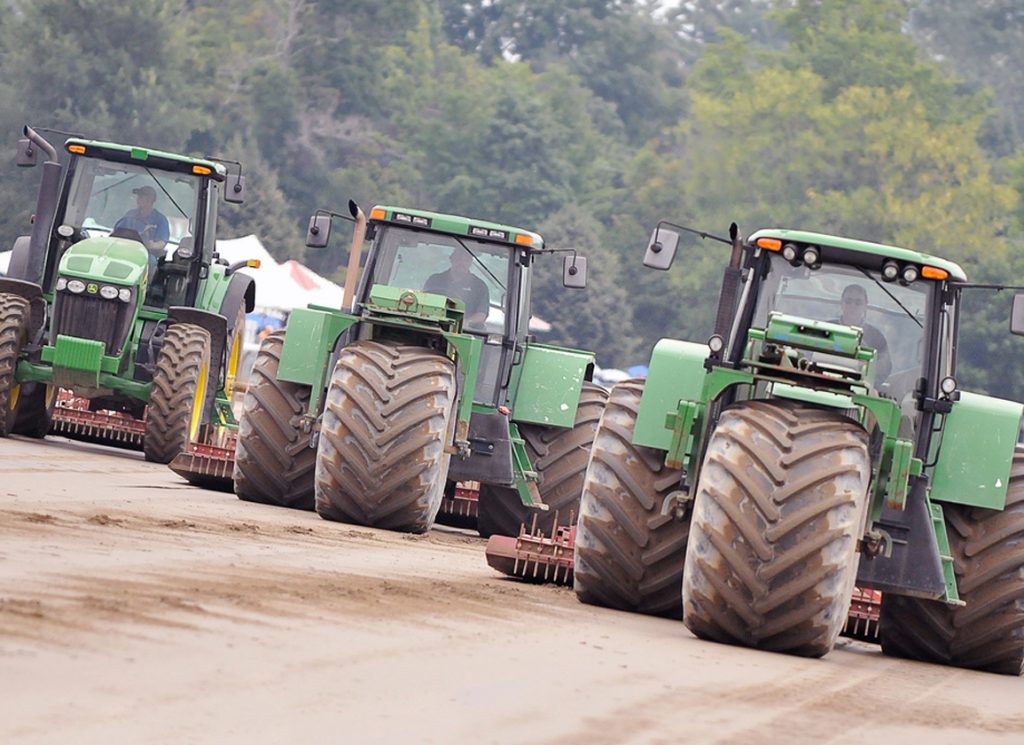
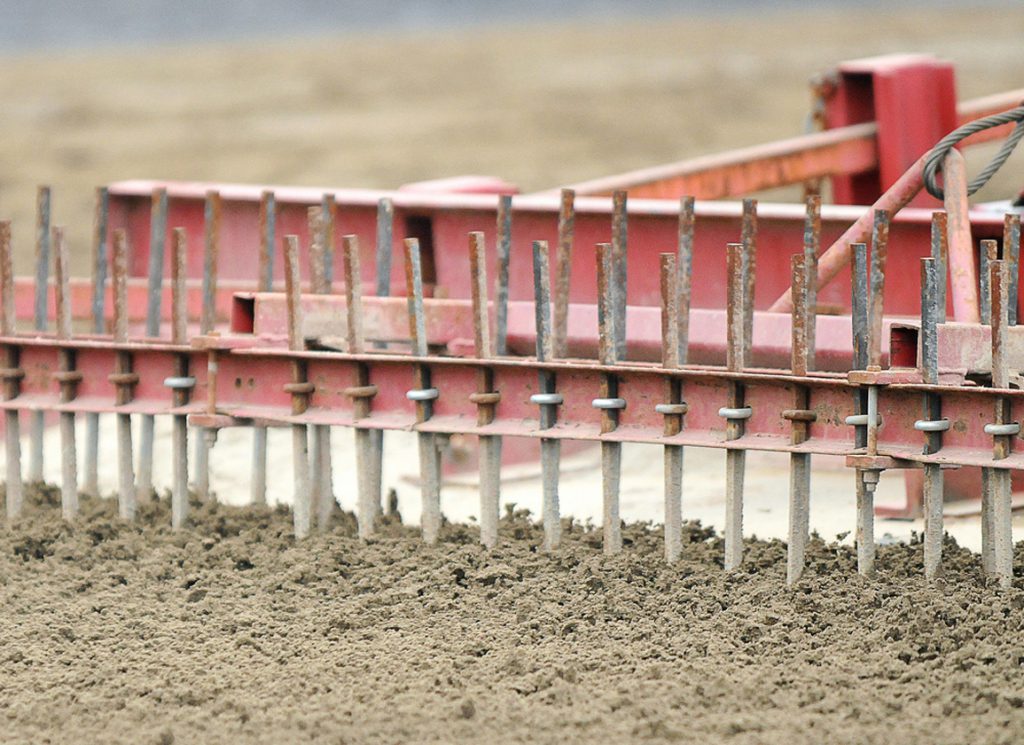
“If I'm putting down 100,000 gallons of water,” Banno said, of the details recorded. “If we use harrows for the first few races and we then switch to floats. If it rains–things like that.”

But as someone “more comfortable with dirt and mud than documentation,” ducks and water would hardly be analogized in the way Banno's taken to the task. “I'm hoping it gets a little more streamlined,” he admitted. Efficiencies can also be made elsewhere.

“I have a wish list every year,” said Banno, pointing out that his crew is working with equipment that is, in some cases, more than 40 years old.

“I'm sure many smaller racetracks have to deal with that, too,” said Banno, pointing out that new equipment is both pricey–new floats or harrows can run up to $25,000 each–and fairly limited in supply.

“As far as I can tell, there's only two vendors that sell this equipment, and one of them doesn't really supply too many things anymore,” he said.

The current Thistledown meet ends Oct. 14 before kick-starting once again next spring.

With more than six months between now and then, Banno has ample time on his hands to prepare for HISA's pre-meet testing requirements. Many other meets are scheduled to launch in the interim.

This is where Peterson, who founded the non-profit Racing Surfaces Testing Laboratory, is expected to step in.

“It doesn't tell you anything”

HISA is in the final stages of reaching an agreement with Peterson for his organization to oversee these pre-meet stipulations.

“Our agreement is to ensure that HISA gets what information it needs when we go to the racetracks to do the testing,” said Peterson. Not that he anticipates the same degree of involvement at all tracks.

Many of the larger, more prestigious tracks already meet and often exceed the baseline track demands under HISA. Take moisture content readings–what should be measured daily–with Fair Grounds “a good example,” said Peterson.

“I can tell you what the moisture content was measured at 24 points [around the track] in 2010 at Fair Grounds, every day of the race meet,” he explained.

But not all U.S. track superintendents currently use the requisite tool to measure moisture content–a funkily called time domain reflectometry device. Those that don't typically gauge it the old-fashioned way, grabbing a clump of dirt and squeezing it with their hand. Or through the feel of the equipment on the track.

The good news is that a time domain reflectometry device will set the buyer back around $1,400–hardly a bank-breaker. Nor do these instruments require a PhD in engineering.

“Incredibly simple,” Peterson said, about the device's ease of use. “You just stick it in, press the button.”
Sarah Andrew

For run-ragged superintendents at under-resourced tracks, arguably the biggest headache under HISA's new regime has proven the time and discipline involved in keeping daily testing and maintenance logs.

Some of the tracks already affiliated with the Racing Surfaces Testing Laboratory use the organization's online portal to record information, though Peterson admits it can still prove laborious, the database something of a Bronze Age relic of the early digital era.

That old software, however, is undergoing a digital facelift. “The new version with The Jockey Club is going to be a lot more user-friendly,” said Peterson. That revamped software will undergo beta-testing at the Keeneland fall meet.

Which leads to the ultimate aim of what Peterson describes as the wholesale collection of “standard data taken in a consistent fashion out of a lot of tracks”: the ability to refine the information to better determine what track surface maintenance practices improve equine safety–and those that don't.

“It doesn't tell you anything,” said Peterson, dismissive of the Clegg hammer–a device measuring hardness and compaction that is still widely used around U.S. racetracks.

Then there's the issue of sealed tracks. In California, for example, horses are not permitted to train on such a surface. According to Peterson, that reticence is probably unfounded.

The “largest study to date from the Equine Injury Database [EID]” found “no significant difference when comparing off dirt versus regular dirt track for risk factors,” Peterson said.

The question then becomes: How soon can we expect the data collected under HISA to bear fruit?

“It's going to take a lot of data,” said Peterson, comparing it to the evolution of the EID.

“The first four or five years, I remember it wasn't clear that the EID was going to contribute any meaningful understanding of catastrophic injuries,” he said. “It took a lot of data, even with full participation.”

Given the steadily shifting sands of public opinion toward horse racing, there's a chance some tracks with dicey safety records might not have that four- or five-year leeway.

“This surface is not right,” warned trainer Kevin Eikleberry during an Arizona racing commission meeting before the 2021-22 Turf Paradise meet when even the commission's head veterinarian bemoaned a lack of thorough and consistent surface maintenance standards.

With a change of crucial track personnel at the Arizona facility in the interim, however, expectations are noticeably higher one year on.
Coady

“HISA would absolutely react”

“We've had to make sure the banking is how we want it,” explained Wood, before ticking off a long grocery list of other preparations already conducted at the track, including removing “a lot” of material from the existing surface, and adding tons of new sand and bark, the latter for cushioning.

“All these things should help,” said Wood, before adding that “you're still going to have to have the other guys, the vets and such, do their job” to meaningfully shift the needle.

According to George Lopez, the newly minted track superintendent at Turf Paradise–himself a former protégé of the Wood academy of track management–the facility has also splashed out on new equipment.

This includes a new grader–used to redistribute surface materials–and two new water trucks. “We also have two good tractors now,” said Lopez, who describes his new job as a “challenge” to relish.

“I'm very confident and I'm very sure we're going to have a really good, safe meet this time,” he said.

But what if the meet resumes this November and safety expectations fall short once more?

Stressing the “multifactorial” nature of equine injury, McGovern said that in such an instance, the new federal authority would “immediately” get involved, though stopped short of outlining a clear set of potential actions.

“Getting involved may mean talking to management, talking to the track superintendent, sending Mick [Peterson] to look at the track surface, looking at necropsies, looking at training methods,” McGovern said. “HISA would absolutely react to any track that had numbers as significant as we have seen at Turf Paradise last year.”

The post Racetrack Surfaces: Where HISA’s Rubber Meets the Road appeared first on TDN | Thoroughbred Daily News | Horse Racing News, Results and Video | Thoroughbred Breeding and Auctions.

Source of original post

Verified by MonsterInsights