We're less than three months away from the first Saturday in May, which means it's time for detailed looks at the horses that could fill the Kentucky Derby starting gate with Andrew Champagne of Catena Media and The Saratogian's Pink Sheet.
Check the Paulick Report every week for updated rankings that include news, notes, and opinions on the 3-year-olds that figure to take center stage.
This season's Kentucky Derby preps have come and gone. Barring defections, the top 20 spots on the Derby leaderboard are locked up, and we know which horses are likely to enter the starting gate on the first Saturday in May.
Up until this point, this list had been a hybrid of one handicapper's opinion and runners likely to make the field. Now, though, we can exclusively focus on the top 20 horses on the leaderboard.
Let's take a look!
Kentucky-bred contenders will be highlighted in red, and will receive additional analysis into their breeders, broodmares, and auction histories. Pedigree notes are written by Joe Nevills.
#1: Epicenter

Pedigree: Not This Time – Silent Candy (by Candy Ride)
Owner: Winchell Thoroughbreds
Trainer: Steve Asmussen
Kentucky Derby points: 164
Epicenter didn't just win the Grade 2 Louisiana Derby. He did it in exactly the right way. He showed he could rate just off the speed, even taking some dirt in his face going up the backstretch. When called upon, he swooped past the front-runners and had plenty left late. It was as perfect a final prep as the connections could've hoped for, and he may very well be your Kentucky Derby favorite.
Epicenter was bred in Kentucky by Westwind Farms, out of the Grade 3-placed stakes winner Silent Candy. He sold for $260,000 at the 2020 Keeneland September Yearling Sale. Westwind Farms bought Silent Candy pregnant to Scat Daddy for $130,000 in 2014.
#2: Taiba

Pedigree: Gun Runner – Needmore Flattery (by Flatter)
Owner: Zedan Racing Stables
Trainer: Tim Yakteen
Kentucky Derby points: 100
An unraced maiden in early-March, Taiba emerged as a possible Kentucky Derby favorite with a win in the G1 Santa Anita Derby. He topped stablemate Messier and San Felipe winner Forbidden Kingdom and did so in professional fashion, looking like anything but a lightly-raced 3-year-old going two turns for the first time. Can a horse with just two starts under his belt win the Kentucky Derby for the first time since 1883? We'll find out in just a few short weeks.
Taiba was bred in Kentucky by Bruce Ryan, out of the 14-time stakes-winning Flatter mare Needmore Flattery. The dam was a homebred for Ryan and Tim Hamm's Blazing Meadows Farm. Taiba sold as a yearling for $140,000 at the 2020 Fasig-Tipton Kentucky Fall Yearling Sale, and he later brought $1.7 million at the following year's Fasig-Tipton Gulfstream Selected 2-Year-Olds In Training Sale.
#3: Zandon

Pedigree: Upstart – Memories Prevail (by Creative Cause)
Owner: Jeff Drown
Trainer: Chad Brown
Kentucky Derby points: 114
Zandon needed to run well in the G1 Blue Grass to make the field. In rallying from way back beneath a masterful ride from Flavien Prat, he did just that and showed a lot of the traits one looks for in a potential Derby horse. Brown has yet to win the Derby, and this may be one of the better chances he's had to date.
Zandon was bred in Kentucky by Brereton C. Jones of Airdrie Stud, and the colt is the first foal to race out of the unraced dam. Zandon sold as a yearling for $170,000 from the Airdrie Stud consignment.
#4: Messier

Pedigree: Empire Maker – Checkered Past (by Smart Strike)
Owner: SF Racing, Starlight Racing, Madaket Stables, Robert Masterson, Jay Schoenfarber, Waves Edge Capital, Catherine Donovan, Golconda Stable, and Siena Farm
Trainer: Tim Yakteen
Kentucky Derby points: 40
I can't ding Messier too much for losing to Taiba in the Santa Anita Derby. He wasn't far off a pretty fast pace, and he was 10 lengths clear of that day's third-place finisher. It's entirely possible he needed the race off of a brief freshening, and as nice as it would've been to win it, it was another Derby that's long been the main goal for these connections. In running second, Messier punched his ticket to that dance, and he'll have every chance to turn the tables on his stablemate in that event.
#5: White Abarrio

Pedigree: Race Day – Catching Diamonds (by Into Mischief)
Owner: C2 Racing Stable and La Milagrosa Stable
Trainer: Saffie Joseph, Jr.
Kentucky Derby points: 112
White Abarrio jumped up a few spots after his win in the G1 Florida Derby, where he topped Charge It, Simplification, and Classic Causeway, among others. He's never lost at Gulfstream Park, and if his Florida form travels to Kentucky with him, he'll have every chance to give his young trainer his first Kentucky Derby victory.
White Abarrio was bred in Kentucky by Spendthrift Farm, and he is the first foal out of the Into Mischief mare Catching Diamonds. He sold as a newly-turned yearling for $7,500 at the 2020 OBS Winter Mixed Sale. Spendthrift purchased Catching Diamonds as a yearling for $425,000.
#6: Smile Happy

Pedigree: Runhappy – Pleasant Smile (by Pleasant Tap)
Owner: Lucky Seven Stable
Trainer: Ken McPeek
Kentucky Derby points: 70
Similar to Messier, who maintains a high spot despite losing to Taiba, I can't knock Smile Happy too much for his runner-up finish in the Blue Grass. He was wide around both turns and close to the pace on a day where Keeneland's main track wasn't kind to early speed. He still ran well, but was just second-best on the day. We know Smile Happy likes Churchill Downs, and the Derby will be the third start of his form cycle. He has every chance to be sitting on his best race when it matters most.
Smile Happy was bred in Kentucky by Moreau Bloodstock International Inc. and White Bloodstock LLC, out of the winning Pleasant Tap mare Pleasant Smile, whose four starters are all winners, also including the stakes-placed Wilko Rum, by Wilko. Smile Happy sold as a weanling for $175,000 at the 2019 Keeneland November Sale, and later brought $185,000 at the Keeneland September Sale.
#7: Charge It

Pedigree: Tapit – I'll Take Charge (by Indian Charlie)
Owner: Whisper Hill Farm
Trainer: Todd Pletcher
Kentucky Derby points: 40
Charge It made just the third start of his young career in the Florida Derby, which doubled as his first try around two turns. He ran in spurts, but did enough to finish second and sew up a spot in the Kentucky Derby field. Several accomplished horses finished behind him that day, and given his inexperience, he's certainly got the potential to move forward. Add in the presence of Hall of Fame trainer Todd Pletcher, and you have a runner that merits plenty of attention.
Charge It is a Kentucky homebred for Mandy Pope's Whisper Hill Farm, out of the Indian Charlie mare I'll Take Charge. Pope bought the dam as a yearling for $2.2 million at the 2013 Keeneland September sale.
#8: Mo Donegal

Pedigree: Uncle Mo – Callingmissbrown (by Pulpit)
Owner: Donegal Racing
Trainer: Todd Pletcher
Kentucky Derby points: 112
Mo Donegal, the winner of last year's G2 Remsen, added the G2 Wood Memorial beneath a perfectly-timed move from jockey Joel Rosario, who ran down Early Voting in the shadow of the wire. Rosario likely won't be aboard in Kentucky, but likely rider Irad Ortiz, Jr. is as good a replacement as one can hope to find at this stage.
Mo Donegal was bred in Kentucky by Ashview Farm and Colts Neck Stables. He brought $250,000 at the 2020 Keeneland September sale.
#9: Cyberknife

Pedigree: Gun Runner – Awesome Flower (by Flower Alley)
Owner: Gold Square LLC
Trainer: Brad Cox
Kentucky Derby points: 100
Cyberknife punched his ticket to Kentucky with a win in the G1 Arkansas Derby. Unlike heavy favorite Secret Oath and runner-up Barber Road, Cyberknife had a clean trip and made the most of it. His record looks far better if you toss the dud he ran in the G3 Lecomte, and about a month after having no 3-year-olds on the Derby leaderboard, Cox now has three in the field.
Cyberknife was bred in Kentucky by Ken and Sarah Ramsey, out of the Grade 2-placed stakes winner Awesome Flower, who the Ramseys claimed for $30,000 at Gulfstream Park in 2012. The colt sold for $400,000 at the 2020 Fasig-Tipton Selected Yearling Sale.
#10: Early Voting

Pedigree: Gun Runner – Amour d'Ete (by Tiznow)
Owner: Klaravich Stables
Trainer: Chad Brown
Kentucky Derby points: 50
Early Voting did everything but win in the Wood Memorial. While he made the lead, he had to work to get there, and he still had nearly enough to repel the challenge of Mo Donegal. These connections once skipped the Derby with a lightly-raced horse that went on to win the Preakness (Cloud Computing, in 2017), but as Brown noted in an interview with DRF's David Grening, the owner/trainer tag team had another Derby horse that year (Practical Joke).
Early Voting was bred in Kentucky by Three Chimneys Farm, and he sold as a yearling for $200,000. Three Chimneys bought Amour d'Ete, a half-sister to top sire Speightstown, as a yearling for $1.75 million.
[Story Continues Below]
#11: Simplification

Pedigree: Not This Time – Simply Confection (by Candy Ride)
Owner: Tami Bobo
Trainer: Antonio Sano
Kentucky Derby points: 74
Simplification finished third behind White Abarrio and Charge It in the Florida Derby, and in an age where many top 3-year-olds will have two preps under their belts, it's impressive to see four here. He won the G2 Fountain of Youth and Mucho Macho Man and was second in the G3 Holy Bull.
#12: Zozos

Pedigree: Munnings – Papa's Forest (by Forestry)
Owner: Barry and Joni Butzow
Trainer: Brad Cox
Kentucky Derby points: 40
Zozos ran well when second in the Louisiana Derby. He set a legitimate pace under pressure, and while he was no match for Epicenter, he held second and secured enough points to get him to Kentucky. The pedigree doesn't exactly scream “a mile and a quarter,” but the 1 3/16-mile distance of the Louisiana Derby didn't seem like too much of a problem. With only three starts under his belt, he may have more room to improve.
Zozos is a Kentucky homebred for Barry and Joni Butzow, out of the winning Forestry mare Papa's Forest. The Butzows purchased Papa's Forest as a yearling for $57,000 at the 2011 Keeneland September sale, and she made $233,593 on the racetrack.
#13: Barber Road

Pedigree: Race Day – Encounter (by Southern Image)
Owner: WSS Racing, LLC
Trainer: John Ortiz
Kentucky Derby points: 58
There's something to be said for a horse that just doesn't run a bad race. With the exception of his debut, he's never been worse than third, and that includes five starts in stakes company. He salvaged second behind Cyberknife in the Arkansas Derby, and in doing so, he earned enough Derby points to make the field.
Barber Road was bred in Kentucky by Susan Forrester and Judy Curry, out of the unplaced Southern Image mare Encounter. The mare was a $1,000 purchase out of the 2015 Keeneland November Sale by Scott Conlee, who bred Encounter's future foals in partnership with Forrester and Curry until the latter two acquired full ownership. Barber Road sold as a weanling for $15,000 at the 2019 Keeneland November Sale.
#14: Tiz the Bomb

Pedigree: Hit it a Bomb – Tiz the Key (by Tiznow)
Owner: Magdalena Racing
Trainer: Ken McPeek
Kentucky Derby points: 110
All systems appear “go” for Tiz the Bomb to try dirt again on the biggest stage possible. After an early-season misfire, he won back-to-back Derby preps over Turfway Park's synthetic surface, including the G3 Jeff Ruby Steaks (now a 100-point prep). He's got tons of talent, and the distance shouldn't be an issue given his pedigree…but can he run on dirt?
Tiz the Bomb was bred in Kentucky by Spendthrift Farm, out of the winning Tiznow mare Tiz the Key. McPeek, acting as agent, purchased Tiz the Bomb for $330,000 at the 2020 Fasig-Tipton Kentucky Select Yearling Sale. Spendthrift bought Tiz the Key as a yearling for the same price at the 2012 Keeneland September Sale.
#15: Tawny Port

Pedigree: Pioneerof the Nile – Livi Makenzie (by Macho Uno)
Owner: Peachtree Stable
Trainer: Brad Cox
Kentucky Derby points: 60
As it turned out, Tawny Port didn't need to run in the G3 Lexington to earn a spot in the Kentucky Derby. However, his connections kept him in the race, and their optimism was rewarded with a professional score. He showed he could run well on dirt, but he'll likely need to take a significant step forward in order to contend against the division's heavy hitters next month.
Tawny Port was bred in Kentucky by WinStar Farm, out of the Grade 2-placed stakes winner Livi Makenzie. The colt sold to Fort for $430,000 at the 2020 Keeneland September Yearling Sale. WinStar Farm bought Livi Makenzie as a broodmare prospect for $190,000 at the 2014 Keeneland November Sale, and the operation sold her pregnant to Always Dreaming for $30,000 at the same sale in 2020.
#16: Morello

Pedigree: Classic Empire – Stop the Wedding (by Congrats)
Owner: Blue Lion Thoroughbreds, Craig Taylor, and Diamond T Racing
Trainer: Steve Asmussen
Kentucky Derby points: 50
Morello lost all chance at the start of the Wood Memorial and ran last in that event. It was his first start around two turns, and while it's easy to say the race is a throw-out given his poor break, he also didn't do anything to answer the question, “can he go long?” His connections haven't ruled out a spot in the Derby, though, and he'd be safely in the field should they chart a course for that event.
Morello was bred in Kentucky by Robert B. Tillyer and Dr. Chet Blackey, out of the Congrats mare Stop the Wedding. The colt sold as a weanling for $140,000 at the 2019 Keeneland November Sale, then he brought $200,000 at the following year's Fasig-Tipton Select Yearling Sale. In 2021, Morello sold for $250,000 at the Fasig-Tipton Midlantic 2-Year-Olds in Training Sale. Stop the Wedding was an $11,000 purchase, pregnant to Cairo Prince, by Tillyer at the 2020 Keeneland January Sale.
#17: Un Ojo

Pedigree: Laoban – Risk a Chance (by A.P. Indy)
Owner: Cypress Creek Equine
Trainer: Ricky Courville
Kentucky Derby points: 54
Un Ojo had a very rough trip in the Arkansas Derby, but he seems to have recovered from that journey. A recent workout inspired his connections to keep the one-eyed New York-bred on the Derby trail, and his upset win in the G2 Rebel means he'll have more than enough points to go postward.
#18: Crown Pride

Pedigree: Reach the Crown – Emmy's Pride (by King Kamehameha)
Owner: Teruya Yoshida
Trainer: Koichi Shintani
Kentucky Derby points: 100
With his win in the Group 2 UAE Derby, Crown Pride ensured himself a spot in the Kentucky Derby field. Given the focus on stamina and longevity within the Japanese breeding program, it seems likely they'll win a Derby at some point. I'm just not sure this is the year that happens.
#19: Happy Jack

Pedigree: Oxbow – Tapitstry (by Tapit)
Owner: Calumet Farm
Trainer: Doug O'Neill
Kentucky Derby points: 30
A horse had to run third in the Santa Anita Derby, and a horse had to run third in the G2 San Felipe. This year, Happy Jack filled both spots, and he earned 30 Kentucky Derby points in doing so (enough to back into the field following a recent round of defections). O'Neill has won the Derby twice, but if he does it this year, it will be with one of the longest shots on the board.
Happy Jack is a Kentucky homebred for Calumet Farm, out of the placed Tapit mare Tapitstry. The breeder purchased Tapitstry for $100,000, pregnant to Tizway, at the 2015 Keeneland November sale.
#20: Summer Is Tomorrow
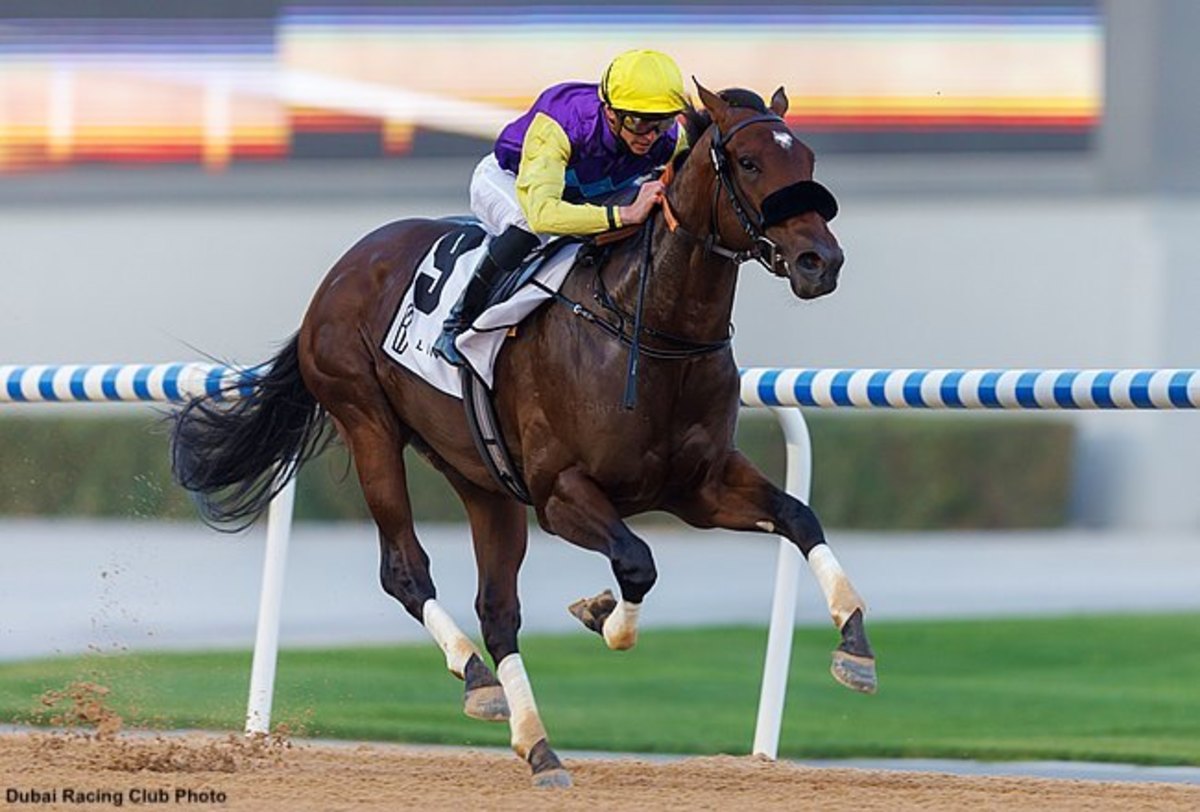
Pedigree: Summer Front – Always Tomorrow (by Badge of Silver)
Owner: Michael and Negar Burke
Trainer: Bhupat Seemar
Kentucky Derby points: 40
The connections of the UAE Derby runner-up have said they're planning to ship to Kentucky, since their colt has enough points to make the field. He's won two of seven starts in Dubai ahead of his trip to the U.S., and based on his current resume, it's tough to see him as anything other than the longest of longshots.
Summer Is Tomorrow was bred in Kentucky by Brereton Jones of Airdrie Stud, out of the winning Badge of Silver mare Always Tomorrow, who Jones bought for $20,000 at the 2015 Keeneland January Sale. The colt initially sold as a weanling for $25,000 at the 2019 Keeneland November Sale, and he later brought $169,743 at the 2021 Arqana Deauville Breeze Up Sale.
The post The Derby Bubble Presented By Kentucky-Breds: Hurry Up And Wait After Final Prep appeared first on Horse Racing News | Paulick Report.
Source of original post
