Holly Payne Caravella: Endurance, Sensitivity Make Thoroughbreds Perfect For Three-Day Eventing

Holly Payne Caravella, an international eventing competitor and trainer, tells Practical Horseman why she is devoted to the Thoroughbred breed. 

Thoroughbreds were ideally suited to the classic three-day eventing format, which included both roads-and-tracks and steeplechases phases in addition to the traditional cross-country, dressage and showjumping. With natural endurance, the Thoroughbred dominated this older style of eventing competition. 

When eventing eliminated the steeplechase and roads-and-tracks phases, Warmbloods began to infiltrate the upper-level ranks. 

Holly says that Thoroughbreds are often not as flashy in their movement as their Warmblood counterparts, which can negatively affect their dressage scores. Additionally, Warmbloods often don't have to be as well-trained as Thoroughbreds to excel in the dressage and showjumping phases. 

Eventing competitors are now seeking out “crossbreds” (Warmbloods with Thoroughbred blood), but many riders are truly interested in the horse's breeding – they want to be sure their mount has enough Thoroughbred blood to be competitive in the cross-country phase. 

Holly finds most Thoroughbreds easier to train than Warmbloods; they are more spatially aware of their bodies, their brains work quickly and they tend to stay naturally fit with less conditioning. Though Thoroughbreds can be more sensitive, this can become an advantage once a relationship is established, she explains. 

[Story Continues Below]

Thoroughbreds are making a comeback in competition rings in a big way. Holly says programs like the Jockey Club's Thoroughbred Incentive Program and the Retired Racehorse Project's Thoroughbred Makeover are highlighting what great athletes these horses can be. 

This is a positive thing, she notes, driving up the price of retired racehorses, which in turn is a boon for horse welfare. It encourages racehorse owners to potentially race the horses a bit less in an effort to retire them sound and encourage a post-racing riding career. 

Click here to learn what Holly looks for in an eventing prospect. 

The post Holly Payne Caravella: Endurance, Sensitivity Make Thoroughbreds Perfect For Three-Day Eventing appeared first on Horse Racing News | Paulick Report.

Source of original post

Kentucky Derby Picture: Who’s In, Who’s On The Bubble?

Now that all the points have been awarded for this year's Road to the Kentucky Derby series, it's time to take a closer look at which 3-year-olds have made it into the starting gate on the first Saturday in May.

Only the top 20 points-earners are eligible for that coveted slot, with those just below them on the list hoping for a late defection in order to make the field.

The full points leaderboard is available here: Road to the Kentucky Derby Leaderboard

In order of points earned, the top 20 headed for the Run for the Roses are:

1 – Epicenter (164)

Trainer: Steve Asmussen

Owner: Winchell Thoroughbreds

Sire: Not This Time

Major Preps: won both the G2 Louisiana Derby and G2 Risen Star

Epicenter (inside) works at Churchill on April 17

2 – Zandon (114)

Trainer: Chad Brown

Owner: Jeff Drown

Sire: Upstart

Major Preps: won the G1 Blue Grass

Zandon wins the Blue Grass Stakes at Keeneland

3 – White Abarrio (112)

Trainer: Saffie Joseph, Jr.

Owner: C2 Racing and La Milagrosa

Sire: Race Day

Major Preps: won the G1 Florida Derby and G3 Holy Bull

White Abarrio, with Junior Alvarado aboard, breezes at Gulfstream Park on April 17

4 – Mo Donegal (112)

Trainer: Todd Pletcher

Owner: Donegal Racing

Sire: Uncle Mo

Major Preps: won the G2 Wood Memorial and G2 Remsen

Mo Donegal gallops at Churchill Downs on April 18

5 – Tiz the Bomb (110)

Trainer: Ken McPeek

Owner: Magdalena Racing (lessee)

Sire: Hit It A Bomb

Major Preps: won the G3 Jeff Ruby Steaks

Tiz the Bomb works at Churchill Downs on April 16

6 – Cyberknife (100)

Trainer: Brad Cox

Owner: Al Gold

Sire: Gun Runner

Major Preps: won the G1 Arkansas Derby

Cyberknife works at Churchill Downs on April 16

7 – Crown Pride (100)

Trainer: Koichi Shintani

Owner: Teruya Yoshida

Sire: Japan-bred son of Reach the Crown (Sunday Silence grandson)

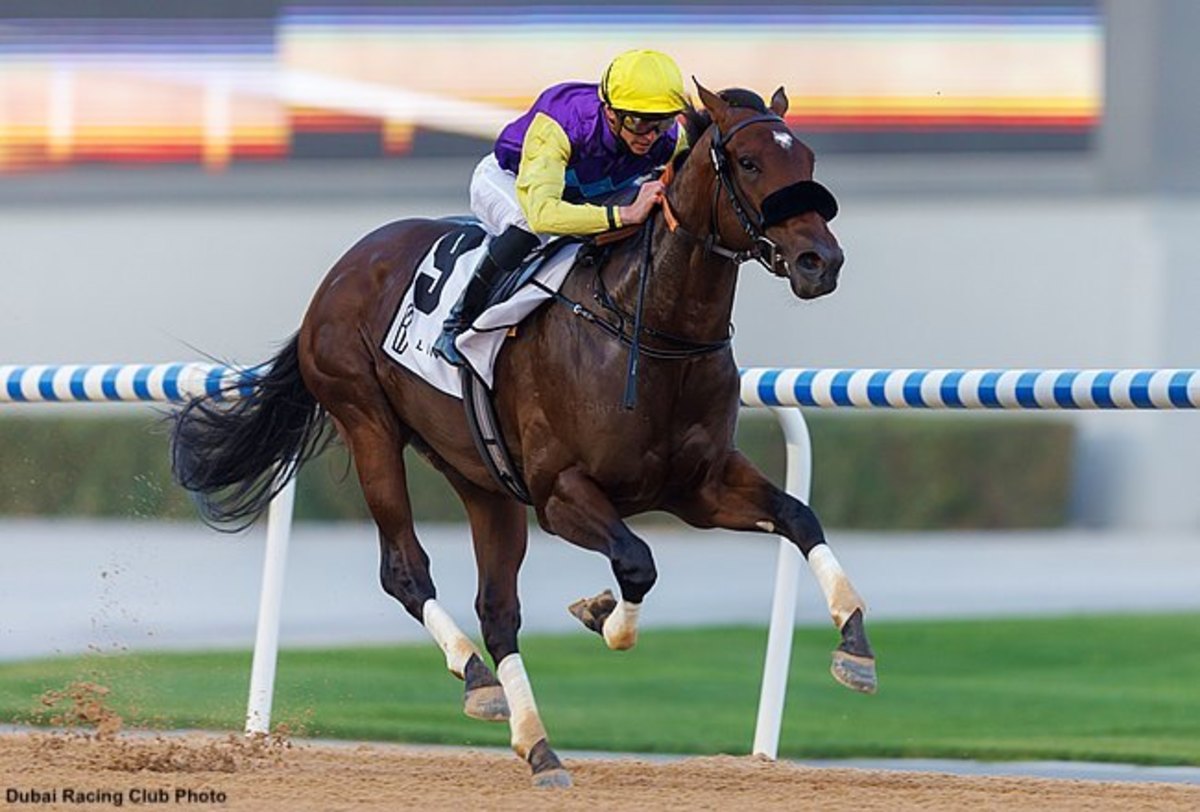
Major Preps: won the G2 UAE Derby

Crown Pride gallops at Churchill Downs on April 18

8 – Taiba (100)

Trainer: Tim Yakteen

Owner: Amr Zedan

Sire: Gun Runner

Major Preps: won the G1 Santa Anita Derby in just his second career start

Taiba winning the Santa Anita Derby

9 – Simplification (74)

Trainer: Antonio Sano

Owner: Tami Bobo

Sire: Not This Time

Major Preps: won the G2 Fountain of Youth

Simplification breezes on April 15 at Gulfstream Park

10 – Smile Happy (70)

Trainer: Ken McPeek

Owner: Lucky Seven Stable

Sire: Runhappy

Major Preps: won the G2 Kentucky Jockey Club

Kentucky Jockey Club Stakes winner Smile Happy

11 – Tawny Port (60)

Trainer: Brad Cox

Owner: Peachtree Stable

Sire: Pioneerof the Nile

Major Preps: won the G3 Lexington

Tawny Port strikes for first win on dirt in Lexington Stakes

12 – Barber Road (58)

Trainer: John Ortiz

Owner: WSS Racing

Sire: Race Day

Major Preps: ran second in the G1 Arkansas Derby and third in G2 Rebel

Barber Road gallops at Oaklawn Park on March 26

13 – Un Ojo (54)

Trainer: Ricky Courville

Owner: Cypress Creek Equine and Whispering Oaks,

Sire: Laoban

Major Preps: won the G2 Rebel

Un Ojo at Oaklawn Park on March 30

14 – Early Voting (50)

Trainer: Chad Brown

Owner: Klaravich Stables

Sire: Gun Runner

Major Preps: won the G3 Withers and ran second in G2 Wood Memorial

Early Voting after his win in the G3 Withers

15 – Morello (50)

Trainer: Steve Asmussen

Owner: Diamond T, Blue Lion, and Craig Taylor,

Sire: Classic Empire

Major Preps: won the G3 Gotham

Morello after his win in the G3Gotham

16 – Messier (40)

Trainer: Tim Yakteen

Owner: SF Racing et. al.

Sire: Empire Maker

Major Preps: won the G3 Bob Lewis and ran second in G1 Santa Anita Derby

Messier winning the Robert B. Lewis Stakes under John Velazquez

17 – Zozos (40)

Trainer: Brad Cox

Owner: Barry and Joni Butzow

Sire: Munnings

Major Preps: ran second in the G2 Louisiana Derby

Zozos wins an allowance race at Oaklawn Park

18 – Summer Is Tomorrow (40)

Trainer: Bhupat Seemar

Owner: Michael Hilary Burke and Negar Burke

Sire: Summer Front

Major Preps: ran second in G2 UAE Derby

Summer Is Tomorrow wins the Al Karama Stakes at Meydan

19 – Charge It (40)

Trainer: Todd Pletcher

Owner: Mandy Pope

Sire: Tapit

Major Preps: ran second in the G1 Florida Derby

Charge It gallops at Churchill Downs on April 18

20 – Happy Jack (30)

Trainer: Doug O'Neill

Owner: Calumet Farm

Sire: Oxbow

Major Preps: ran third in G1 Santa Anita Derby

On the Bubble

The next few horses in terms of points earned are:

  • Pioneer of Medina (25) – Trained by Todd Pletcher for Sumaya U. S. Stables, son of Pioneerof the Nile ran third in G2 Louisiana Derby
  • In Due Time (24) – Trained by Kelly Breen for Edge Racing, Medallion, and Parkland, son of Not This Time ran third in G3 Lexington and second in G2 FOY
  • Ethereal Road (22) – Trained by D. Wayne Lukas for Julie Gilbert and Aaron Sonos, Quality Road colt ran second in G2 Rebel
  • Rich Strike (21) – Trained by Eric Reed for RED TR-Racing, son of Keen Ice ran third in G3 Jeff Ruby Steaks

The post Kentucky Derby Picture: Who’s In, Who’s On The Bubble? appeared first on Horse Racing News | Paulick Report.

Source of original post

Coming Soon: You May Need To Register With HISA As July 1 Deadline Approaches

Attendees of the annual convention for the Association of Racing Commissioners International (ARCI) last week had a lot of questions for the new national authority that is set to begin its regulatory takeover. On the convention's first day, Horseracing Integrity and Safety Authority CEO Lisa Lazarus gave commissioners a few more details about what to expect on July 1, including a phase-in of the racetrack safety accreditation program as well as more immediate rule changes, including some impacting crop use.

On the conference's second day, commissioners heard from attorneys and technology experts to field questions about what to expect.

Attorneys have voiced concern or confusion about how transparent the new agency will actually be, and as with many things regarding HISA, no one is totally sure yet whose stance is correct. Thus far, HISA has asserted that it does not fall under the Federal Advisory Committee Act, a 1972 law that requires certain committees publish notice of upcoming meetings and open those meetings to the general public. Some attorneys read the Federal Advisory Committee Act as having a narrow scope in terms of the types of bodies it may apply to, and it's not clear whether HSIA could be one of them. This could also exempt HISA from open records act requests.

Ed Martin, president and CEO of ARCI, said that the organization had formally encouraged HISA to consider writing open records requirements into its code. Additionally, Martin expressed frustration with what he characterized as poor communication from HISA to racing commissioners. Martin says commissioners were not given a heads-up when HISA determined it would not be positioned to take over drug testing responsibilities on July 1 of this year, and found out only when a public announcement was made.

“That was kind of a surprise for many of the jurisdictions because there was no advance warning or discussion,” Martin said.

Martin urged that open communication, both with the public and with key members of the industry, would be the best path forward for the new authority as it begins the complex process of taking over racing regulation.

Some attendees had questions about how the process of appealing a stewards' ruling would change under the new authority. John Roach, interim HISA general counsel, explained that there would still be layers of appeals possible under the new system. Using a whip rule violation as an example, Roach said the new system would have the stewards making a ruling, and if the rider appeals, that would go through a layer of review at the Authority. If the Covered Person wants to appeal HISA's decision on the rule violation, they could request a Federal Trade Commission administrative law judge hear an appeal, which the FTC does not have to grant. If an FTC administrative law judge does hear the appeal and upholds the stewards' ruling, the Covered Person then would go on to federal court.

It's not clear how the timeline for this appeals process would compare to the existing system, in which a licensee appeals a stewards' decision to the state racing commission, then to local court, then to state appeals court and state supreme court before moving on to the U.S. Supreme Court if applicable. (Relatively few appeals cases of suspensions or other racing regulation violations are heard by the U.S. Supreme Court.)

In another presentation, HISA technology director Steve Keech walked the audience through a demonstration of the registration process for HISA. Anyone who's considered a Covered Person under the Horseracing Integrity and Safety Act will be required to register with the new authority. This includes most people who are currently licensed by state racing commissions, with the exception of people who do not directly participate in racing, like food vendors or cleaning staff, etc.

There will be no fee to register with HISA. Registration will allow the authority to track continuing education credit, compile licensing and regulatory action information, and more.

Users will be asked to enter their existing state license information into HISA's registration portal. The HISA system has been integrated with state license databases, InCompass, ARCI, and others to scrape all license information for a given person and compile it into one place. The system will use third party address verification systems to ensure contact information entered is accurate, based on that person's previous known locations.

The registration process is available in both English and Spanish, and Keech said he has been working with jockeys from various Central and South American countries to be sure the Spanish language version is appropriate for all dialects so the instructions are as clear as possible.

Horses will also need to be registered, which will require the Responsible Person for that horse (usually, though not always, the trainer) entering the horse's vaccine history and uploading health paperwork into the system, along with noting the horse's location. Location information will need to be updated anytime the horse moves from one place to another. Keech said his team is still working on how to import large batches of horse registration information for trainers with large barns who may have some records already stored in InCompass.

It's not yet clear how the claim or sale of horses will work in this system, or what information will be transferred between Responsible Persons.

It's also unclear how HISA or other authorities will enforce the requirement that all Covered Persons under the new law actually complete the registration process. As several commission staffers pointed out in the question and answer portion of the presentation, it's already a battle to get some stable staff licensed with the state, and it's not uncommon to discover barns have employees who are not licensed.

Keech is hopeful, however, that the HISA system, which will integrate information from databases that are currently separate, may open up new possibilities to using that data in a productive way. Veterinarians, for example, will be required to enter information about their veterinary as well as their racing licenses into the database, which could help states hunt for qualified practitioners with the right licensing if they find themselves in the midst of a veterinarian shortage. It will also make it easier for authorities to see a given person's license history in aggregate, as well as a horse's veterinarian's list history across jurisdictions.

The registration system is on target to launch July 1, and on that date, the authority's rules state that all Covered Persons must be registered with HISA. The system is not yet accessible to the public.

The post Coming Soon: You May Need To Register With HISA As July 1 Deadline Approaches appeared first on Horse Racing News | Paulick Report.

Source of original post

Baffert, Zedan Again Denied Relief in KY Court of Appeals

Two weeks after a Kentucky Court of Appeals judge denied trainer Bob Baffert and owner Amr Zedan an “emergency” stay in their fight against the penalties levied against them by the Kentucky Horse Racing Commission (KHRC) over Medina Spirit (Protonico)'s betamethasone positive in the 2021 GI Kentucky Derby, a separate three-judge panel denied a motion for interlocutory relief that will keep the case from proceeding any deeper in that same court.

The Apr. 15 ruling did, however, note that the judges' order was not a ruling on the merits of the arguments related to Baffert's 90-day suspension and $7,500 fine or Zedan's being stripped of both his Derby-winning status and Medina Spirit's share of the purse.

On Mar. 21, a Franklin Circuit Court judge initially denied the trainer and owner's request to force the KHRC to impose any sort of stay on those sanctions. Baffert and Zedan then decided to kick the Franklin court's denial up to the higher Court of Appeals on Mar. 24. When the appeals court judge ruled against the “emergency” request Apr. 1, Baffert and Zedan asked for further court intervention via requests for interlocutory relief and a chance to make oral arguments on their own behalf.

Separately, the KHRC had also filed to dismiss the entire proceeding, but that motion was also denied within the same three-judge ruling (which effectively stopped the case from going forward anyway with the denial of Baffert and Zedan's request for interlocutory relief).

“[T]he circuit court did not err in determining that the equities of the situation mitigate against injunctive relief,” the three-

judge order stated. “We echo the circuit court's assessment that 'it is imperative to ensure public confidence in the Commonwealth's signature industry'…

“[T]he penalties the Stewards assessed upon Baffert may ultimately be reversed [but] Baffert's interest in staying enforcement of the Stewards' Ruling does not necessarily trump the public interest in the integrity of Thoroughbred horse racing and the safety of the horses,” the Apr. 15 order continued.

Baffert is now two weeks into his 90-day suspension, which is being appealed at the KHRC level. Depending on timing, the suspension could very well run its course before that administrative process gets underway or even results in a decision.

The Hall-of-Fame trainer's legal team had previously argued in court filings that “Baffert's income from racing is almost entirely linked to a horse's performance in a given race. There is simply no way to conclusively determine how his horses would have performed in the races taking place during his suspension. Missing out on the prestigious Triple Crown races (and many others) in 2022 is irreparable harm to a trainer like Baffert as the opportunity to compete in them can never be regained and the lost opportunity is not subject to remuneration.”

The three-judge Apr. 15 ruling dissected Baffert and Zedan's motions as follows:

“Neither Movants' motion for emergency relief, disposed of by this Court's April 1, 2022, Order, nor their motion for interlocutory relief, advances any specific argument as to 1) how or why Movant Zedan Racing Stables, Inc., will suffer irreparable harm from the circuit court's denial of a temporary injunction; or 2) what particular interim relief Zedan Racing Stables, Inc., seeks from this Court…

“In the April 1, 2022 Order, the Court pointed out that the motions, as they pertain to Zedan Racing Stables, Inc., are lacking in these respects…. Despite the Court's drawing attention to these omissions, Zedan Racing Stables, Inc., has not filed a motion for leave to supplement the motion for interlocutory relief, nor has Amr F. Zedan moved to intervene herein. In light of this failure to act, the Court denies the motion for…relief as it pertains to Zedan Racing Stables, Inc., and will consider the motion with respect to Baffert only.”

The order continued: “The circuit court's March 21, 2022, order addressed two separate claims made by Baffert [but] the statutory procedure under [Kentucky state law] is a complete and adequate remedy in itself, thus undermining any claim that Baffert could have properly sought a temporary injunction in the circuit court…

“This Court lacks a sufficiently developed record to assess Baffert's contentions of error,” the Apr. 15 order summed up. “Furthermore, because we have concluded the circuit court did not abuse its discretion in finding that Baffert failed to show he would suffer irreparable injury in the absence of injunctive relief, resolving the question whether Baffert has shown a substantial question on the merits is not necessary to our decision today.”

The post Baffert, Zedan Again Denied Relief in KY Court of Appeals appeared first on TDN | Thoroughbred Daily News | Horse Racing News, Results and Video | Thoroughbred Breeding and Auctions.

Source of original post

Verified by MonsterInsights