With the global economy tottering in the Covid headwind, last year a lot of stallion farms went out of their way to help breeders with fee cuts. As a result, as I've previously suggested, the market's remarkable rally since means that the present trading environment represents a pretty historic opportunity. And that particularly applies to the next group in our series, as the first to have absorbed those cuts. (Even last year, it felt as though the rookies had been priced with the usual and necessary opportunism.) Especially because one or two of these, from that lowered base, have now received an extra trim of the kind customarily offered, in plainer times, for stallions beginning to lose the priceless commercial advantage of novelty.
His third book is always an early crossroads in a stallion's career. While the second might at least start to reflect the physical impression made by first foals, the third will be responding to some concrete evidence of their reception in the ring. If things have not gone well, in that initial test, then some breeders will tend to back off and wait until stock has been measured more rigorously on the racetrack.
Obviously there's no guarantee that the guy who tops the weanling averages will retain his primacy when finally reaching that stage, and vice versa. But it's no less clear that a depressing number of people will by then have disappeared over the horizon, the job done, meanwhile engaged on the next cycle of sires that remain spared the inconvenience of exposing their ability (or otherwise) actually to come up with runners.
As things stand, then, we must pick a precarious path between trying to harness the undeniable energies of the market-commercial esteem, after all, will hold up book sizes and so fill “the pipeline”–and keeping the faith with those that you think deserve a chance to reward it, once their stock finally gets somewhere near a starting gate. As such, each having come through his first market test in decent shape, we make no apologies for sticking by three stallions we've liked from the get-go.
With this particular intake, most roads have led to Spendthrift. In the first instance, that was simply because so many of its most coveted prospects were herded up there. Even with their reliably competitive pricing strategy, the late B. Wayne Hughes and his team launched the first, second and joint-third most expensive rookies in 2020. That felt like a pretty significant moment in the evolution of the aggressive commercial model that had revolutionised competition for mares in the Bluegrass.
But then, last year, you also had to factor in the characteristic lead taken by Hughes in cutting fees so purposefully. Rival farms will duly have to pardon Spendthrift's central role in the value conversation, at least for this instalment of our series, even though our top pick a) wasn't one of their headline recruits when starting out and b) was already priced too attractively to be one of the 15 of 21 stallions on the farm roster to take a cut last year.
As ever, however, these choices reflect just one person's highly subjective opinions. Different stallions fit different mares; different fees fit different pockets. But what I would say is that it's a good time to stick with any of this group that you do like, as you'll be taking the foals to market after they have actually started to show their wares on the track. That introduces a degree of volatility, and tends to drive nervous breeders elsewhere. But the odds for those who do get it right will certainly be rewarding.
Bubbling under: The $360,000 Audible filly that topped the fifth session at Keeneland November was the most expensive weanling sold by those taking their bow at the sales, but the WinStar stallion's $110,000 median was also outstanding. He was a pathfinder for his sire in stretching out for a Derby podium and, as a classier type, also leads a fresh wave in Into Mischief's career as a sire of sires. He covered over 400 mares in his first two seasons and duly holds his fee at $22,500. He has all the momentum he needs, but he's just competing with another son of Into Mischief who simply can't be dislodged from the podium at a much cheaper service.
Mitole was one of those that took a really businesslike cut at Spendthrift last year, slashed to $15,000 from $25,000. Having followed up his staggering debut book of 230 with one of 208, there will be a lot of people out there gratified that his pedigree has meanwhile received such a lift from the stellar sophomore endeavors of half-brother Hot Rod Charlie (Oxbow). That might feel especially useful for a son of the exported Eskendereya, but don't forget that Mitole was his second GI Met Mile winner in three crops. His first weanlings having performed in line with his opening fee, fourth in the averages, this brilliant racehorse finds himself precisely where the program would hope to have placed him at this stage.
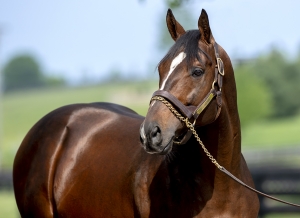 Bronze: PRESERVATIONIST (Arch-Flying Dixie by Dixieland Band) Airdrie, $10,000
This guy was always going to require a little patience, so it's no surprise that he couldn't repeat his opening three-figure book. But we can't just allow block-booking of the podium for stallions that churn through industrial numbers, in the idle hope that they will keep jumping through the market hoops until you discover, too late, that they don't sire runners!
A runner is exactly what you are entitled to expect from Preservationist, and I remain adamant that those who keep the faith will ultimately get their due reward. He offers everything we should be looking for in a young sire: a superb physical ($485,000 yearling, when Arch was a $30,000 cover); a pedigree without a single loose rivet, with sire and dam both tracing to King Ranch matriarchs; and elite performance, for instance in thrashing Catholic Boy (More Than Ready) by 4 1/2 lengths in the GII Suburban. (The runner-up went to market at more than twice the fee.)
A lack of precocity is perceived by some as the cardinal sin, but Preservationist's weanlings actually performed perfectly respectably (averaging just under $40,000) and he will run down those commercial hares in the end.
Silver: OMAHA BEACH (War Front-Charming by Seeking The Gold), Spendthrift, $30,000
The loss of Spendthrift's owner this summer has given the poignant look of a parting gift to the characteristically decisive lead he took on fees this time last year. Now the team continuing his work has given Omaha Beach another trim, from $35,000 to $30,000, even though he had appeared sportingly priced (notwithstanding his status as the most expensive of the intake) when starting out at $45,000.
This latest gesture to breeders is one that the horse hardly appeared to need. Last spring he precisely replicated his opening book, at 215 mares, and then did the necessary in his debut at the weanling sales, topping the averages at $142,692.
Bottom line, then, is that Omaha Beach has been given every possible chance to this point. And he really is abundantly equipped to seize it. Winning Grade Is at six and nine furlongs in the same campaign was as compelling a signpost as we could hope to find, nowadays, for the speed-carrying elixir we crave in stallions. As such, he must be counted a vital ambassador on the main track for a son of Danzig whose influence has proved so international.
It's not hard to figure out where he has found the genes to do that. He's a half-brother to champion Take Charge Brandi (Giant's Causeway) out of a half-sister to two other Grade I winners in Will Take Charge (Unbridled's Song) and Take Charge Indy (A.P. Indy), their dam Take Charge Lady (Dehere) herself a multiple elite scorer. He also doubles up War Front's damsire Rubiano behind his third dam. We know how Rubiano's half-sister gave us a monster dirt influence in Tapit, while the other three sires seeding the bottom half of Omaha Beach's third generation are Raise A Native, Buckpasser and Deputy Minister.
Omaha Beach looked pretty good value at his opening fee, as the market has immediately confirmed. He looked great value, last year, at $35,000. So what can we call him at $30,000? Even those who can afford to play at this level of the market appreciate that kind of saving. In relative terms, then, this is a very generous fee.
Gold: MAXIMUS MISCHIEF (Into Mischief-Reina Maria by Songandaprayer), Spendthrift, $7,500
We couldn't really offer a greater contrast to Preservationist than this blatant commercial formula. But from the outset Maximus Mischief had the look of a horse that could bring back memories for those clients of the farm who got his sire started, and everything has so far been functioning like clockwork. In this day and age, in fact, I find it mildly surprising that he could muster “only” 171 mares last spring after receiving 198 in his debut book.
His first weanlings sold every bit as briskly as one would hope, 26 of 31 finding a new home for an average $42,153–approaching six times his covering fee. With his record of precocity, Maximus Mischief looks tailormade for pinhookers and his yearlings will surely be high on the list for a winter in Florida. (Remember he was himself a $340,000 2-year-old at Timonium.)
Having disappeared after his first defeat, on his sophomore debut, Maximus Mischief went to market with a seamless juvenile record, beaten to a single call in three starts while opening up by an aggregate 17 lengths, the visuals underpinned by the fastest Beyer of the crop. We're familiar with Into Mischief upgrading his early mares, not least in producing some of his first sons to stud, so it counts for plenty that this guy's second dam also produced the tragic juvenile Grade I winner Secret Compass (Discreet Cat) from only three foals.
It's the easiest thing in the world to picture all this translating into a run at the 2023 freshman championship. If that happens, not only will this fee soon recede in the rear-view mirror: it will be those who stay aboard now who reap the benefits at ringside.
There really is a limit to how many horses like this, flaring brightly but briefly, we want to see shaping the breed. But if the purpose of this exercise is to identify value, then the modest stakes–and the potential odds of reward–are just too tempting to resist.

The post Values Sires for 2022, Part 3: First Yearlings appeared first on TDN | Thoroughbred Daily News | Horse Racing News, Results and Video | Thoroughbred Breeding and Auctions.
Source of original post
