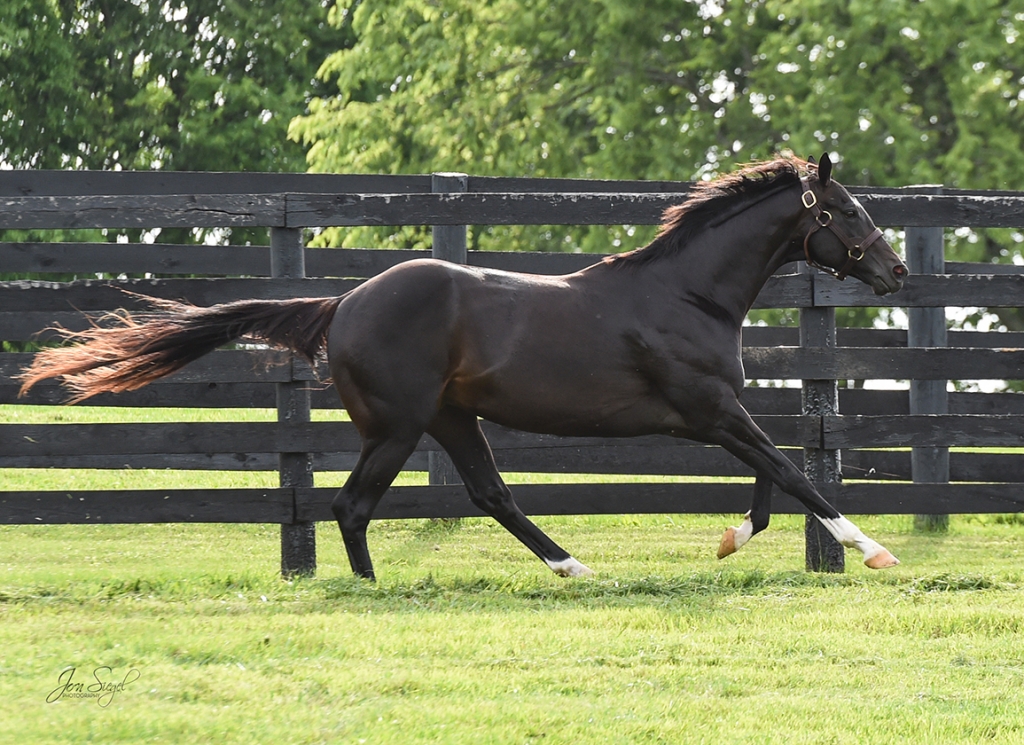
Gulfstream: Of A Revolution Aims To Stay Undefeated In Limehouse

Bassett Stables' Of a Revolution, undefeated through two starts, looks to keep his perfect record intact as he steps up to stakes company for the first time in Saturday's $100,000 Limehouse at Gulfstream Park.

The fifth running of the Limehouse and Glitter Woman for fillies, both sprinting six furlongs, are among five stakes for newly turned 3-year-olds worth $550,000 in purses on a New Year's Day holiday program headlined by the $150,000 Mucho Macho Man.

Post time for the first of 11 races is noon.

Championship Meet-leading trainer Saffie Joseph Jr. captured the 2021 Limehouse with Drain the Clock. Drain the Clock would go on to wins in the Claiborne Farm Swale (G3), Bay Shore (G3) and Woody Stephens (G1) and run second in the Fountain of Youth (G2) and Amsterdam (G2).

Like Drain the Clock, Of a Revolution has also begun his career with two straight wins before taking on stakes competition.

“This horse, from Day 1, has always showed a lot of talent. We call him Drain the Clock Jr.,” Joseph said. “He obviously has a long way to go to reach that standard but he's a nice horse. The first time out he won. The second time out he came off a layoff and beat a quality field. I thought he did it the right way. He missed the break and was still able to overcome that. We feel like he's very talented and he goes over there with a very big chance.”

Of a Revolution, by Maclean's Music, was favored in his May 29 debut at Gulfstream in a five-furlong maiden special weight, winning by a half-length over Cajun's Magic, who would come back to capture the FTBOA Florida Sire Dr. Fager and run second in the Affirmed and In Reality divisions.

“He was actually supposed to be an early kind of 2-year-old and we were going to take him to Saratoga after he won, and he got sick,” Joseph said. “So, we kind of got backed up on him and that's why it took us longer. We got him back and then we had to just wait around for a race.”

The wait ended Nov. 13, also at Gulfstream in a six-furlong optional claiming allowance where Of a Revolution was bumped and pinched back at the start but managed to work his way to the lead after a half-mile and sprinted clear to a 2 ½-length triumph over Summery, who also returns in the Limehouse. Third-place finisher Simplification is entered in the Mucho Macho Man.

“When he broke, I thought all chance was gone and he was still able to overcome it. He made a good move and he was able to sustain the move. I think he's a quality horse,” Joseph said. “We feel like he's going to become a good sprinter. He's all speed.”

Out of the Salt Lake mare Hot Spell, Of a Revolution is a half-brother to Hopkins, who ran second by a half-length to Bob Baffert-trained stablemate Shaaz in a Dec. 26 maiden special weight at Santa Anita. Hopkins earned a Beyer Speed Figure of 104 in defeat.

“The family is getting good, it looks like,” Joseph said. “We feel that he's very talented.”

Tyler Gaffalione has the assignment on Of a Revolution from Post 3 in a field of seven.

Lea Farms' Lightening Larry will be making his seventh career start and third straight in a stakes after finishing second to Make It Big in the seven-furlong Juvenile Sprint against fellow Florida-breds Oct. 30 at Gulfstream and Cattin the six-furlong Inaugural Dec. 4 at Tampa Bay Downs.

Make It Big, Of a Revolution's Joseph-trained stablemate, improved to 3-0 with a win in the Springboard Mile Dec. 17 at Remington Park, while Cattin ran fourth in the Affirmed and third in the In Reality.

“We love him. Last time in the stake at Tampa we just caught a little bit of a bad break there where we let the horse that ended up winning the race come up in between us and we should have moved down to the rail,” trainer Jeff Engler said. “But, live and learn. [Jockey] Romero [Maragh] even said he made a little bit of a mistake there but he still dug in, and [Cattin] is a nice horse, too. We just need a good break and a good trip and I think he's going to be right there again.”

Engler said Lightening Larry, first or second five times with two wins, had an excuse in his lone poor effort when he ran ninth after chasing the pace in the seven-furlong Affirmed Aug. 28. He came back six weeks later to take an optional claiming allowance at Gulfstream over the filly Muted, who returned with an 8 ½-length score against her own kind Nov. 11.

“The one race where he didn't finish on the board honestly wasn't his fault. He had a little stall accident where he had to get some stitches in his hind quarter, so he had missed like three weeks of training,” Engler said. “We kind of ran him in there before he was really ready so that was really a trainer fault. Now that he's back in regular training and on his regular breeze schedule he's always right there. He's just very aggressive and he loves the competition.”

Maragh gets the return call from Post 5.

“He's a nice horse and he loves to train. He's just a nice colt that loves his job. He's doing great. He's on go, and we're looking for good things,” Engler said. “He's grown up a lot and he's getting bigger and taller and I think in his 3-year-old year he'll really blossom.”

Monarch Stables, Inc.'s Last Leaf will take on the boys in her seasonal debut. In her only previous try against males, the Ron Spatz trainee won the five-furlong Hollywood Beach Sept. 25 over the Gulfstream turf. That effort came on the heels of a 10 ¾-length optional claiming allowance triumph 21 days earlier on a sloppy main track.

“I loved her turf sprint. She had a good turf sprint and I think she'll love that if we can get some more opportunities to do that. And, she loved the slop, too,” Spatz said. “She's doing good. She had a good work coming up to this, so all systems go.”

Last Leaf was third, beaten a length as the favorite, in a 5 ½-furlong sprint over Gulfstream's Tapeta surface Oct. 31. She was back on grass and stretched out to a mile for her most recent start, running fifth after being fractious in the gate of the Dec. 3 Wait a While.

“I didn't think she had a big fondness for the Tapeta when she ran, and she ran good. Then it was either go to Tampa to go in a six-furlong race or try her two turns,” Spatz said. “We decided to stay here and try the two turns and it didn't work out. She's a sprinter right now, and that's what we'll do. She's coming up good for it.”

Last Leaf drew the rail under Junior Alvarado and will carry low weight of 117 pounds as the lone filly in the field.

Also entered are Carl Hess Jr.'s Concrete Glory, who had a three-race win streak snapped when eighth in the Inaugural; O Captain, a 9 ¼-length maiden special weight winner in his lone start Aug. 14 at Gulfstream for trainer Gustavo Delgado; and Calumet Farm's Bueno Bueno, a winner of two straight at Ellis Park.

The post Gulfstream: Of A Revolution Aims To Stay Undefeated In Limehouse appeared first on Horse Racing News | Paulick Report.
Source of original post

It’s a World of Mischief

As a year of unprecedented achievement draws to a close, the distribution of laurels among our champion stallions must first and foremost celebrate their sheer potency. For while we already know Into Mischief to be a phenomenon, he demands fresh admiration in sealing his third consecutive general sires' championship with a prizemoney haul just shy of $25 million, shattering the $22,507,940 record he set in his second; the work of 260 winners, similarly raising the bar giddily on the 221 who compiled his first. As the revelation of the year, equally, Gun Runner reached uncharted territory in the freshman's table, his tally of $4,209,350 surpassing the record of $3,717,490 set by Uncle Mo in 2015.

For these twin peaks to have been scaled simultaneously, however, also requires us to reflect on what such a historic coincidence might tell us about the changing nature of this business. Whatever else he achieves, Into Mischief is presumably going to end up the most prolific champion sire in the story of the breed, measured by simple volume of paternity. Yet that does not seem to have eroded his efficiency. His ratios, in producing elite stock this year, remain competitive or better with the other leading stallions, and best of all–if only just–in terms of black-type performers at almost precisely 16%.

(All figures, incidentally, are correct on TDN's database through Dec. 29. In any final analysis, minor updates will obviously be required to incorporate the final two days' sport of the year.)

On one level, you couldn't ask for better evidence of the functionality we seek–but rarely find–in every stallion prospect. In the axiom of one of the masters of this trade, John Sikura, the genetic switch is either “on” or “off”. Into Mischief famously overcame the modesty of his first covers, in both quality and quantity, to brandish an unmissable capacity to impart prowess to his stock. Gun Runner, as a Horse of the Year starting at $70,000, had all the advantages Into Mischief lacked at the outset. Nonetheless he appears to have cut straight through the kind of mitigations we would often expect to offer a two-turn stallion who reached his peak in his third campaign.

Gun Runner | Sarah Andrew

If his stock can still abide by original presumptions, and build higher yet on this foundation of unexpected precocity, then Gun Runner will surely join Into Mischief among that premier tier of stallions who sustain the commercial primacy of the “bull” over the “herd”. (Which is a question far more fundamental than their useful promiscuity, relative to the mares necessarily confined to a single progeny every year.)

But if the genetic “switch” has a primal quality, then the scale against which we measure stallions is not so absolute. It will fluctuate with an ever-changing environment. As champion freshman in 1984, Danzig had just 13 starters. These included 11 winners, nine stakes horses and three Grade I winners, including the champion juvenile colt. Two made the Derby podium the following May. Nowadays, in contrast, veterinary vision and commercial myopia together ensure that new sires constantly inundate the gene pool.

When that process discloses a Gun Runner, that's fine. He has had 62 starters from 115 named foals in his debut crop, the result of 171 covers; and we'll detail his success below. But Klimt, who has launched 79 juveniles without finding a stakes winner, has reportedly been exported to Turkey already. And obviously every intake will include Klimts by the dozen for every Gun Runner.

Pending The Jockey Club's attempt to restrict book sizes, however, the industry appears to be widely and wholeheartedly committed to volume. I guess the question is whether the damage done by prolific duds is adequately addressed by those whose switch is “on”. And that's why it's important for Into Mischief and others to demonstrate that the intensity of their impact is not diluted by its expansion.

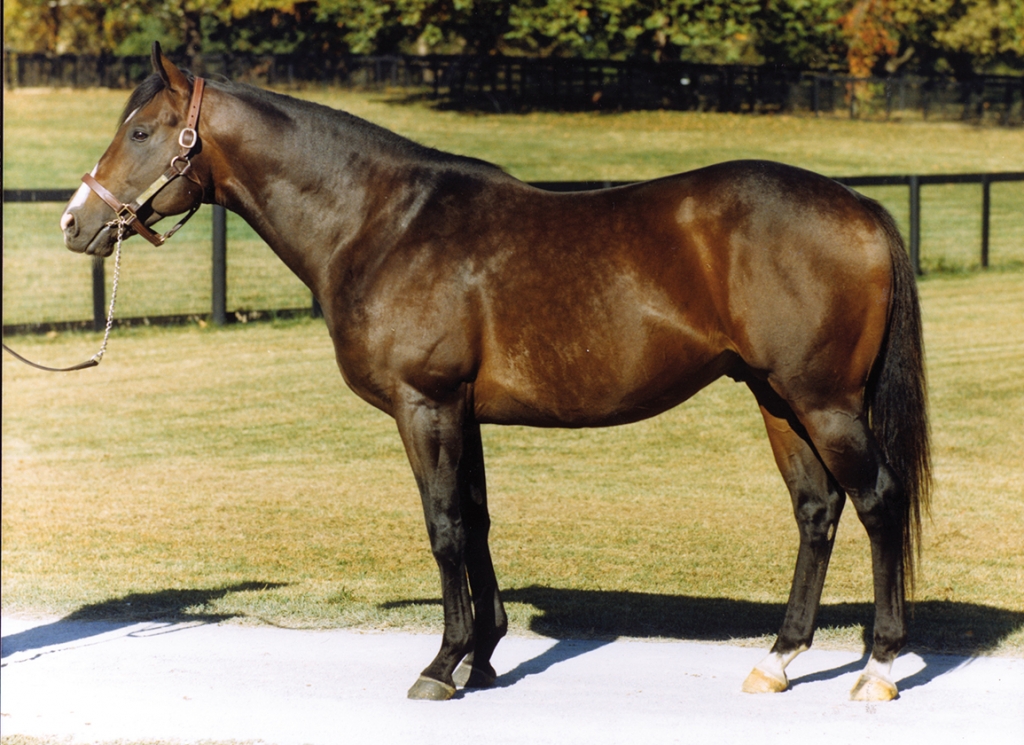
The great Danzig | Claiborne photo

Who knows, conceivably Danzig's breed-shaping legacy around the world might have been still greater, had he covered mares on the same industrial scale as Into Mischief. Being additionally blessed by fertility and libido, the Spendthrift champion has been able to maintain huge books even as his fee has soared, with a staggering 250 mares at $175,000 in 2019, and 214 even at $225,000 last spring. He commands $250,000 for the coming season, but the fact is that his 2022 sophomores will be his first conceived even at six figures–and, pending the outcome of what has tragically become a posthumous saga about Medina Spirit (Protonico), this incoming Classic crop may well be seeking to give Into Mischief a third consecutive GI Kentucky Derby.

That would sit very nicely with this third general sires' title off the reel, a distinction shared most recently with Tapit (2014-2016) and, before him, Danzig himself (1991-1993). But the overall trajectory of Into Mischief's career is such that perhaps only the unaccountable bounties nowadays available in the desert inhibits sacrilegious speculation about Bold Ruler's streak of seven in the 1960s.

These modern megaprizes, of course, permit a single horse's wild distortion of the overall standings: in 2017, for instance, Unbridled's Song would have finished 44th, not first, but for Arrogate. Down the line, perhaps, we must try to devise a way of levelling out the playing field. Otherwise we will someday end up with a champion sire long since exported to Uruguay, who happens to have left behind a standout who wins the G1 Saudi Cup and G1 Dubai World Cup.

As it is, much the most striking aspect of Into Mischief's record $24,945,619 earnings in 2021 is how widely his best performers have spread their contributions. His premier earner is Mandaloun, with $1,560,000 as things stand, though he may yet get that Derby windfall. That represents just 6.3% of his sire's overall bank for the year, compared with the whopping 45.5% contribution made by Mystic Guide to the $16.2-million haul of runner-up Ghostzapper.

Into Mischief admittedly owed 31.9% of his 2020 total to Authentic, but he would still have been champion even without his Horse of the Year. And the previous year Covfefe banked just 5.5% as the premier contributor to his sire's first title.

That looks the most instructive measure of both the legitimacy and the sustainability of the dominion established by Into Mischief. For while he may have fielded more runners than any other sire, at 444, they include not just that record-breaking number of individual winners but also 71 black-type horses. As noted already, no other sire surpasses that clip–quite.

Curlin | Sarah Andrew

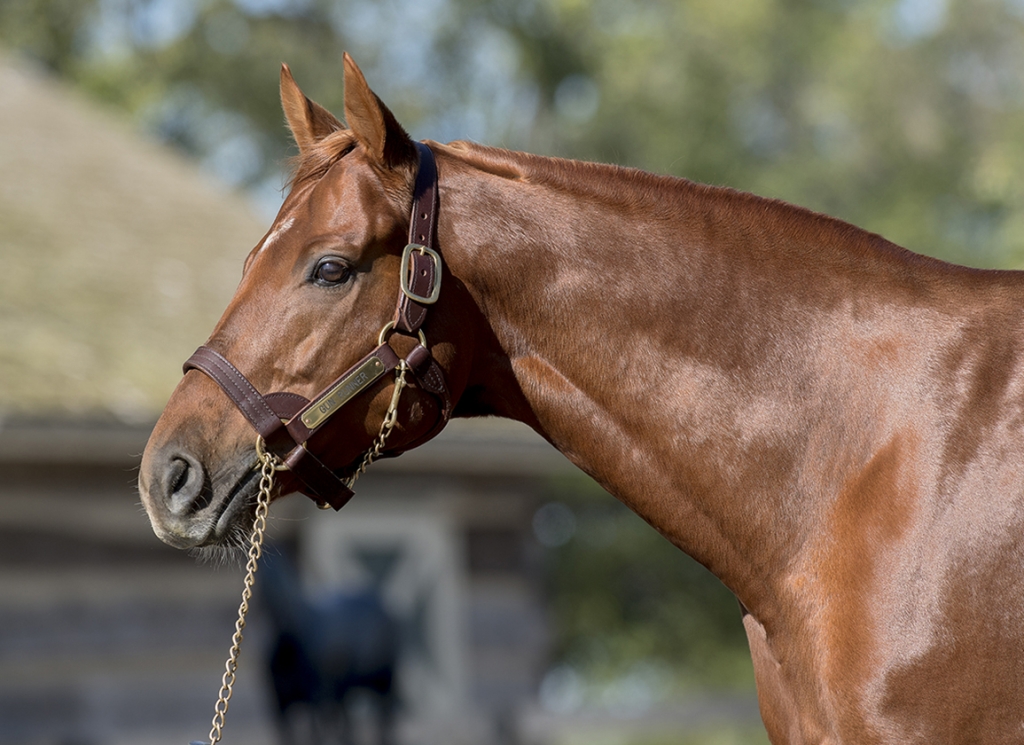
But there are one or two who basically match it, while also exceeding his ratios in other indices. Constitution's third crop has elevated him to 13th in the general sires' table, for instance, and his elite percentages beat Into Mischief in all bar Grade I winners. And, you know what, there's a sire out there who has credible claims to be saluted as stallion of the year, even with Into Mischief again breaking so much new ground. Over at Hill 'n' Dale, certainly, they'll be making a very coherent case for Curlin. While confined to third in the prizemoney standings, he has unequivocally outperformed even the champion when their respective indices with elite stock are compared.

Both have had 13 graded stakes winners in 2021, but Curlin has done so from almost exactly half the number of starters: 224 against the remarkable tally of 444 already noted for Into Mischief. These represent just about 5 and 3% respectively of their starters. And while Into Mischief has 32 graded stakes performers overall, compared with 24 for Curlin, in percentage terms that again favors the less prolific footprint of one (9.3% of starters) over the other (7.2%). As the icing on the cake, Curlin has had five Grade I winners and 9 Grade I podiums, at 1.9% and 3.5% of starters; compared with four and eight for Into Mischief (0.9 and 1.8%). Their overall stakes action, meanwhile, is broadly in step: Into Mischief's 29 black-type winners and 71 performers represent 6.5 and 16% of starters; Curlin's 19 and 41, 7.3 and 15.8%.

That's not to diminish Into Mischief in the slightest. He still has a lot of stock out there conceived at lower fees and we've all seen how seamlessly he has entwined his rising mare quality with his arc of achievement, immediately establishing himself as a Classic influence the moment he covered mares like the dam of Authentic at a bare $45,000. (That same spring was Curlin's first as a six-figure cover.) To be fair, Into Mischief had got a couple of colts from early crops that finished strongly for Derby/Preakness placings, but he has now definitively shown himself capable, with the right partners, of stretching his trademark speed through a second turn.

Nonetheless Curlin merits a special mention for a magnificent year. And his achievements should not be swamped by those disproportionate elements that have exalted two others above him in the table: the lucrative endeavors of Mystic Guide, in one case, and sheer scale in the other.

Tapit | Sarah Andrew

We also need to mention Tapit, for his sheer, metronomic consistency. In adding the later-blooming Flightline to the relentlessly accomplished Essential Quality, notably as his fourth GI Belmont S. winner, Tapit mounted a late charge for fifth place. Heading to the wire, he needed less than $1,500 from one of his last runners of the year to catch Speightstown–and so extend a unique distinction, across the last 12 years, of 11 finishes in the top five. Let's remember that Tapit previously held the prizemoney records both for general sires, meanwhile claimed by Into Mischief, and for freshmen, now in the hands of Gun Runner (following the Uncle Mo interregnum).

All the way through, remember, Tapit's books have been managed with commendable restraint at Gainesway, yet in August he became the highest-earning North American stallion of all time when overtaking Giant's Causeway. He has now passed $178 million, and needs another six graded stakes winners to reach 100 in 2022.

If favored by good health and longevity, perhaps Into Mischief can challenge for that record, too. Even as Tapit reached his milestone this summer, Into Mischief was breaking the $100-million barrier, and he's meanwhile already raced past $109 million. Whatever happens, there's no mistaking him as a champion for our times, and a fitting bequest by the late B. Wayne Hughes. It was as a struggling young stallion by Harlan's Holiday, of course, that Into Mischief famously inspired the kind of incentive scheme by which Spendthrift have meanwhile transformed the entire commercial breeding landscape. We now have the incredible state of affairs in which the three busiest stallions of 2021, with 682 covers between them, were all sons of Into Mischief: Goldencents and Authentic in the same barn, and Practical Joke at Ashford.

The latter must count himself unlucky to have landed in the same intake as Gun Runner, as runner-up in the first-crop sires' championship. As it was, the Three Chimneys freak has almost doubled the tally of his nearest pursuer, with Practical Joke gasping in his wake on $2,339,717. As noted above, Gun Runner has banked $4,209,350. Sometimes the laurels in this category can be divided across different indices, but the son of Candy Ride (Arg) also dominates by individual winners (28 beats 26 for Connect), wins (39) and, inevitably, across-the-board in terms of stakes action.

Admittedly Gun Runner is one of those stallions to have started out with a useful propensity for landing his best punches where they make most impact. Of four graded stakes performers, all four have won at that level, two in Grade Is, from a total of six black-type scorers. Uncle Mo, in accumulating the previous record, had a very similar pattern. He, too, had 28 winners but from more runners (73 against 62); he also included among them two Grade I scorers; he had two more graded stakes performers than Gun Runner, but one fewer such winners.

Uncle Mo's fee was promptly trebled from $25,000 to $75,000, and he stands at $160,000 for 2022. Gun Runner, having been clipped to $50,000 last spring, now smashes into the six-figure club at $125,000. Hats off to Gonçalo Torrealba and his team, to their partner Ron Winchell, and to Steve Asmussen who continues to develop the legacy of the horse he trained so expertly.

Not This Time | Jon Siegel

Champion second-crop sire with $5,458,779 is Not This Time, whose 13 stakes winners represent 10.24% of starters: the best ratio in the general sires' list, an outstanding achievement that consolidates his persisting claims as a precious late conduit for his sire Giant's Causeway.

Runner-up Nyquist ($4,807,628), top freshman last year, sent out as many as nine graded stakes performers, representing 7.4% of his starters, but had to wait until Slow Down Andy's GII Los Alamitos Futurity to get one of them into the winner's circle. From very similar numbers (Nyquist 121 starters, Not This Time 127), Not This Time clocked 68 winners against 50 for his rival at Darley, but the pair were exactly in step in terms of overall stakes action, with 18 black-type performers apiece.

But Not This Time is really on his way, now, given the upgrade in mares he will have earned with his breakout. Best of luck to him in 2022, and to all those hoping to find the next one whose time has come.

The post It’s a World of Mischief appeared first on TDN | Thoroughbred Daily News | Horse Racing News, Results and Video | Thoroughbred Breeding and Auctions.

Source of original post

Horowitz On OTTBs: Looking Forward To 2022 With Hope For Ex-Racehorses

Last month, I wrote about “nature,” genetics, and how the Thoroughbred breed “has evolved over more than three centuries to be an elite sport horse, regardless of what that sport is.”

“Understanding and embracing the true nature of the Thoroughbred means that events like the Retired Racehorse Project Thoroughbred Makeover, programs like The Jockey Club Thoroughbred Incentive Program, and retired racehorses competing at horse shows can be appreciated as representations of the strengths of the breed, and not just something different that happens after a racing career ends.”

Now, I'd like to explore “nurture” and how the ability for Thoroughbreds to excel in new sports after racing is actually honed by what they learn on the racetrack.

The Thoroughbred breed was developed with the primary goal of being an elite racehorse. Certain key skills learned through racing and the racetrack serve these horses well for future endeavors. Plus, we're at the stage in the breed's evolution where racing can be seen as a first discipline in which Thoroughbreds will compete but will not necessarily be the end game.

There is still a learning curve to go from horse racing to, say, jumping or polo, but there would also be a learning curve with similar amplitude for a horse going from being a show hunter to an eventer. The foundations of being an equine athlete are similar across all disciplines, and the racetrack does a great job of instilling those foundations.

“The training that a horse gets before the track, like when they're being started under saddle, is like someone going through kindergarten and elementary school in their formative years,” said Jen Roytz, the outgoing executive director of the Retired Racehorse Project who is heavily involved in understanding and promoting the successes of Thoroughbreds both on and off the racetrack. “It's like the most basic building blocks of how to be a riding horse. Then, they get to the track, and that's kind of like their high school education. They start to do several things at once, and they're faster and responding to cues faster. Then, they get off the track where they're going to do other equestrian sports, and people have more time to hone those skills.”

By the time racehorses finish their racing careers, they will likely have travelled by trailer to multiple locations, been handled by many people, and been exposed to high-stimulation environments. They will have been ridden many times by different riders and, in the process, been asked to go through the different gaits of walk, trot, and canter and change leads.

Perhaps of most benefit, a career in horse racing instills a mindset that a horse should go forward.

“You want the horse's answer to always be forward,” Roytz said. “Like, if you're jumping, you want the horse to go forward over the jump and not spook and shy away. People try to train a 'yes' horse. I think racing does them such a benefit in that way because they come off the track eager to go forward.”

The forward-thinking nurturing of Thoroughbreds matches with their forward-thinking nature. It's worth repeating what Chris Ryan, the subject of my “nature” article about the Thoroughbred breed last month, said, “The Thoroughbred looks out into the far distance. His horizon is way out there and he feels he can get there whenever he wishes. This gives him tremendous forward thinking. A horse thinking forward is going forward. Watch his ears!”

The Thoroughbred often knows where he will go before we do. That makes the journey and the possibilities of destinations incredibly exciting.

[Story Continues Below]

To be fair, there are certain areas that horse racing does not emphasize or emphasizes in a different way, but most of those things shouldn't be seen as a knock against racing. A British literature class will emphasize different material than a course in American literature. But a student going from one of these classes to the other does not need to reinvent the wheel, and neither does a Thoroughbred when going from a racehorse to a sport horse career.

Roytz gives a specific example, saying when it comes to changing leads: “Horses at the track know how to change leads, going from their right lead on straightaways to their left lead going around the turns. They learn how to do it at speed based off the riders' weight distribution and a cue on the reins usually. Then, they get off the track, and they learn to do it in a slower, more proper way, balancing themselves differently, pushing off from behind, making a much more purposeful change of lead with a more subtle, nuanced cue.”

And, yes, there are certain areas that horse racing in the United States can improve upon for the future well-being of the horse, like instilling good ground manners, offering turnout, and simply giving horses more opportunities to stand still to get used to high-stimulation settings.

However, at the end of the day, horse racing should not be seen as an outlier for Thoroughbreds nor should an appearance in another sport be a novelty for Thoroughbreds.

As we wrap up a roller coaster 2021, I'm not saying that the horse racing industry is free from criticism. This year will very well be remembered as the year that a Kentucky Derby winner tested positive for betamethasone and that prominent trainers who had made a mockery of fair play were finally brought to justice.

However, we should celebrate that, through trying to prepare horses for their racing careers, many racing connections are giving their horses the skills they need for whatever lies ahead. And that gives me hope for the Thoroughbred industry in 2022.

The post Horowitz On OTTBs: Looking Forward To 2022 With Hope For Ex-Racehorses appeared first on Horse Racing News | Paulick Report.
Source of original post

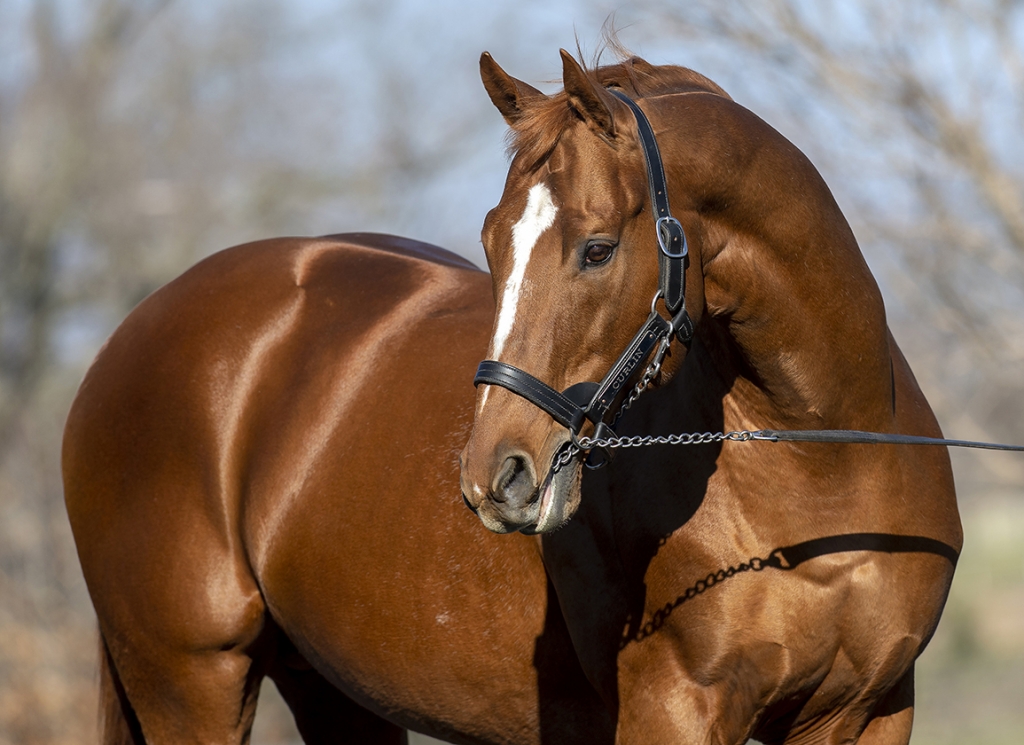
Strategy Queen Chasing Third Straight Win In Ginger Brew

All In Line Stables' homebred filly Strategy Queen, coming off back-to-back victories, will get the chance to make it three straight as she steps up and stretches out on a new surface for her stakes debut in Saturday's $100,000 Ginger Brew at Gulfstream Park.

Trained by Championship Meet leader Saffie Joseph Jr., Strategy Queen has yet to race on turf or beyond 5 ½ furlongs through four races. Her first two starts came on dirt, finishing fourth following a slow start in her Aug. 13 unveiling then running second after a prolonged duel with Rapturous in a Sept. 11 maiden claimer.

Strategy Queen has put together her win streak over Gulfstream's Tapeta surface, graduating by three-quarters of a length in a Sept. 30 maiden special weight before returning for a nose triumph over winners in a Nov. 19 optional claiming allowance. All of her races have come at Gulfstream.

“She's won two in a row and she's doing good. The mile is going to be a question mark, obviously, and the turf. I think she'll handle the turf, but the question will be the distance. Can she stay the mile?” Joseph said. “She's obviously never done it. She acts like she could, but until they do you never know for sure.

“She's going from two sprints to a mile. She's a filly that's kind of leggy and built long, so she looks more like a miler than a sprinter,” he added. “Sometimes they trick you into thinking they want further and they don't really want it. We feel like she can get the mile. It's a step up in class, too, but we feel like it's worth a try.”

Joseph also entered Vesgo Racing Stable homebred Li Li Bear off a maiden special weight victory Oct. 28 at Gulfstream in her first start for the trainer and first on Tapeta. Prior to that she raced twice on the dirt at Saratoga, running fourth to Echo Zulu July 15 and sixth behind Jester Calls Nojoy Sept. 5. Echo Zulu went on to win the Hopeful (G1), Frizette (G1) and Breeders' Cup Juvenile Fillies (G1) to compete a perfect season, while Jester Calls Nojoy was sixth in the Frizette and most recently second in the Maryland Juvenile Fillies Dec. 18 at Laurel Park.

“She ran two races in Saratoga with [trainer] Phil Gleaves and then we got her,” Joseph said. “Her first race was very good when she ran into Echo Zulu. We put her on the Tapeta because we had no grass then and she won. She acts like she'll stretch out, also. She'll be stretching out for the first time but she acts like she will. She's a filly that we think a lot of her.”

Strategy Queen will be ridden by Junior Alvarado from the rail in a field of seven, while Li Li Bear will have the services of Tyler Gaffalione from Post 2.

Teneri Farm and J Stables' Opalina returns to South Florida following a road trip to Kentucky where the daughter of Optimizer closed to be fifth, beaten 1 ½ lengths, after a troubled start in the 1 1/16-mile Jessamine (G2) Oct. 13 over a Keeneland turf rated good. She raced three times prior at Gulfstream for trainer Roderick Rodriguez, running second twice before breaking her maiden against state-breds on yielding ground Sept. 17.

Soldi Stable and Ohana Racing's Ocean Safari is also a maiden special weight winner over the Gulfstream turf. Her victory came sprinting 7 ½ furlongs over good ground Sept. 10 and was followed by a third-place finish in a one-mile, 70-yard optional claiming allowance on the Tapeta Oct. 17, her most recent effort.

Also entered are Alittleloveandluck, exiting a Nov. 12 maiden special weight triumph on the Tapeta at Gulfstream; Louella Street, a Sept. 16 winner over Laurel Park's world-class turf course who finished off the board in the Nov. 28 Tepin at Aqueduct; and maiden Lady Puchi.

The post Strategy Queen Chasing Third Straight Win In Ginger Brew appeared first on Horse Racing News | Paulick Report.
Source of original post

Verified by MonsterInsights