Body & Soul: Empire State Perspectives

Been paying attention to what's going on in the Empire State lately (er, you might know it as New York)? We speak not of the mess in the Governor's Mansion or resulting headlines and cable news rumblings. Rather, we refer to the status of registered New York-breds, exploits of which are tickling the fancy of the state's breeders–many of whom went home dancing with dollars following the conclusion of the Fasig-Tipton sale for a brace of indigenous yearlings.

The sale continued a recent demand from owners, trainers, and pinhookers because New York-breds are winning important open company stakes, and a lot more of them are earning tons of money in bonuses and other rewards offered through the Empire State's incentive program.

However, we are not here to shill for these horses–they do well enough on their own. Rather, we are here to offer perspective on how this has come about, a perspective that will focus on the development of the state's stallion rosters since the program was initiated in the late 1970s. That's because without perspective there is no other way to explain the current success of the program.

First, let's get this concept of “perspective” defined relative to this exercise. According to the Oxford English Dictionary, putting something in perspective has two basic definitions (italics added): 1) “the art of drawing solid objects on a two-dimensional surface so as to give the right impression of their height, width, depth, and position in relation to each other when viewed from a particular point,” 'a perspective drawing'; and 2) “a particular attitude toward or way of regarding something, a point of view.”

Your correspondent is in a unique position to present this perspective because: 1) the algorithms for the biomechanical analysis we have utilized since the early 1980s generates a series of graphs for each horse measured, hence a “picture” of how the horse is constructed in terms of potential racing and breeding efficiency; and 2) your correspondent has been intimately involved in the New York Thoroughbred industry since the early 1980s in many ways including as an adviser to breeders and owners, newspaper publisher, compiler of state sire lists, and one who also helped shaped policy for the program.

As for the latter issue, without getting too deep into the weeds, suffice it to say that as president of New York Thoroughbred Breeders (NYTB), your correspondent wrote the rules and regulations passed into law in 1994 governing mare residency and stallion breed-back requirements, which in 2020 were altered modestly to expand the residency issue to attract more quality mares.

Over the years we have watched the comings and goings of stallions in New York and have come to several conclusions based on what the market wants, what the stallions brought to the breeding sheds in pedigree and biomechanics, and how the development of a stallion program in New York is not very different from those in other states, including Kentucky.
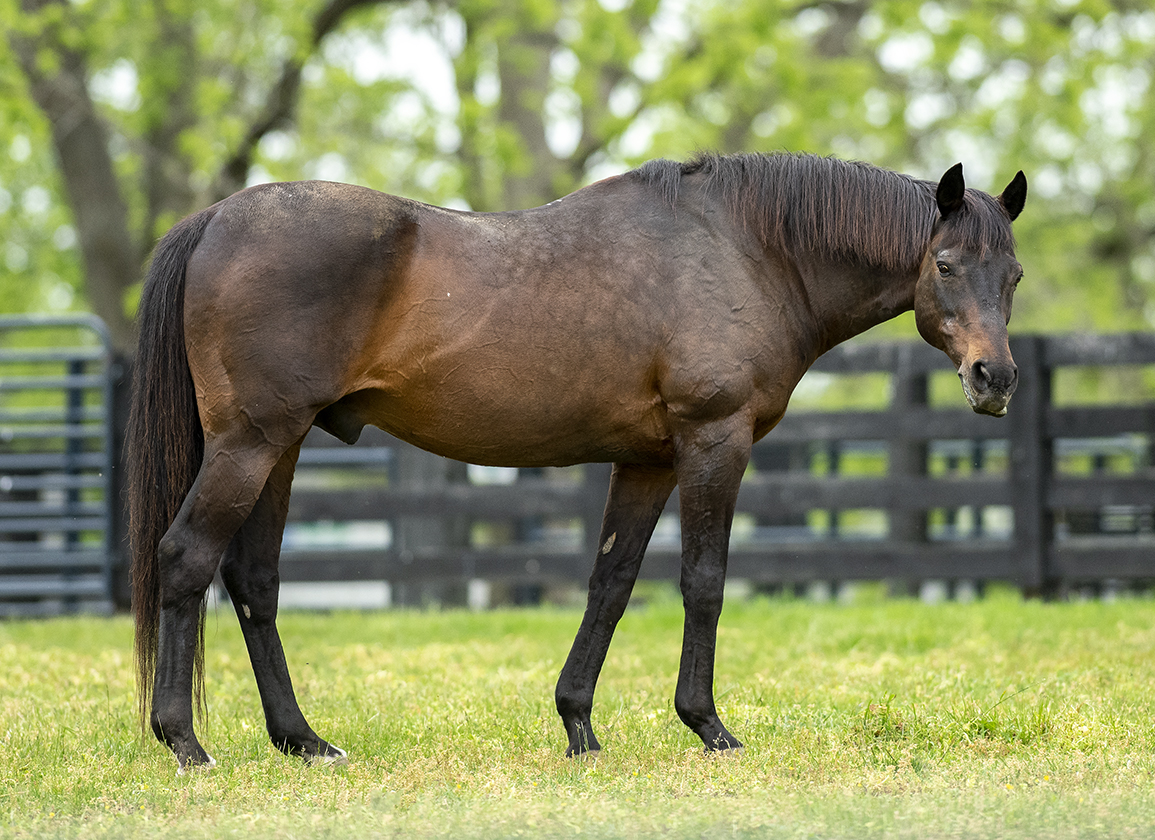
Go for Gin, shown in retirement, was by New York-based Cormorant | Sarah Andrew

Our conclusion: While dozens of stallions were either retired to stand in the state or moved from elsewhere, all faced a basic disadvantage regardless of the rules and incentives promulgated by the state. The majority of available mares lacked either the pedigree and/or biomechanical qualities to match many of the stallions available.

That said and “all Gaul” notwithstanding, the Empire State's breeding program can be divided into three parts (or, in this case, three time periods, or “cycles”). Each is defined by economic and regulatory factors that strongly affected the development of a competitive stallion roster within the state.

Five stallions emerged through those cycles that shaped the story of the entire program: two of which moved into the state and three of which retired to stud there. Parenthetically, each of those five had a favorable biomechanical profile to be successful irrespective of pedigree and, given the quality and quantity of the mares they attracted, all of them succeeded as expected on those scores.

In the late 1970s two stallions moved to New York early in their careers and, despite being completely different in pedigree and race records, dominated the state's sire lists for many years. One was Cormorant, a son of His Majesty who sired Kentucky Derby winner Go for Gin, Eclipse Award winner Saratoga Dew, and Grade I winner Grecian Flight among his 46 stakes winners. The other was Talc, a son of Rock Talk who did not sire as many stakes winners as Cormorant but who consistently battled that one on the sire list. In the 1970s and 80s it was not uncommon for several races a day at NYRA tracks and Finger Lakes to feature one or more offspring of these two.

New York's multiple leading sire, Freud | Sarah Andrew

Both were average sized, very well-balanced individuals who stamped their foals in their own image. Indeed, you rarely saw a Cormorant or Talc that was anything other than bay or brown except when toward the end of his career Cormorant got the gallant gray gelding Gander, a fan favorite. The irony here is that even though Go for Gin sired Grade I winner and sire Albert the Great, the His Majesty line–and therefore the Ribot line–in North America saw the beginning of its end in Cormorant. And the Rasper II line, of which Talc was a major part, also basically ended with his demise.

Yet these two were so consistent in getting winners from any pedigree or physical type that the only caveat during that time was the well-worn advice that you should make sure the mare you bred to Cormorant mitigated his personality (which was, how you say, difficult), but you could breed a dog to Talc and get a runner.

These two paved the way to the next cycle wherein two stallions who retired directly to stud in the state met the challenge in completely different ways. First came D'Accord, a Grade II-winning son of Secretariat out of champion Fanfreluche, by Northern Dancer, who was purchased by John Hettinger of Akindale Farm in 1984. He was unquestionably the most prominent “marquee” stallion prospect to stand in the state if only because of his pedigree.

He came along before his sire became better known as the broodmare sire of epoch-making stallions Storm Cat, Gone West, and A.P. Indy rather than as a sire of sires, and in many ways D'Accord turned out to be right up there among Secretariat's best sons at stud. Richly supported by Hettinger, his book was also very carefully monitored for quality, so he never had huge crops commercial sires required as a pivot for success. Though he got one good son who went on to become a sire in Montreal Red, it was his fillies among his 19 stakes winners who stood out. Thus, like Cormorant and Talc before him, D'Accord, in effect, was one of those who helped precipitate the end of a sire line.

On the other hand, a large multiple Grade III-winning speedball son of Danzig came into the stallion barn at Sugar Maple Farm, a few miles up the road from Akindale, and immediately became the star of the show. That would be Belong to Me, who was not only a phenotypical carbon copy of his sire (though larger) but given his opportunity in New York, a most propitious pedigree and physical match for the state's broodmares.

His first runners set the tracks on fire and after siring four crops at Sugar Maple, he was dispatched to Kentucky where he subsequently became a successful shuttle sire in Australia. By the time of his demise at age 31 last year, and without a son to establish a Danzig branch, it was most probably forgotten by many that he rang the bells initially in New York.
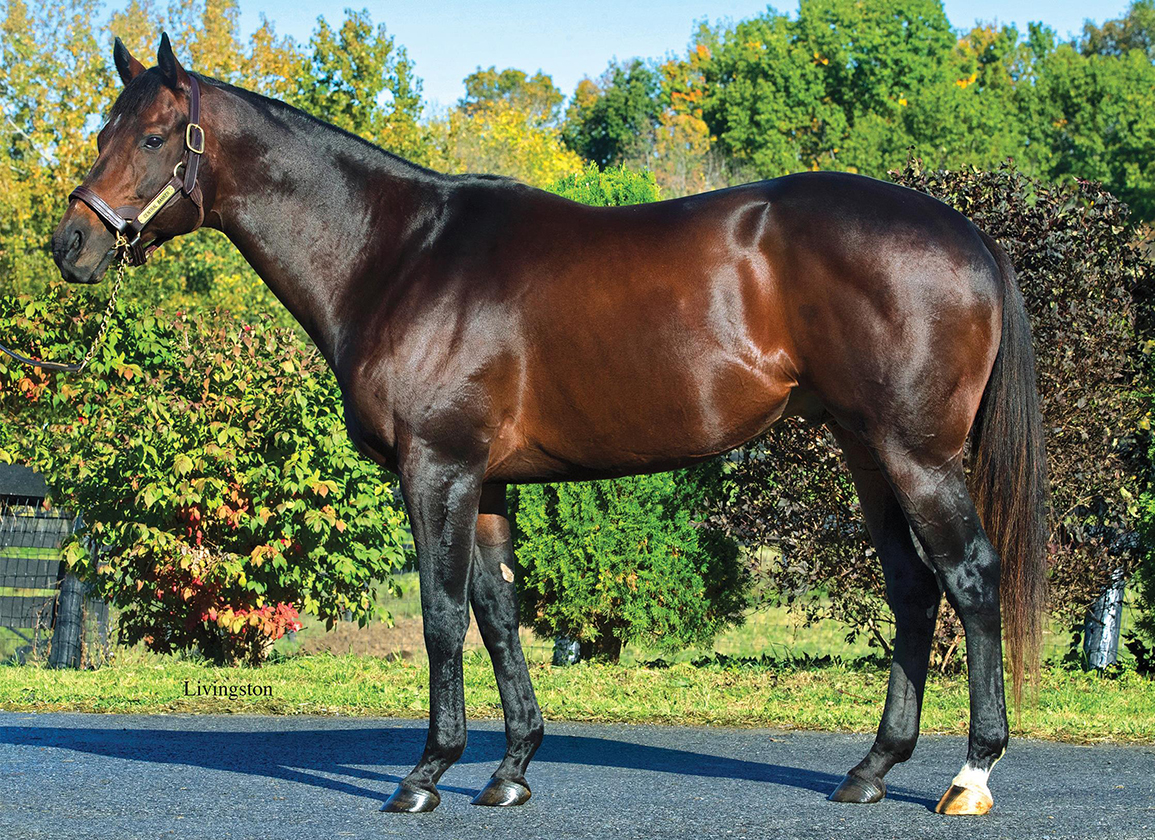
The young Central Banker is getting early, fast runners | Barbara Livingston

Which brings us to the third cycle which has been dominated by a horse with a name that should require him to explain everything to us: Freud. Retired to the state after a modest group-placed career in Europe, he was given a chance primarily because he was a full-brother to international champion Giant's Causeway, being by Storm Cat out of Mariah's Storm, by Rahy. First impressions might lead one to believe, as a friend once remarked, “well, that shoots the full-brother theory,” for Freud is a dark bay resembling Storm Cat while Giant's Causeway was a chestnut though much bigger than his similarly colored broodmare sire.

However, the tale of the tape shows that they were virtually twins phenotypically and in body measurements, so much so that on several key biomechanical tests they scored almost identically. Thus, it was not so much of a surprise to those who bred to him early on with this knowledge that Freud would be successful, at least in a state-bred program. That he has sired nearly 70 stakes winners including 17 graded victors thus far has certainly solidified his standing as the most successful stallion to retire to stud in the Empire State. The fact that two of his leading earners are out of mares by D'Accord sweetens the pot.

Freud has been New York's leading sire many times but in the past two years he has been challenged and now surpassed by Central Banker, a son of Speightstown who benefitted from huge books in his first few years to gain a reputation for getting a lot of early, fast runners. He needs to step up with more than the few black-type earners he has at this time to justify a prognostication for leading a future cycle, but as of now his yang to Freud's yin at the top of the list of stallions retired directly to the state is somewhat analogous to the counterbalance that Cormorant and Talc brought with them when they hopped on vans all those years ago and settled in the Hudson Valley.

Bob Fierro is a partner with Jay Kilgore and Frank Mitchell in DataTrack International, biomechanical consultants and developers of BreezeFigs. He can be reached at bbfq@earthlink.net.


The post Body & Soul: Empire State Perspectives appeared first on TDN | Thoroughbred Daily News | Horse Racing News, Results and Video | Thoroughbred Breeding and Auctions.

Source of original post

Piassek’s Plays: Seeing Green on Sunday at Kentucky Downs

In his regular gambling blog, John Piassek presents his top picks for the upcoming weekend in horse racing, offering betting options at different budget levels. Piassek’s Plays is brought to you by Horseplayers.com, the official online qualifying site of the Breeders' Cup Betting Challenge (BCBC) and National Horseplayers Championship (NHC).

Read More...

Source of original post

Preparing For Catastrophic Flooding As Horse Owners

Seventeen inches of rain in 24 hours were recorded in McEwen, a small town in West-Central Tennessee over the weekend of Aug. 21. And no, 17 is not a typo.

While not yet official, this would break the all-time 24-hour rainfall record in Tennessee by more than three inches. McEwen was one of many locations across this area that saw 8-plus inches of rain.

[Story Continues Below]

As you can imagine, this resulted in catastrophic flooding across this region causing 21 deaths with many others still missing. Property damage has also been immense, with homes lost and vehicles totaled. As the Tennessee Crop Progress and Condition Report summarizes, flooding left row crops and hay fields under water, tore down fences and damaged other infrastructure.

Like Tennessee, Kentucky has experienced its own share of catastrophic flooding this year and in the past. A few weeks ago, Governor Beshear issued a state of emergency following severe flooding across Nicholas County. While not as bad as the flooding in Tennessee, impacts included one death and severe property damage after some locations recorded 3 to more than 4 inches of rainfall.

Kentucky also experienced historic flooding at the end of February when excessive rain fell across a stalled frontal boundary, leading to accumulations of 4 to more than 6 inches across portions of South Central and Eastern Kentucky. Soils were already saturated from melting snow/ice and vegetation was dormant, leading to excessive runoff into streams and rivers. Some rivers broke all-time record crests. Below is one image showing the town of Beattyville under water.

All of these examples demonstrate one thing: We need to be prepared.

I always remind students in my meteorology class that they have probably seen multiple tornado warnings in their lifetimes but have never seen an actual tornado. You still need to take shelter. You can't predict when the warning might turn into a tornado passing over your house. The same goes for flooding. You never know when a disaster like the flooding events in McEwen, Tennessee; Nicholas County, Kentucky; or Eastern Kentucky could occur in your neighborhood.

The best thing to do is prepare. I've talked about flood safety in previous columns, but being prepared for inclement weather, especially on a farm, is critical. There isn't much we can do about row crops, but safe passage through severe weather for families, animals and buildings takes planning. Think about all the scenarios that could happen and prepare for each, making a plan for both family and farm.

I've put together a list of recommendations and questions to consider when thinking about emergency preparedness in relation to flooding, but many apply to other disasters.

Examine the landscape and determine safe areas during a flood event (higher elevations) and potential evacuation strategies. Be sure to prevent livestock from accessing flood-prone areas. Take into account the possibility of washed-out roads. Do you have a means for transporting animals? What if you have downed fence line, which happened in Tennessee? Will you have people (family, neighbors, employees,) you can count on to help?

Identify how you will receive warning information. This could include television, weather apps, radio or local outdoor warning systems. How will you get news if there is a loss of electricity? I recommend everyone have a NOAA Weather Radio. NOAA weather radios alert you to any warnings or watches across the area from your local National Weather Service office. They can be picked up for as little as $20-30 and can save your life. These devices also run on batteries. Of all the suggestions mentioned, I would make this one of the top priorities. Another thing you will need to consider is how will you send a warning in the case of communication failure. Do you have two-way radios available?

Make an emergency contact list. This may include neighbors, utility companies, local Cooperative Extension, veterinarians and emergency medical contacts. These contacts may be obvious to you, but what if you're not there? Consider creating a wallet-sized card (the size of a business card) with the farm's emergency contact information and distribute it to everyone on the farm.

Keep an up-to-date list of on-farm inventory. This can include farm machinery, livestock, acreage, electrical shutoff points and hazardous materials. Be sure that all animals can be clearly identified as your own.

You may already have a disaster supply kit for you home, but what about the farm? It's always good to have some extra supplies on-hand for the unknown. I suggest planning for a week at a minimum, longer for drought scenarios. Your disaster kit might include alternative power supplies, extra fuel, dry bedding, additional feed for livestock, fence supplies and alternative sources of clean water. Also, fire extinguishers are a must for every building.

Review your emergency plan periodically. Things change and it's best to account for all those changes before the next disaster. Replenish supplies, update contact information and learn from the past.

In the end, my advice is plan and prepare so you stay safe. While we've had our fair share of localized flooding disasters over the past several years, we can't rule out even worse flooding in the years to come. Tennessee's disastrous flooding is an eye-opener.

To drive home the danger of flooding, I want to take you back to 1937, arguably the worst flood in recorded history for the state of Kentucky. The National Weather Service in Louisville has a great writeup on the event, with eye-popping statistics. Overall, Louisville saw 15 inches of rain in 12 days (which shows how severe the Tennessee flood was) during the middle of January. Seventy percent of the city was underwater, and the flooding caused an estimated $3.3 billion in damage in today's dollars. The flood crested 30 feet higher than flood stage.

Read more at UK College of Agriculture, Food and the Environment. 

The post Preparing For Catastrophic Flooding As Horse Owners appeared first on Horse Racing News | Paulick Report.

Source of original post

Corazon’s G3 Prix d’Arenberg Win A Stakes First For Markaz

Syndicate supremo Nick Bradley and George Boughey hooked up to secure the trainer's first pattern-race triumph with Oscula (Ire) (Galileo Gold {GB}) in last month's G3 Prix Six Perfections at Deauville and the burgeoning axis repeated the dose as their 2-year-old filly Corazon (Ire) (Markaz {Ire}) battled to a career high in Thursday's G3 Prix d'Arenberg over the straight five furlongs at ParisLongchamp. She had earlier registered a July 30 debut fourth tackling five furlongs at Worlverhampton, graduating in an Aug. 10 novice test over the same distance at Lingfield last time, and went postward as a 17-2 chance for this stakes and turf bow. Corazon broke sharply and occupied a front-end berth through the early fractions of this dash. Scrubbed along once headed at halfway, she was under the full weight of Mickael Barzalona's drive when tackling Listed Prix La Fleche victrix and G3 Prix de Cabourg runner-up Dizzy Bizu (Ire) (Caravaggio) passing the furlong marker and would not be denied in the closing stages to edge that rival by a neck in game fashion, becoming the first stakes winner for her second-crop sire (by Dark Angel {Ire}).

“It's great to have another stakes winner for Nick [Bradley], he's the biggest supporter of my yard and so we're very happy,” said trainer George Boughey after claiming a second pattern-race success. “Mickael [Barzalona] is world class and has given her a peach of a ride. I was pretty keen for him to make plenty of use of her, to get her out and get her going. We've been pretty keen to make sure we have the right people on board when we travel to France and Mickael has done us another favour. The race looked a good opportunity and she'd worked like a filly that should be running in stakes races. It might have come one step too soon, but she was equal to it. She's always shown plenty of pace at home and I would imagine she will get six furlongs. Her work has always been pretty good and she's come a long way in a very short space of time. We'll get her home and see how she is, but I haven't really got a concrete plan for her. It wouldn't be a surprise to see her get an entry in the [G2] Flying Childers [at Doncaster next week]. I know that's a quick back-up, but it is a Group 2. She deserves a short break in training and there are lots of races she can go for towards the end of the season.”

Corazon, kin to a yearling filly by Dandy Man (Ire), is the fourth of five foals and leading performer from two scorers produced by a winning daughter of Dissonance (Ire) (Rossini), herself an unraced full-sister to G3 Firth of Clyde S. victrix Golden Legacy (Ire). Golden Legacy, in turn, is the dam of G3 Prix de Meautry runner-up Stake Acclaim (Ire) (Acclamation {GB}) and hails from the family of G1 Japanese 2000 Guineas-winning sire Hawaiian Image (Jpn) (Father's Image), G1SW Chilean champion Prince Albert (Arg) (Slewsville), MGSW sire Saritamer (Dancer's Image) and MGSW G1 Cheveley Park S. runner-up Risky (GB) (Risk Me {Fr}).

Thursday, ParisLongchamp, France
PRIX D'ARENBERG-G3, €80,000, ParisLongchamp, 9-2, 2yo, 5fT, :57.36, gd.
1–CORAZON (IRE), 122, f, 2, by Markaz (Ire)
1st Dam: Disko (Ire), by Kodiac (GB)
2nd Dam: Dissonance (Ire), by Rossini
3rd Dam: Dissidentia (Ire), by Dancing Dissident
1ST BLACK-TYPE WIN; 1ST GROUP WIN. (£11,000 Ylg '20 TIRSEP). O-Nick Bradley Racing 44 & Partner; B-Cooneen Stud (IRE); T-George Boughey; J-Mickael Barzalona. €40,000. Lifetime Record: 3-2-0-0, €48,797. Werk Nick Rating: A. Click for the eNicks report & 5-cross pedigree.
2–Dizzy Bizu (Ire), 122, f, 2, Caravaggio–Izzy Bizu (Ire), by Kodiac (GB). O/B-Peter Savill (IRE); T-Stephane Wattel. €16,000.
3–Illustrating (GB), 122, f, 2, Showcasing (GB)–Maids Causeway (Ire), by Giant's Causeway. O-Clipper Logistics; B-Branton Court Stud (GB); T-Karl Burke. €12,000.
Margins: NK, SNK, 1. Odds: 8.50, 2.00, 2.70.
Also Ran: Canonized (GB), Papa Don't Preach (Ire), Guilded (Ire), Sunday Best (Fr), Help (Fr), Royal Ashirah (Ire), Josejosephine (Fr), Solotov (Ire). Click for the Racing Post result or the free Equineline.com catalogue-style pedigree. Video, sponsored by TVG.

The post Corazon’s G3 Prix d’Arenberg Win A Stakes First For Markaz appeared first on TDN | Thoroughbred Daily News | Horse Racing News, Results and Video | Thoroughbred Breeding and Auctions.

Source of original post

Verified by MonsterInsights