Body & Soul: Another Freshmen Future Book

Following the completion of the last major 2-year-old sale of the season in each of the past three years, we looked at the potential success of the freshmen sires by creating a handicapping event, noting that the freshmen sires of each year were very competitive bunches, i.e., many of them were capable of rising to the top five or so of their contemporaries after a few crops had raced.

With the aberration in sales dates last year caused by the COVID-19 situation behind us, this season's major sales proceeded as traditionally scheduled, from March through June. Now that the graduates of those sales are starting to race some observers might infer that we will prejudice our picks toward some stallions that have already had a few impressive winners.

To answer that: 1) Fewer than two dozen graduates of the sales sired by freshmen have started thus far; 2): Our task is to lay odds on how the offspring of these sires are likely to compete over the long term, not to identify the Leading Freshman Sire–although both outcomes could be the case in some years.

We concentrated on freshmen of 2021 that had at least 10 of their offspring breeze at the major 2-year-old sales. While we look at pedigrees in context of commercial appeal, we utilize only video and biomechanical data to assist us in our prognostications. The video data details how their offspring compared as individuals to all the other 2-year-olds which breezed regardless of their sires. The components of this data are included in DataTrack's BreezeFigs™ service which is partially based on breeze time, stride length, and efficiency of angulation. Since 2006, this product has been utilized at sales by buyers and sellers, as well as being offered every day as a handicapping tool at Daily Racing Form's website.

We also took into consideration the results of stallion projection profiles which were compiled in 2018 when these horses went to stud. These profiles are based on biomechanical measurements and the probabilities of these stallions siring race-efficient foals from books of biomechanically balanced mares.
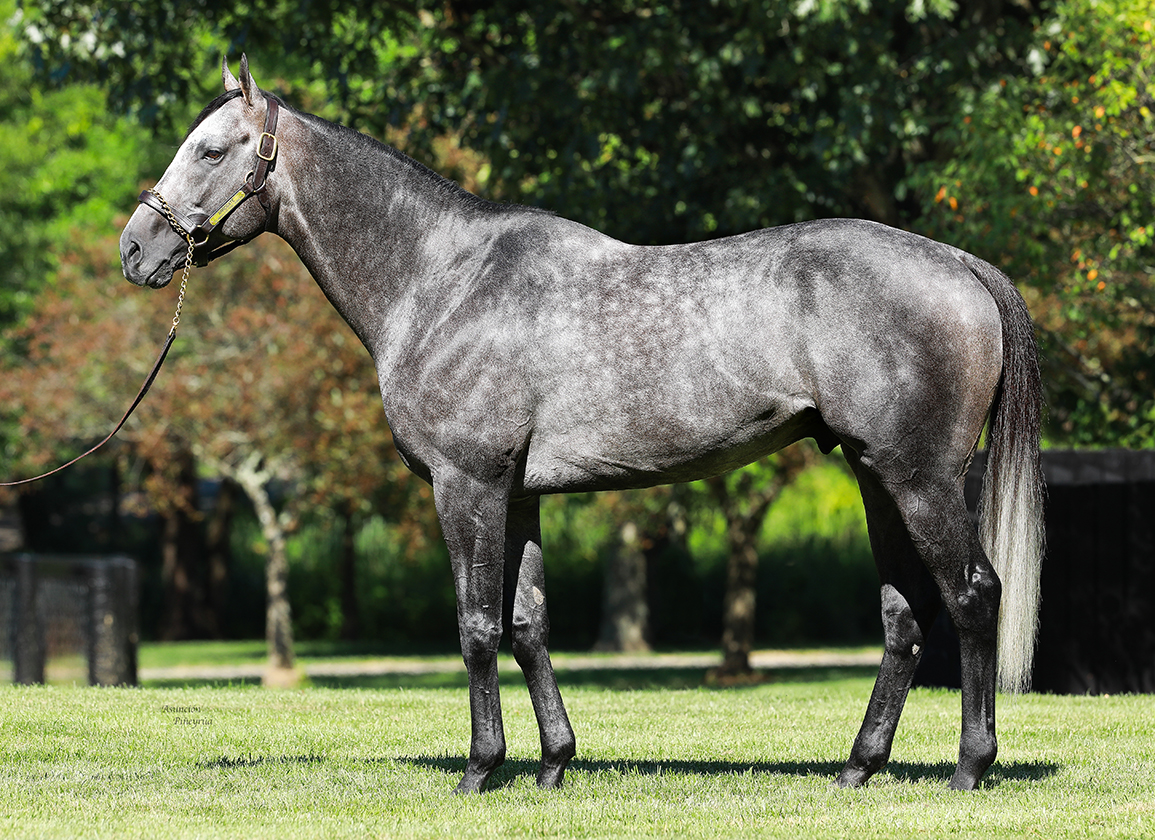
Arrogate | Asuncion Piñeyrua

We also took into consideration the biomechanical profiles of their offspring taken at the 2021 2-year-old and the 2020 yearling sales.

As mentioned, we limited our interest to stallions for which we have biomechanical data which also had at least 10 offspring that breezed at the major sales–that came down to 17 that began their careers in Kentucky (one, Arrogate, has since died), plus one in New York. In addition, we separated each sire's offspring by sex and in the process discovered that while a few had solid data for both colts and fillies, several others were stronger for one sex. However, several, including some with huge crops represented, returned disappointing results for both sexes.

Fifteen of the Kentucky stallions were separated into three groups according to stud fees that were in effect when they retired to stud–ironically, there are five in each of those groups. Theoretically, they are competing against each other in “races” according to a hypothetical condition book. In addition, Arrogate was set apart because he left only one crop behind, and the other, Mohaymen, entered stud for $7,500 and was grouped with Union Jackson, who stands in New York.

Based on our dataset, which has more than half-dozen components, what follows is our “Future Book” on how each of these stallions stack up as the best long-term prospects within their individual groups.

Group 1 (Stud Fee=$25,000 Plus, Kentucky)

∙              8-to-5                  Gun Runner (Candy Ride {Arg})

∙              5-to-2                  Lord Nelson (Pulpit)

∙              5-to-2                  Practical Joke (Into Mischief)

∙              3-to-1                  Mastery (Candy Ride {Arg})

∙              6-to-1                  Classic Empire (Pioneerof the Nile)

Comment: Gun Runner was a heck of a runner and despite that he had fewer 2-year-old representatives than any other in this group, this guy delivered all the promise his biomechanical profile suggested he possessed–and along with Mastery gives his sire a super shot of continuing on his path as a serious sire of sires. Indeed, this group is so close together on the datasets that it may take a couple of years before one or two of them can shake loose from the pack–or battle each other through their lifetimes. Practical Joke was a talking-sire at the sales and they are off and running fast. Lord Nelson popped up as a bit of surprise and adds credence to the belief that his sire left us too soon (viz Tapit, California Chrome, and see American Freedom in Group 3 as well). Classic Empire has a strong chance of moving up as his crops mature.

Group 2 ($12,500 to $20,000, Kentucky)

∙              8-to-5                   Midnight Storm (Pioneerof the Nile)

∙              5-to-1                   Astern (Aus) (Medaglia d'Oro)

∙              8-to-1                   Connect (Curlin)

∙              10-to-1                 Cupid (Tapit)

∙              15-to-1                 Bal a Bali (Brz) (Put It Back)
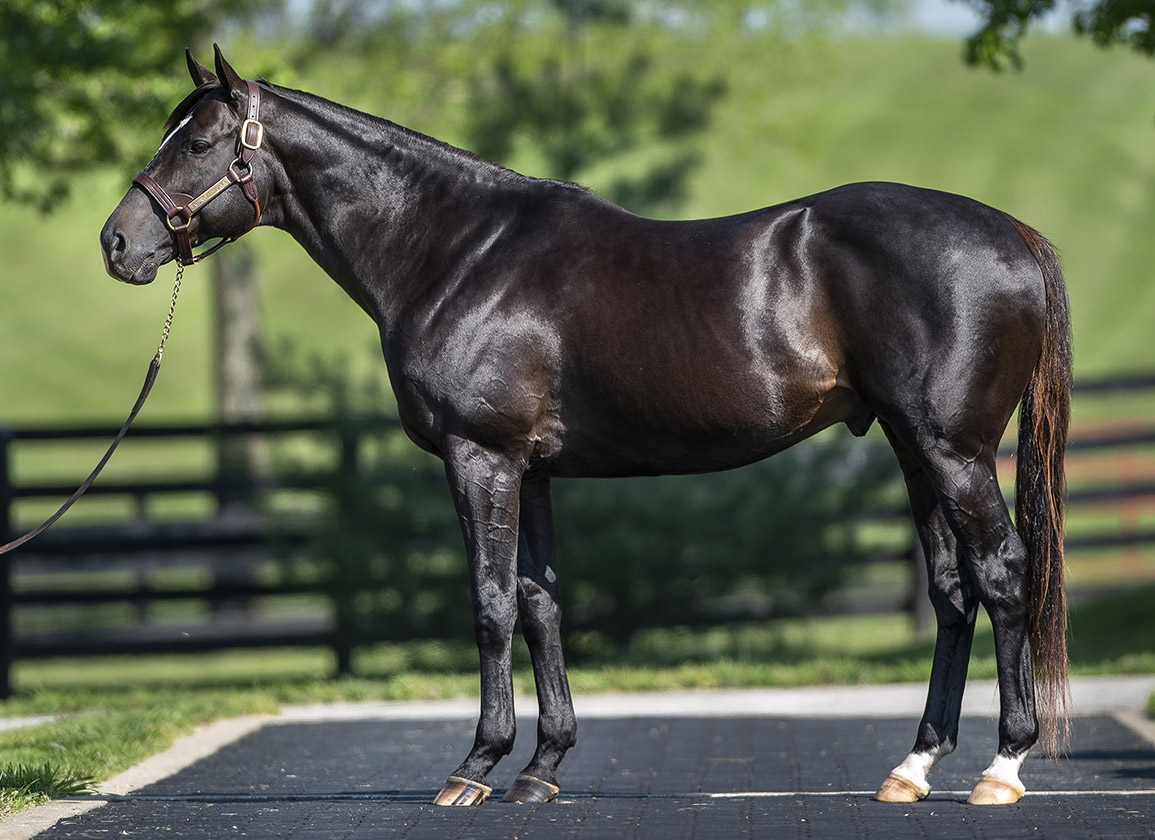
Midnight Storm | Taylor Made Stallions/Amy Lanigan

Comment: Irony here is that Midnight Storm, whose dataset is strong across the board, has a shot at topping off this entire crop and along with Classic Empire solidify their sire as another who left us too soon. Astern (Aus) is another example of his sire's ability to get serious prospects in two hemispheres and his dataset is strong. Connect and Cupid will probably not be contending for Leading Freshmen Sire honors but when they go further, they could emerge sharply, Bal a Bali (Brz) is his sire's first shot at proving his exportation was a premature event, and he has the goods to send them out early.

Group 3 ($10,000, Kentucky)

∙              3-to-1                   American Freedom (Pulpit)

∙              5-to-1                   Gormley (Malibu Moon)

∙              8-to-1                   Unified (Candy Ride {Arg})

∙              15-to-1                 Keen Ice (Curlin)

∙              15-to-1                 Klimt (Quality Road)
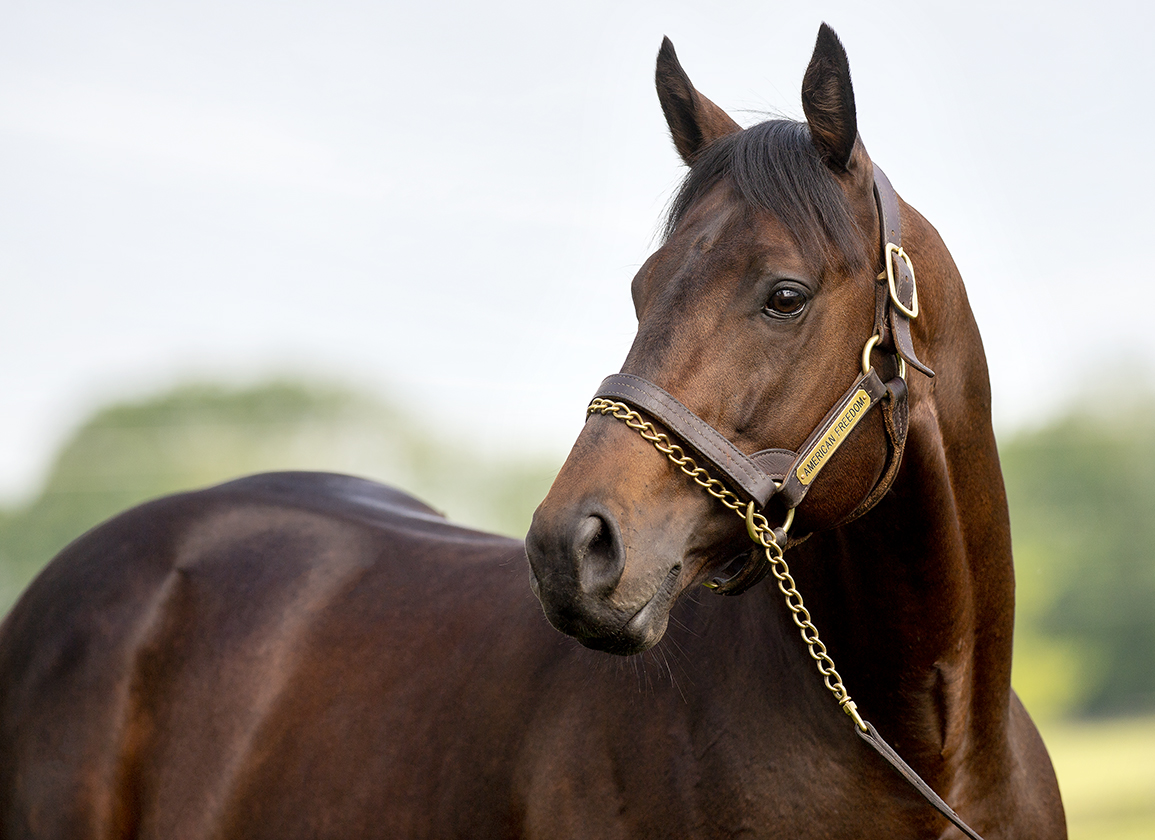
American Freedom | Sarah Andrew

Comment: American Freedom was consistent in sending out offspring that were consistently good performers on the track–watch out Lord Nelson! Gormley and Unified sent out huge numbers of breezers who look like they might get runners that can perform at any distance. Keen Ice and Klimt are likely to need to wait to see their kids score big time, but that could happen toward the end of the year.

Group 4 (Below $10,000, Kentucky & Regional)

∙              5-to-2                   Mohaymen (Tapit) (Kentucky)

∙              5-to-2                   Union Jackson (Union Rags) (New York)

Comment: Everyone should keep in mind that Mohaymen was a terrific early juvenile, so his stud fee may look like a bargain soon. Union Jackson comes from a very clever outfit and more of them came out than is usually the case for a freshman not based in Florida, and they impressed.

And then there is Arrogate. Suffice it to say that if had more than one crop he'd be up there challenging Gun Runner for long-term honors. We would not be surprised if he battles for the lead at the end of this year, thus underscoring what might be a growing legacy for Unbridled's Song–his best siring sons were, as they said in other times, the last of the wine.

There you go, place your bets!

(Bob Fierro is a partner with Jay Kilgore and Frank Mitchell in DataTrack International, biomechanical consultants and developers of BreezeFigs. He can be reached at bbfq@earthlink.net).

The post Body & Soul: Another Freshmen Future Book appeared first on TDN | Thoroughbred Daily News | Horse Racing News, Results and Video | Thoroughbred Breeding and Auctions.

Source of original post

Addeybb To Stay In Eclipse

Despite his reputation as a soft-ground specialist, Addeybb (GB) (Pivotal {GB}) will run in Saturday's G1 Eclipse S. at Sandown whatever the underfoot conditions, trainer William Haggas said.

A triple Group 1 winner last year, Addeybb has not been seen since returning this spring from his latest stint in Australia, where he defended his title in the G1 Queen Elizabeth S. and finished second in the G1 Ranvet S., both times over ground drier than his preference. Addeybb romped in last year's G1 Champion S. over the heavy Ascot going.

“He's fine and he's ready to race. We've had this in mind since he got back from Australia so we're pleased to be there,” Haggas told Sky Sports Racing. “I'd be pretty loath to take him out because he needs to race. You can't keep practising on the [Newmarket] Heath and in the nets and not get out in the middle. He needs a run.”

The Eclipse has come under some criticism this week for its small field size, but Haggas said he think it will be an intriguing clash of the generations.

“Here you've got a really top-class speedier 3-year-old [St Mark's Basilica] who's won two Classics and won the Dewhurst last year, so he's obviously a very good horse. You've got Mishriff, who won a French Derby and really excelled in Saudi Arabia and Dubai, and then our fella who keeps battling away and bashing away. He's as reliable a yardstick as you can get. If the ground came up soft, heavy in places, our chance would increase and maybe St Mark's Basilicia's wouldn't, so who knows what's going to happen.”

Haggas also provided an update on Shadwell's G3 Hampton Court S. winner Mohaafeth (GB) (Frankel {GB}), who goes next to the G2 York S. on July 24. Mohaafeth will be ridden by Dane O'Neill, with first-call stable jockey Jim Crowley required at Ascot for Al Aasy (Ire) (Sea The Stars {Ire}) in the G1 King George VI and Queen Elizabeth S.

“We knocked the Eclipse on the head last weekend and he's going to go for the Sky Bet race at York on July 24, which is unfortunate for Jim, but good for Dane, because that's the same day as the King George,” Haggas said. “The horse that won the King Edward [Alenquer] is hopefully going for the [G1] Grand Prix de Paris on July 14, so we've got a busy few weeks coming up.”

The G1 Coronation S. runner-up Al Aasy has the option to warm up for the King George in next week's G2 Princess of Wales's S., but his trainer said it is likely he will head straight to Ascot.

“The King George is very much the plan. Whether he goes for the Princess of Wales's S., I'm not sure–I doubt it,” Haggas said. “He'll probably go straight for the King George. He worked beautifully again yesterday and is on target to go where we want him. We just have to decide whether going to Newmarket might take the edge off him for Ascot, which wouldn't be sensible. My gut feeling is he'll probably go straight to Ascot.”

The post Addeybb To Stay In Eclipse appeared first on TDN | Thoroughbred Daily News | Horse Racing News, Results and Video | Thoroughbred Breeding and Auctions.

Source of original post

Selecting Horse Hay: Separating Fact From Fiction

Horse people are often described as picky, fussy or difficult when it comes to hay selection. This description is not surprising because many horses are either very valuable or viewed as part of the family.

It is often a lack of knowledge about selecting quality hay that gives horse owners a bad name and forces them to pay more for hay than their neighbors with other types of livestock. Myths develop because of a piece of truth that becomes inflated and held as absolute truth without justification. To improve our knowledge of hay selection, here are a few common myths about hay, how these myths came to be accepted and, finally, “the truth.”

Note: For the purposes of this article, “high quality hay” refers to hay with a high nutritive value.

Myth: Second cutting hay is always the best cutting.

How it came about: The number one factor that determines hay quality is stage of maturity at harvest. Cool season grasses such as orchardgrass and timothy will produce a seedhead in the spring, often just in time for the first cutting. For the hay producer, this means an increase in yield and therefore more bales can be harvested and sold. However, this also means that fiber is elevated in the crop, therefore reducing quality. Because seedheads are only produced one time per year in cool season grasses, subsequent cuttings do not contain them and second or later cuttings will be generally less fibrous as a result. Second cuttings tend to cure more quickly and are less likely to experience rain damage; both contribute to higher quality relative to first cutting.

Truth: First cutting hay can be high quality if cut early and second cutting can be low quality if it cut late. Stage of maturity and other management factors affect hay quality at harvest. High quality (or low quality) hay can be harvested from late spring to late fall if weather and management conditions are right. Quality should never be assessed based on cutting number, but on a laboratory-performed analysis.

Myth: Horses require higher quality hay than cattle.

How it came about: Some horses, especially those with high nutrient requirements, do require higher quality hay than cattle. Horses and cattle have very different digestive tracts. Cattle are ruminants and are able to breakdown fiber very efficiently, whereas horses are monogastrics with a functional large intestine (hindgut fermenters) and are less efficient at fiber digestion. Therefore, cattle can perform well on lower quality hay that horses cannot digest well.

Truth: Individual needs of the animal should dictate the quality of hay provided. An easy-keeping Quarter Horse in light work does not need the same quality of hay as a Thoroughbred at the peak of its racing career. Similarly, an open Angus cow does not need the same quality of hay that a high producing dairy Holstein needs at the peak of lactation. Consider the current body condition, level of work and pasture availability of your horse. Then choose hay that will meet the needs of your horse without excess based on a hay test.

Myth: (Fill in the blank) is the best type of hay.

How it came about: Statements such as this often come from horse owners that have moved from one area of the country (or world) to another and are not accustomed to the local hay. Different forages are adapted to different soils and climate conditions, so the most common hays available for horses vary among regions.

Truth: Hay quality is not about the forage species or even the variety. Forage species used for hay will fall into one of two categories: grasses or legumes. Grasses can include orchardgrass, Kentucky bluegrass, tall fescue, bermudagrass, timothy, teff and smooth bromegrass. Legumes include alfalfa, red and white clover, lespedeza and birdsfoot trefoil. When managed and harvested correctly, legumes will be higher in quality than grasses; however there will be little difference between different grasses or between different legumes when all other factors are held constant. Buying quality, local hay will likely save money due to reduced transportation costs. Make sure to address any concerns with a specific grass or legume species, such as endophyte infected tall fescue. If you are concerned about feeding a certain species of hay, ask your local county extension agent or equine nutritionist about it.

Myth: Forage stored as round hay bales or as silage contain diseases such as botulism and should not be fed to horses.

How it came about: The botulism bacterium prefers moist conditions and is commonly found in the soil, in stream sediments and in the intestinal tracts of fish and mammals. Silage (haylage) by definition is stored with higher moisture than hay, and when not properly handled, can allow the botulism bacterium to flourish. Hay that is conserved in large round bales is usually baled at a similar (often lower) moisture content as small square bales and thus is different than haylage. However, if round hay bales are stored outside, they can get wet from rain, encouraging the growth of bacteria and mold.

Truth: Proper storage, handling and feeding of round hay bales will minimize the risk of botulism in horses. Round hay bales should be covered when stored and fed using a hay feeder to reduce contamination from trampling and urination. Round bales that show clear signs of mold should not be fed to horses. Feeding silage to horses is much more common in other countries than in the U.S. Silage should be put up at the proper moisture content for the style of storage, kept airtight until feeding and fed quickly to reduce the risk of botulism. Silage should always be tested for forage quality before feeding. In botulism prone areas, a veterinarian should be consulted about the use of silage and the inclusion of a vaccination against botulism to protect horses.

Myth: Don't feed hay that has been rained on.

How it came about: Rain negatively affects hay in a variety of ways:

Rain on recently cut hay can prolong plant respiration and reduce energy content.

Rain on legumes will cause leaves to separate from the stems (called leaf shatter) and therefore remove the more nutritious portion of the plant. Fibrous stems will then be more concentrated in the final product, causing a decrease in quality.

Rain will also cause leaching of sugar and other carbohydrates, proteins and minerals.

Heavy rain can splash soil up onto curing hay, which can increase dustiness and rapidity of molding.

Truth: Rained on hay can be acceptable quality. While rain usually negatively affects hay, to what degree depends on several factors, including what type of hay is being harvested, how much/how intense the rain fell, stage of curing when it rained and what the producer has done to counteract these negative effects. For example, if light rain occurs within a day of cutting, it has very little effect on hay quality. All hay, especially material that has been rained on should be tested for quality and inspected for mold or dustiness before use.

Myth: Hay should be stored for six weeks before feeding.

How it came about: This myth likely came about from hay testing. After hay is stored in a barn, it will continue to cure for four to eight weeks. During this curing period, the quality of the hay can change slightly.

Truth: Hay can be fed at any time after harvesting. Hay should not be tested until it has been stored for six to eight weeks to increase the accuracy of the hay test. While feeding hay sooner will not be harmful to horses, it will be difficult to balance the ration because the quality of the hay is unknown.

Myth: Green is good; brown is bad.

How it came about: Often, hay that has been harvested too late or mishandled will lose its green color due to processes such as heating and bleaching. Green hay is less likely to have gone through these processes and more likely to be of quality.

Truth: A hay test is the only way to truly evaluate quality. No quality factors directly affect color or vice versa. Therefore, color is an inconsistent factor to evaluate the quality of hay.

Myth: Feeding hay causes a large, distended digestive tract, known as a hay belly.

How it came about: Hay belly usually results when malnourished horses are provided large quantities of low quality, high fiber hay. The horse will usually be thin over the neck, withers, ribs and hindquarters; however the belly will appear large because the horse is consuming large amounts of hay.

Truth: A balanced ration that includes quality pasture or hay will maintain a horse at an ideal condition without excessive gut fill.

It is important to remember that horses evolved consuming forage, and whether in the form of pasture or hay, is an important component in the equine diet. Choosing hay for your horse will depend on your horse's current condition, work level, pasture availability and the logistics of management on your farm. Hay should always be inspected and found to be free from contaminants such as weeds, insects, mold, dust and other foreign material. The nutritional value of the hay should also be evaluated prior to feeding so that a ration can be formulated that will meet the needs of your particular horse.

Read more here. 

The post Selecting Horse Hay: Separating Fact From Fiction appeared first on Horse Racing News | Paulick Report.

Source of original post

Verified by MonsterInsights