Undefeated White Filly Sodashi Headlines Japanese 1,000 Guineas

This week, following a win of the Osaka Hai by a female for the second year in a row, the girls are once again in the spotlight. This time, however, they make up the entire field.

The top-level action remains at Hanshin for the 81st running of the fillies' 3-year-old classic Oka Sho (Japanese 1,000 Guineas) on Sunday, April 11. The Grade 1 event is the first race in Japan's filly triple crown and, at 1,600 meters (one mile), is the shortest of the three races.

Twenty four of Japan's top fillies have been nominated to the Oka Sho gate and 18 will make the cut. The winner's prize is JPY105 million (approximately $950,000).

The final field should boast three of the top four finishers in the Grade 1 Hanshin Juvenile Fillies last December and no matter what the racing action, the Oka Sho will look like it's straight from a fairytale, thanks to an appearance by the unbeaten stunning white filly Sodashi. She'll likely be the race favorite and will be meeting Juvenile Fillies runnerup Satono Reinas and fourth-place finisher Meikei Yell once again, as they try to turn the tables on her.

The Oka Sho is not one to favor the favorite. The race No. 1 choice has only won twice in the last 10 runnings and has only made the Top 3 five times. That said, double-digit picks have never won the race in the last decade and have only made the Top 3 twice in the same period.

Following is a look at the expected top picks.

Sodashi – Sodashi is not only the field standout in looks, her record is a stellar 4 for 4, with two of those starts over 1,600 meters. She has a Grade 1 in her cap along with two Grade 3 victories, was awarded the JRA Award for Best Two-Year-Old Filly of 2020, is the first white horse to win a JRA top-level competition, and will be the first white horse to run in a Japan classic race. In addition, the daughter of Kurofune could become only the eighth filly in the history of the Oka Sho to bag the race unbeaten. Sodashi hasn't raced in four months, not since the Hanshin Juvenile Fillies, and a winner of that race hasn't won the Oka Sho since Apapane in 2010. After returning to Ritto, Sodashi has trained primarily up the hill course, and on March 31 clocking 52.4 seconds over the four furlongs, with a final furlong in 11.8 seconds.

“She can be overly sensitive, so we brought her back to the training center early and gave her gate practice and a hard workout last week,” said trainer Naosuke Sugai. “This week, I just plan to breeze her.”

Expected to be in the saddle on Sunday is jockey Hayato Yoshida, currently No. 5 in the jockey standings and gunning for his first win of the Oka Sho.

Satono Reinas – Following Sodashi over the line in second in the Hanshin Juvenile Fillies was Satono Reinas. She lost by a mere nose and that despite being slow out of the gate. But her speed in the final stage topped that of Sodashi's and she was able to make up the lost ground. Though she debuted a month earlier than Sodashi, the Deep Impact-sired Satono Reinas has had only three starts, all over the mile, and from them a record of 1-1-2. Based at the Miho stable of trainer Sakae Kunieda, Satono Reinas worked on March 31 over the woodchip flat course under current leading jockey Christophe Lemaire. She looked powerful, clocking 64.4 seconds over five furlongs with Lemaire urging her on only a bit just before the finish. Satono Reinas is also unraced since the Hanshin Juvenile Fillies, as Kunieda says he wanted to give her a rest.

“She'd earned enough so I decided to give her some time off with an eye to this race,” Kunieda said. “She hasn't changed that much physically from her last race, but she's much more relaxed now and has matured mentally.”

Nonetheless, the long trip from Miho to Hanshin was never a worry. Last time, Satono Reinas recorded no significant change in weight and remained calm throughout.

Meikei Yell – Meikei Yell suffered her first and only loss of her five-race career in her fourth start and first mile, the Hanshin Juvenile Fillies. Drawn wide and missing the break, she was forced to race from much farther back than her usual fourth position. Able to make up ground, however, she finished only 0.2 seconds behind Sodashi in fourth place. Sired by Mikki Isle, who usually led the field in his races and captured two Grade 1s wire to wire, Meikei Yell took on the Grade 2 Tulip Sho at Hanshin on March 6 and finished in a dead heat with Elizabeth Tower. The biggest concern with Meikei Yell is her reluctance to settle. In the Tulip Sho, she traveled in fourth position but jumped into the lead early from the final turn.

“She did a good job letting off some steam with that last start and that made her easier to prepare this time,” says trainer Hidenori Take. “I have no concerns about her physical condition, but key will be getting her to run more balanced.”

With regular rider Yutaka Take sidelined with injuries, pegged for the ride is jockey Norihiro Yokoyama, who has 27 G1 wins to his name but has yet to notch the Oka Sho. “If Norihiro Yokoyama is able to bring out her best, we'll just have to see how it goes,” says trainer Take.

Akaitorino Musume – Daughter to 2005 Triple Crown winner Deep Impact and 2010 filly triple crown champion Apapane, Akaitorino Musume has some big shoes to fill. Like Satono Reinas, she's from the stable of Sakae Kunieda, and though chronically slow from the gate, has nevertheless notched three wins from four starts, with only one finish off the board. All of her outings have been over the mile and last out mid-February she topped Art de Vivre by a neck in winning the Grade 3 Queen Cup at Tokyo. Slow from the gate, she was still able to travel farther forward than usual in midfield and took the lead about halfway down the stretch. With three starts at Tokyo and one at Niigata, Akaitorino Musume will be racing to the right for the first time. It will also be her first time to haul from her Miho base to western Japan.

“Even though she traveled farther forward than before in her last race and moved earlier, I watched it without worry,” says Kunieda. “After that I kept her at the training center, so there hasn't been any gain in weight. I think she's matured both physically and mentally and I'm looking forward to seeing how she'll do to the right and with the long trip to the track.”

Jockey Takeshi Yokoyama is expected to have the ride Sunday.

Others to watch are Fine Rouge and Elizabeth Tower. Fine Rouge has been given one furlong longer in each of her three starts and jumped from her maiden win to victory in the Grade 3 Fairy Stakes at Nakayama in mid-January. Since, she has remained at Miho. Her versatility in racing styles and keen racing sense should stand her well.

Elizabeth Tower has had three starts, all over the mile and topped the Grade 2 Tulip Sho at Hanshin last out on March 6. She will most likely be piloted by Osaka Hai winning jockey Yuga Kawada.

In only the second start of her career, Art de Vivre finished second to Akaitorino Musume in the Grade 3 Queen Cup. Based at Ritto, Art de Vivre won her debut racing to the right over the Kyoto mile.

The Maurice-sired Shigeru Pink Ruby shares her dam Moonlight Bay with 2019 Oka Sho runnerup Shigeru Pink Dia and captured the Grade 2 Fillies Revue at Hanshin on March 14. It was her second win from three starts, both wins coming over seven furlongs.

“This time will be one furlong longer, but I'm hoping her excellent maneuverability will stand her well,” says Ritto trainer Kunihiko Watanabe.

The post Undefeated White Filly Sodashi Headlines Japanese 1,000 Guineas appeared first on Horse Racing News | Paulick Report.
Source of original post

Political Climate in California

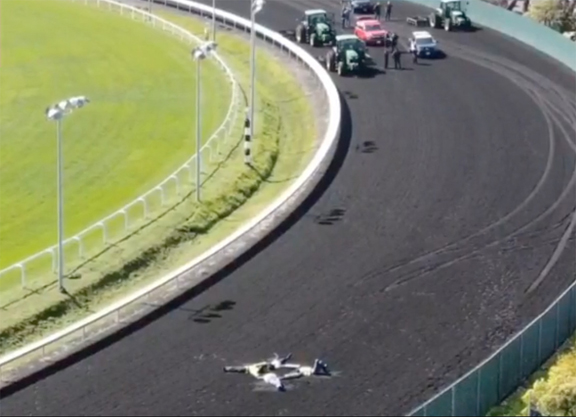
At the start of last month, a small cadre of animal rights protestors snuck onto the Golden Gate Fields racetrack, lay down with arms interlocked in pipes, and halted live racing–as well as a vaccination drive on facility grounds–until police intervention saw their removal.

While the incident had a flash-in-the-pan quality, it had the corollary effect of reminding those within the sport here in the Golden State of the somewhat precarious position in which it still finds itself–an important part of the economic puzzle, employing tens of thousands, but one that doesn't always fit squarely with the state's broader progressive bona fides on animal welfare.

And so, placed in the context of the last two years, during which time the sport has been buffeted by sweeping reforms and hitherto unbeknownst scrutiny, it begs the question: Where does the state's industry now find itself in terms of political favor and cultural currency?

The answer appears both promising and cautionary, with the California state senate's vote against the reappointment of Wendy Mitchell to the California Horse Racing Board (CHRB) Monday providing yet another indicator of a delicate balancing act.

“Two years ago, at this date, we were sitting at meetings with The Stronach Group [TSG], reviewing various plans whether to close Santa Anita for the rest of the meet,” said Greg Avioli, president and CEO of the Thoroughbred Owners of California (TOC), pointing to the welfare crisis that had engulfed Santa Anita.

Since then, the sports political roller coaster has been helter-skelter, taking in a joint hearing in Sacramento, a letter of condemnation from senator Dianne Feinstein, major pieces of legislation, a regulatory board dramatically reshaped by Governor Gavin Newsom–who told The New York Times in 2019, “I'll tell you, talk about a sport whose time is up unless they reform. That's horse racing”–as well as a proposed ballot initiative to end racing in the state (one that was ultimately extinguished before voters had a chance to weigh in).

Two years later, sweeping equine welfare and safety reforms have proven markedly effective. “We've come a long way,” Avioli said.

Del Mar | Horsephotos

As to the temperature in Sacramento toward horse racing, “We have conversations with legislators and representatives weekly. In this last week, the conversations have focused on the recent safety results, particularly at Del Mar,” Avioli added, referring to recent news out of the Southern California track that it is among the safest in the nation for the third year straight year.

As a result, “I do not expect that you're going to see additional bills on the same subject,” said Avioli about prospective legislation in Sacramento. “The core issues of horse safety and welfare right now seem to be adequately addressed by the legislature.”

That sentiment appears mirrored by Senator Bill Dodd, whose legislative fingerprint can be seen on a number of horse racing-related bills over the past two years.

A spokesperson for the state senator, who represents the northern San Francisco Bay Area and Delta region, wrote in an email: “As chairman of the committee overseeing horse racing, Sen. Dodd follows developments in the sport closely and continues to monitor his previous measures to improve rider and equine safety. He has not introduced any new legislation in this area so far this year.”

Josh Rubinstein, Del Mar Thoroughbred Club president, strikes a similar tone to Avioli.

Industry progress made at the local, state and national level–including recent passage of the Horseracing Integrity and Safety Act (HISA)–means there is now a “different tone in our conversations with governmental leadership” compared to two years ago, Rubinstein wrote, in an emailed response to questions.

“We have real tangible progress we can point to, which makes a difference,” he added.


Protesters on the track at Golden Gate | Direct Action Everywhere

“I think there's some positives in all of this”

And so, what to make of events up at Golden Gate, by an organization called Direct Action Everywhere, which purportedly seeks to shut the facility down?

Anti-racing protests in California aren't new or novel–picketers have routinely descended upon both Del Mar and Santa Anita in recent years, often prompting workers at both facilities to stage counter-protests.

Indeed, Scott Chaney, CHRB executive director, downplays the significance of what occurred last month.

“I don't think a few protestors at Golden Gate are representative of the larger population in California,” Chaney said, highlighting both overarching public sentiment toward the sport, and the fractured nature of animal welfare organizations in the state with disparate sets of goals and agendas. “I think lumping animal rights activists in one group is unfair.”

At the same time, Chaney acknowledged the long thread of political activism woven throughout the history of the City of Berkeley–whose district Golden Gate Fields partially overlaps–as something the industry needs to be cognizant of.

Political pressure was brought to bear on the CHRB last October, when Berkeley City officials wrote the board requesting an investigation into equine fatalities at Golden Gate.

(The track routinely boasts a better equine fatality rate than the national average, which was 1.53 per 1,000 starts in 2019, according to The Jockey Club. In 2020, it was 1.23, 0.64 in 2019, and 1.12 in 2018.)

The CHRB responded with a letter explaining these rates, while listing a series of increased medication and safety measures the board had recently undertaken statewide and intended modifications for the future, including those specifically geared toward Golden Gate.

How was the letter received? “I'm not certain,” said Chaney.

“But to be fair, this is all against the backdrop of a global pandemic,” he added, saying that the track had built a good rapport with the City's Public Health Division as a result of a large facility outbreak last year, illustrated by the vaccination drive conducted on Golden Gate property. “I think there's some positives in all of this.”

In a written response to questions, Craig Fravel, CEO of 1/ST RACING, wrote, “At 1/ST, we believe in the right to free speech and peaceful protest, but the types of actions exhibited by the activists that disrupted live racing at Golden Gate Fields last month run directly counter to a safe and healthy environment and endangered the lives of thousands of people as well as the horses they were claiming to protect.

“Animal rights and extreme activists are very different,” Fravel added. “Those in our industry who stand for ethical horse racing believe in the protection of these beautiful creatures and are working together to ensure that racehorses are cared for before, during and after their racing careers.”


A surface safety evaluation at Santa Anita | Horsephotos

“It's a very substantial undertaking”

Which brings us to the path forward, and political land mines still to be negotiated. Come the next election cycle, could racing face another potential challenge at the state ballot?

“You always have to be cognizant in California–just look at Governor Newsom and the recall effort–of the ballot initiative as a challenge for horse racing,” Avioli said.

However, “You generally need upwards of $100 million to support a ballot initiative successfully. It's a very substantial undertaking,” he said, adding, “There is no indication of serious talk of a ballot initiative right now to address horse racing.”

One important distinction, said Avioli, is that a history of state initiatives related to animal welfare show support “to some level” by the Humane Society.

“We have good relations with them,” he said, of the global non-profit. “It all goes back to the fact that we did two years of the most aggressive reforms that have ever been done in this country in horse racing and it appears to be working.”

But that brings us to perhaps the biggest sticking point moving forward, one that highlights the various levers and conflicts tugging at the sport both within and without: the issue of continuing reform.

Horsephotos

According to Avioli, after two years of snowballing regulatory change, the industry is at a point of consolidation, allowing the dust to first settle on a radically altered landscape before further modification.

“The CHRB seems right now to be not in an activist role,” he said. “They understand the massive amount of new regulations that have been put in place over the last 24 months, and they do not expect it to continue at the same rate.

“Now's the time to focus more on implementing those–see the results of the new rules–before we go on and add additional ones,” Avioli said.

Yet, Kathy Guillermo, vice president of People for the Ethical Treatment of Animals (PETA)–an organization, alongside the Humane Society, afforded key industry input–is critical of the rate of change since the CHRB has undergone its recent personnel reshuffle.

“For all the criticisms of the previous board, at the end, we were working very closely with them to try to make those changes,” Guillermo said, pointing to efforts that included tightened rules pertaining to multiple violators, as well as the implementation of central pharmacies on racetrack grounds, mirroring jurisdictions like Hong Kong.

And while the reforms instituted have seen the industry turn a corner, “a lot more still needs to be done,” Guillermo said.

“There has always been a division in racing about what needs to be done to correct the public perception. I see about half the people really get it,” Guillermo added. “And I see other entrenched parts of racing that still refuse to believe that they're going to have to be accountable to anybody but themselves. And they need to get on the same page.”

Here, it should be noted that the new board has been split on a number of controversial topics in recent months, including the issue of whether to grant Los Alamitos–the latest California facility under scrutiny for its welfare record–a truncated six-month license. After an extended period, the board granted the facility its typical 12-month license.

More recently, the panel was divided over the issue of whether to implement even tighter whip reforms than currently exist, with the board eventually voting 4-3 to table the motion for the time being.

Guillermo released the following statement regarding commissioner Mitchell's failed re-election to the CHRB:

“I've never had a conversation with Wendy Mitchell, nor has PETA ever contacted her directly, but it has become clear to us in the last several months that the California Horse Racing Board has failed to bring about the promised changes to protect horses.”

Guillermo added: “The board and, apparently, the California legislature remain beholden to the old guard in racing that considers abuse and death to be normal business practices, rather than listening to the public that has demanded change. PETA won't sit by quietly while the body count mounts. Legislators can expect to hear from our 700,000 supporters in the state.”

Del Mar | Horsephotos

It's unsurprising, then, many are circumspect about this ongoing balancing act.

“While we may not always agree, as stakeholders we share a collective vision to ensure a healthy and sustainable future for horse racing in North America,” wrote Fravel.

“There is a vast ecosystem that makes up the Thoroughbred racing industry and in order to move forward, the entire industry needs to continue to prioritize equine health and safety and to demonstrate that priority at every turn,” he added.

“It's complicated,” admitted Rubinstein, distinguishing between inclinations from the fringe elements of the animal rights movement and the more orthodox viewpoints of the mainstream.

“So, our messaging is aimed at the more reasonable people who want to see the sport continue and thrive, who appreciate that it is an economic engine for so many people, that it protects family farms and working open space.”

The majority of people support horse racing, he added. “As an industry, we have to take the initiative in Washington and at a state level to affirm recent progress and our overall commitment to safety and welfare.”

The post Political Climate in California appeared first on TDN | Thoroughbred Daily News | Horse Racing News, Results and Video | Thoroughbred Breeding and Auctions.

Source of original post

Racing Industry Honours The Duke Of Edinburgh

The death of Prince Philip, the Duke of Edinburgh and husband of The Queen, on Friday at age 99 will be marked across British racecourses on Saturday.

Two minutes of silence was observed at Aintree on Friday, with jockeys wearing black armbands and flags flying at half-mast, and those measures will be repeated again during Saturday's Grand National meeting at the course. Similar tributes will be held at the fixtures at Chepstow, Lingfield Park, Wolverhampton and Newcastle.

Though never a racehorse owner himself, the Duke of Edinburgh had been an honorary member of the Jockey Club since 1947 and regularly accompanied The Queen at Royal Ascot, where the Duke of Edinburgh H. was staged.

Sir Francis Brooke Bt, Her Majesty's representative at Ascot, said in a statement, “We extend our deepest condolences to Her Majesty The Queen and the Royal Family at this time. We have very happy memories of His Royal Highness The Duke of Edinburgh at Ascot where he accompanied Her Majesty The Queen on so many occasions and shared in her successes. One of the most memorable moments was in 2012 when His Royal Highness The Duke of Edinburgh presented Her Majesty The Queen with the Queen's Vase after Estimate's victory.”

Estimate (Ire) (Monsun {Ger}) would win the G1 Gold Cup the following year at Royal Ascot, providing The Queen with one of her greatest victories as an owner.

Annamarie Phelps, chair of the British Horseracing Authority, said, “The British Horseracing Authority is deeply saddened to hear of the passing of His Royal Highness The Duke of Edinburgh. We owe him a considerable debt of gratitude for his many years of tireless public service and dedication. We offer our sincere condolences to Her Majesty The Queen and The Royal Family.”

The post Racing Industry Honours The Duke Of Edinburgh appeared first on TDN | Thoroughbred Daily News | Horse Racing News, Results and Video | Thoroughbred Breeding and Auctions.

Source of original post

Verified by MonsterInsights