How It Works: A Look At How Jockeys Weigh Out

The subject of jockey weights has been a central part of the news in racing this week as reports circulated that Eclipse Award-winning apprentice jockey Alexander Crispin has been fined and suspended for carrying a lower weight than advertised in a race on Jan. 16.

Most people probably know that jockeys are weighed both before and after a race to ensure they are carrying the weight printed in the program or on the changes list, but unless you've spent time in the jocks' room, you may not know the finer points of how the process works.

First of all, it's important to understand the terminology. “Weighing out” refers to the process of recording a rider's weight before a race, when he or she is on their way out of the jockeys' room. “Weighing in” refers to recording their weight after the race, when they're on their way back inside.

The procedures in the jockeys' rooms vary somewhat between tracks and states, depending on the state rules and preferences of the racing officials at work in a given place.

Javier Torres, clerk of scales at Keeneland, Churchill Downs, and Kentucky Downs, said that riders at those tracks are required to check in at least 30 minutes before the first race where they are named to ride. They will consult a board where Torres has written the weights each rider must carry through the day. By the time they sign in, Torres said, jockeys already have a pretty good idea of what their weight will be that day. At sign-in, they're required to write down what their weight will be for the day and Torres uses that to calculate overweights, if necessary.

“Most of the jockeys, they know what they weigh, they know their bodies,” said Torres. “Most of them know, and I know, what they can do, what their lightest weight is they can do.”

If you sit in the grandstand throughout a race card, you may hear new overweights announced late into the card. Torres said that at the tracks where he works, that's probably because a rider didn't have a mount for the first few races and just signed in, not necessarily because they were struggling all afternoon to reduce weight or have ballooned after an earlier race.

Of course, there will be some races where a rider has to carry more weight than others. There are a few different ways the clerk can add weight to a rider. In Kentucky, Torres uses rubber pads which sit between the saddle towel and the saddle and are designed to weigh between one and ten pounds. Some riders don't care for those pads because they feel the slick outer coating makes the saddle slip, so in some cases Torres will still allow use of lead weights, which are tucked into pockets under the saddle flap.

“Most jocks have three different saddles, depending on the weight they need,” said Torres. “The more weight, they go with the heavier saddle. Sometimes their heaviest saddle isn't big enough. John McKee, he might not even weigh 100 pounds. He has Pat Day's old saddle, and that saddle has the lead built into the actual saddle. I think it weighs 12 or 13 pounds.”
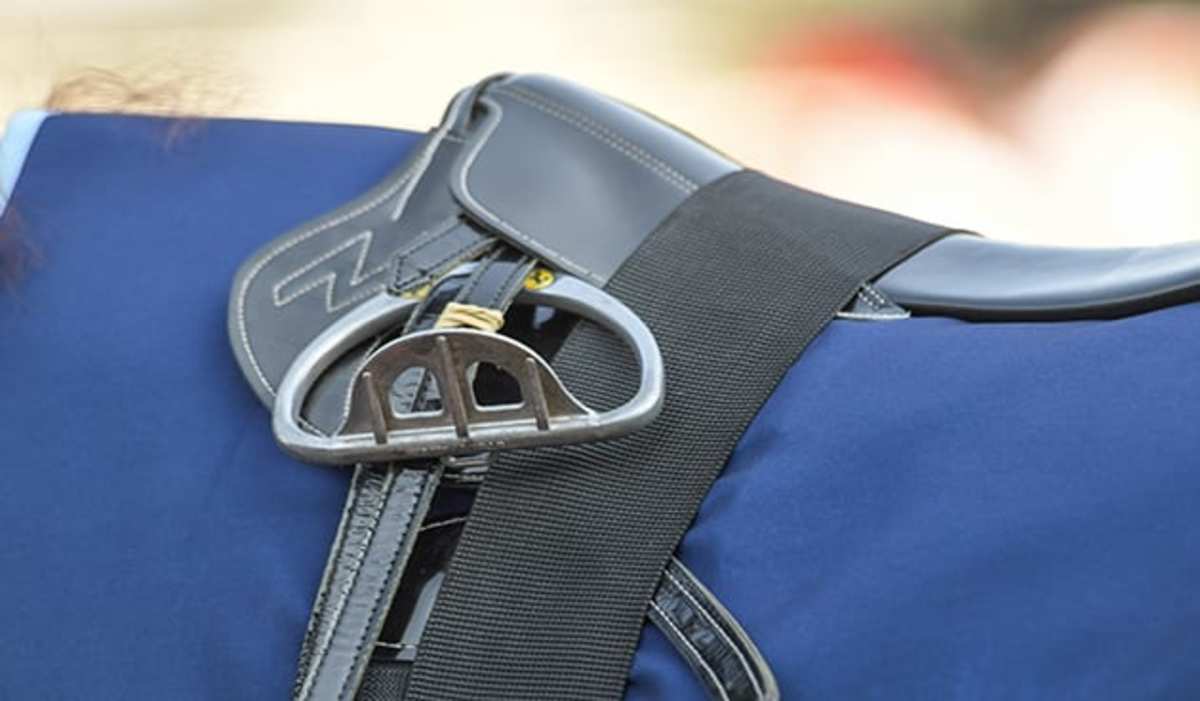
In New York, lead weights are still the preferred system to add weight to a rider unless a trainer supplies a weighted pad, which must be approved by the stewards and the clerk of scales.

Kentucky, California, and New York do not count safety equipment like vests or helmets against a rider's weight allowance. In New York, clerks can count some of the horse's equipment like martingale, breastplate, or other equipment toward a rider's weight allowance.

Scales and recordkeeping vary also. In Kentucky, riders are weighed with a digital scale 15 minutes before each race and the scale's readings feed into a computer system that keeps a running record of those weights. The same happens at NYRA facilities, but at Finger Lakes, weights are manually recorded by the clerk. In Kentucky, Torres and his assistants then place the rider's equipment on a table which is highly visible in the jockeys' room, and cover it with a saddle towel to indicate it has already been measured for the day. The scale and computer readings are verified by the stewards periodically.

In Kentucky, valets do not always saddle horses for the same rider ahead of each race. Torres randomly assigns numbers to valets each day and matches them to horses by post position order, which reduces the opportunity for a valet to collude with a rider ahead of time to change equipment or remove weights. In New York, clerks randomly assign valets to different riders each day.

After the race, riders weigh back in. Traditionally, Kentucky used to weigh only the top four finishers, but now weighs the top five due to certain types of exotic wagers that include the fifth-place entry. Kentucky also allows a rider to come back weighing up to six pounds heavier – three for equipment changes, and three for the accumulation of mud or water on the rider or their tack.

New York has detailed rules on the books prohibiting riders from touching any person or thing with their equipment after dismounting and prior to weigh in. Riders are also penalized in New York and in California for being more than one pound short of their weigh out weight, or for being more than two pounds over their weigh out reading.
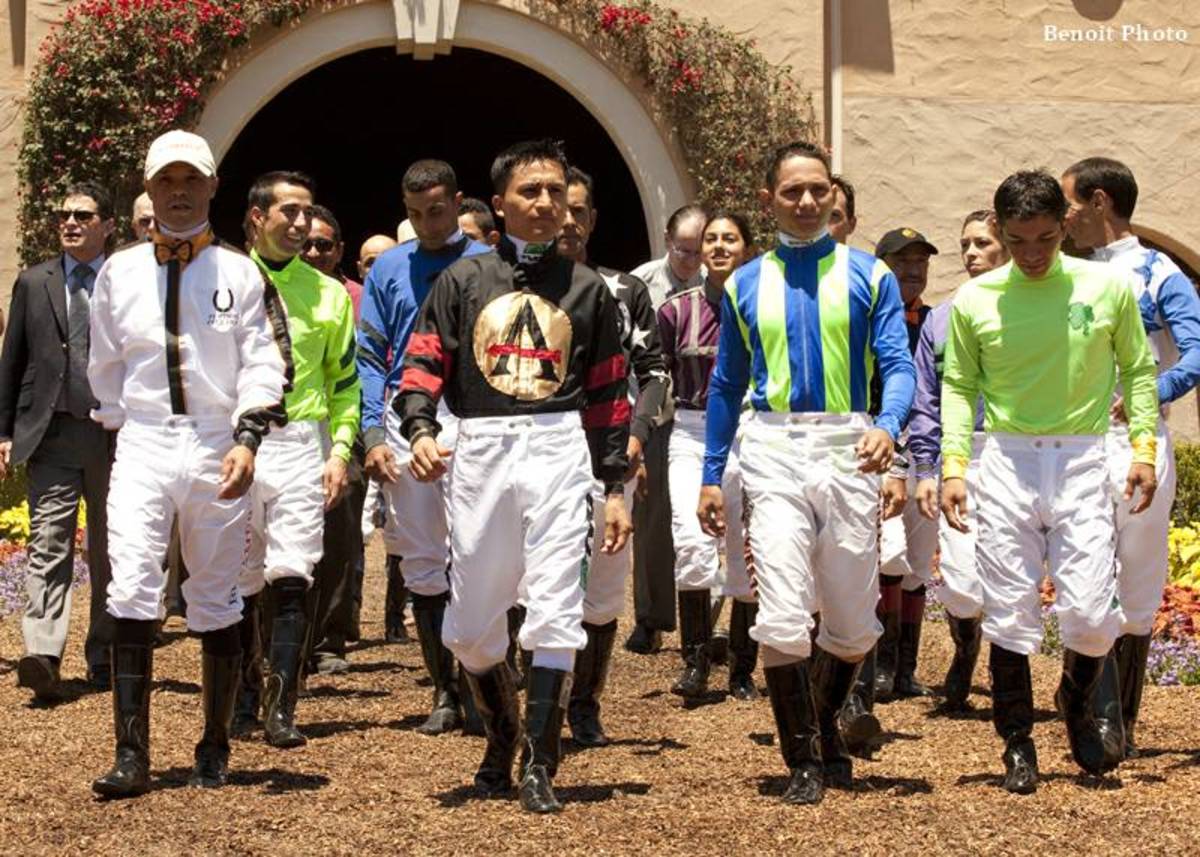
The topic of rider weights has long been a heated one, with many riders advocating for a higher minimum through the years. Torres said he believes fewer riders are going to unhealthy extremes to reduce weight than they did when he started as a clerk of scales some 15 years ago. He can remember one rider routinely sweating off seven pounds in the sauna each day; the steam rooms have been closed since COVID-19 began, and he believes fewer riders are “flipping” (or inducing vomiting) than they once did.

“It's hard to go in there and pull weight,” said Torres. “I tell them, don't kill yourself. I'd rather be stronger than be lightheaded trying to pull weight. To me, over the years, the number of riders having to reduce really hard to make weight is less and less. I know a lot of guys who realize now it's going to affect them in the long run when they retire.”

This piece is part of an occasional series exploring the way different regulations and procedures in racing work. Want to know how something in racing works? Email us using the Ask Ray button in the red bar at the top of this page.

The post How It Works: A Look At How Jockeys Weigh Out appeared first on Horse Racing News | Paulick Report.

Source of original post

Thoroughbred Retirement Foundation Seeking Donations For ‘Lucky Horseshoe’ Drive

The Thoroughbred Retirement Foundation (TRF), an equine retirement facility accredited by the Thoroughbred Aftercare Alliance (TAA), is asking horsemen to drop off their used horseshoes at trainer Rick Schosberg's barn as part of a fundraising drive.

The New York Racing Association, Inc. (NYRA) and its horsemen are committed supporters of the TAA, which accredits, inspects, and awards grants to approved aftercare organizations to retrain, retire, and rehome thoroughbreds using industry-wide funding.

The TRF is asking that horsemen collect their used horseshoes and drop them off in the blue barrels located outside Barn 42 on the Belmont Park backstretch. The drive ends on Friday, March 12.

Following March 12, the TRF will gather the horseshoes, clean them, and tie ribbons to them in preparation for a St. Patrick's Day fundraiser that will see donors who give $30 or more to the horses of the TRF receive a “lucky horseshoe” from the NYRA racetrack community.

For more information about the Thoroughbred Retirement Foundation, or to sponsor a horse at Wallkill or at one of the 500+ retired racehorses in the TRF Herd, please visit https://www.trfinc.org/you-can-help.

The post Thoroughbred Retirement Foundation Seeking Donations For ‘Lucky Horseshoe’ Drive appeared first on Horse Racing News | Paulick Report.

Source of original post

First Mares Confirmed in Foal to Instagrand and Instilled Regard

Instagrand (Into Mischief) and Instilled Regard (Arch) have both had their first mares confirmed in foal. MGISW Cambier Parc (Medaglia d'Oro) scanned in foal to Instilled Regard, and Grade I winner Concrete Rose (Twirling Candy), confirmed in foal to Instagrand. Both stallions stand at Taylor Made.

The post First Mares Confirmed in Foal to Instagrand and Instilled Regard appeared first on TDN | Thoroughbred Daily News | Horse Racing News, Results and Video | Thoroughbred Breeding and Auctions.

Source of original post

Wolf: Gotham Pair Deserve A Shot In ‘Tough Race’ For Derby Points

Having experienced both the high and low ends of the Kentucky Derby spectrum, owner Jack Wolf of Starlight Racing knows the trails and tribulations of the road to the first Saturday in May more than most. On Saturday, he'll be watching the Grade 3, $300,000 Gotham with a sense of cautious optimism when sending out Atlantic Road and Freedom Fighter.

The one-turn mile event at Aqueduct Racetrack is New York's penultimate local qualifier for the Grade 1, $3 million Kentucky Derby on May 1 at Churchill Downs and awards the top four finishers points according to a 50-20-10-5 scale.

Coverage of the Gotham will be available on America's Day at the Races, the acclaimed national telecast produced by the New York Racing Association, Inc. (NYRA) in partnership with FOX Sports. Presented by America's Best Racing and Claiborne Farm, America's Day at the Races will broadcast Saturday from 5-6 p.m. Eastern on FS2, with the Gotham slated as Race 9 at 5:07 p.m.

Wolf, who manages Starlight Racing with his wife Laurie, has campaigned 12 Kentucky Derby starters. He was involved in multiple-owner partnerships which campaigned 2018 Triple Crown winner Justify and last year's winner Authentic, but also had two last-place finishers in Keyed Entry (2006) and Monba (2008).

“Through the years, we've had quite a few hoses in the Derby. It's a lot different when you have one that's a favorite as opposed to a longshot like Keyed Entry,” Wolf said. “It's pretty exciting when you have a legit shot. Last year, even though Barclay's horse [Tagg, Tiz the Law] was the big favorite and the one to beat, I was confident that our horse would perform, and obviously he did.”

Trained by Hall of Fame nominee Todd Pletcher, Atlantic Road broke his maiden at second asking over the Aqueduct main track in gate-to-wire fashion under Kendrick Carmouche. The son of Quality Road was originally owned by Pletcher and was privately purchased by Wolf.

“I think the further he goes the better with him being by Quality Road out of a Smart Strike mare,” said Wolf. “He improved considerably and showed a bit of determination down the lane. His last race was encouraging. It'll be a tall ask to compete, but he deserves the chance.”

Atlantic Road was one of four next-out winners of the January 8 maiden special weight at Gulfstream Park, which was won by Lamutanaaty.

“A lot of those horses validated that they were good ones,” Wolf said.

Atlantic Road will break from the rail under jockey Jorge Vargas, Jr.

Fellow Starlight Racing color-bearer Freedom Fighter also has only made two starts but has covered some ground in both efforts. The son of Violence won on debut at Del Mar on August 1 at Del Mar and emerged from a six-month layoff in the Grade 2 San Vicente on February 5 at Santa Anita, where he registered a 94 Beyer Speed Figure with a close second to highly-regarded stable mate Concert Tour.

Freedom Fighter is co-owned by Starlight Racing alongside SF Racing, Madaket Stables, Golconda Stables, Siena Farm and Robert E. Masterson and was purchased for $120,000 at the 2019 Keeneland September Yearling Sale.

“His figures have improved dramatically just looking at his Beyers and he ran an 8 on the [Ragozin] sheets. But it looks like a tough race,” Wolf said.

Campaigned by Hall of Famer Bob Baffert, Freedom Fighter has trained forwardly toward the Gotham, firing a pair of bullets over the Santa Anita main track, most recently a five-furlong drill in 59.20 on February 27 – the fastest of 63 recorded works at the distance.

“When Bob tells you the horse is good and breezing the way he is, I get pretty excited,” Wolf said. “Relatively speaking, paying $120,000 for him in comparison to what we've paid for some of the others is a bit of a bargain, especially if he moves forward.”

Wolf and owner Sol Kumin of Madaket Stables tasted Derby victory together previously with Justify and Authentic.

Wolf appears to have horses firing on multiple cylinders on the Derby trail as Starlight Racing also is part owner of Spielberg, a fellow Baffert trainee who was recently a game second to champion Essential Quality in the Grade 3 Southwest at Oaklawn Park. A son of Union Rags, Spielberg won the Grade 2 Los Alamitos Futurity in December and currently sits seventh on the leaderboard with 17 points.

He also has Grade 3 Holy Bull runner-up Tarantino for trainer Rodolphe Brisset, who was a last out fourth in the Grade 2 Fountain of Youth and is No. 22 on the leaderboard with nine points.

Both Spielberg and Tarantino are owned by the same five other owners who also own Freedom Fighter.

Wolf said that the ownership group is an enjoyable one to be involved with.

“I've been friends with Tom [Ryan of SF Racing] a number of years,” said Wolf. “He talked to me about getting together with SF and then Sol came along as well. It's a really fun group of people. All of us have been through the highs and lows and we all have a good time, win, lose or draw.

“We've got two of the best trainers in the business,” Wolf added. “Bob doesn't get too excited until April, which is probably the right thing. I think if you have one that's qualified and doing well by April, then you can get excited. The end of a horse's 2-year-old year and the beginning of the following year is too early, but we all like to dream.”

Having traveled the road to the Kentucky Derby many times, Wolf said he knows not to get too carried away with Derby fever.

“There's so many variables between now and then, but it's cool to have nice horses and be in this position,” Wolf said.

The post Wolf: Gotham Pair Deserve A Shot In ‘Tough Race’ For Derby Points appeared first on Horse Racing News | Paulick Report.

Source of original post

Verified by MonsterInsights