Kentucky Sires for 2021: Fifth-Crop Stallions

Today we come to a final group of stallions whose development we're treating separately, before wrapping up our series with a look at those survivors who made it across the highwire and can be grouped together as “Established Sires.” (After which we'll also be taking a tour of regional stallions.)

In the last couple of instalments, we've observed the Kentucky talent pool in each intake rapidly drying up, so that our review of third- and fourth-crop options respectively encompassed 18 and just six stallions. And we are left with a similar rump among those about to launch a fifth crop of juveniles, with only seven still advertising a fee in Kentucky.

No need, by this stage, to reprise yet again the familiar traps of the commercial model. Suffice to turn back the clock to 2016, not so long ago, when Orb (Malibu Moon–Lady Liberty, by Unbridled)–a Kentucky Derby winner from the family of Ruffian, standing for $25,000 on an exemplary, historic farm; one sagely resistant to the inundation of the market by more industrial rivals–dominated this group with a $148,318 average for his first yearlings. Unusually, moreover, he actually managed to elevate his second crop to a still higher yield at $184,006, when selling no fewer than 66 of 77 into the ring. The world was at his feet. In 2021 Orb is still clinging on at Claiborne, but listed as “private” after receiving a grand total of seven mares last spring.

Nobody's fault, and there are parallels on every farm. Conceivably Orb could yet pull a champion out of his hat. But such is the terrifying commercial vortex that consumes a young stallion who does not make an adequately purposeful start.

Nor, on the other hand, does even the briskest of beginnings guarantee lasting momentum. The champion freshman of this group was Overanalyze, whose 2018 book at WinStar promptly soared to 195. The following season, however, he had plummeted to 43 mares and last spring he was exported to Korea. Shanghai Bobby was on his way to Japan within the year of finishing third in the freshmen championship–despite having meanwhile produced a Royal Ascot winner from his second crop, which also turned out to include elite sprinter Shancelot. A year later Japan would also summon Animal Kingdom, who had finished fourth in the freshman table.

Yet this is also the intake that includes New Year's Day. Having been reduced to a couple of dozen mares at $5,000 in 2018, he was sold to Brazil four months before an upgraded claiming horse named Maximum Security gave him a first graded stakes success. The rest is history, and New Year's Day has since been given a fresh start in Japan.

What a chaotic environment, then, shaped more by luck than judgement, has been heroically negotiated by the handful in this class who have established a viable niche in the Kentucky market.

Violence | Sarah Andrew

As it happens, far and away their most consistent achiever has been a horse who was worn down in the GII Fountain of Youth S., which turned out to be his final start, by none other than Orb. Their fortunes have diverged in their new careers, with Violence (Medaglia d'Oro–Violent Beauty, by Gone West) at Hill 'n' Dale dominating on cumulative results by virtually all indices. He only missed Overanalyze by cents as a freshman, and has since maintained output for 21 black-type winners.

True, he had a quieter year in 2019, prompting an immediate reversal–back to $25,000 from $40,000–of the fee hike he had earned with his across-the-board second-crop championship, on the back of which he had sold his yearlings (conceived at $15,000) for a knockout average of $133,600. But his 2020 campaign has the look of a turning point, crowned not just by a first domestic Grade I winner but by three of them, from consecutive crops: Volatile in the Alfred G. Vanderbilt H., No Parole in the Woody Stephens, and Dr. Schivel in the Del Mar Futurity. Behind Speightstown's four elite scorers, only Into Mischief, More Than Ready and War Front shared this distinction in 2020.

The focus on speed in his elite trio is an interesting development. Violence's own sire, though by an avowed turf influence in El Prado (Ire), operated on dirt and has divided his impact, at stud, not only between surfaces but also between disciplines. And an aristocratic maternal family features a series of crossover influences: second dam by Storm Cat out of Hall of Famer Sky Beauty (Blushing Groom); third a half-sister to the flying Dayjur (Danzig); fourth by Nijinsky out of champion sprinter Gold Beauty (Mr. Prospector).

There will be no break in the traffic for Violence, whose sales performance reflects something of his own exceptional physique. The group of juveniles he is about to launch, indeed, graduate from a book of 214 mares and he only lost momentum after that quiet 2019, with 86 mares last year. You can bet that numbers will be back up now. After sliding to a yearling average of $44,649 with his 2019 blip, this time round Violence rallied to $72,128 for 66 yearlings sold of 88 offered–an especially good performance, of course, in the teeth of the pandemic economy.

I love that Violence's first two dams are both by sires, in Gone West and Storm Cat, out of daughters of Secretariat–whose half-brother Sir Gaylord is responsible for the damsire of El Prado. One way or another, Violence now has all bases covered and can keep consolidating.
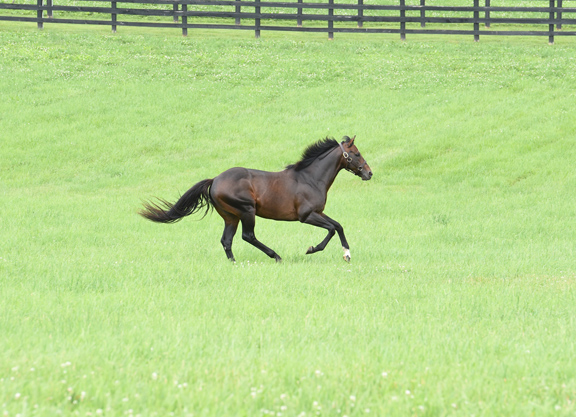
Paynter | WinStar

If Violence has always seemed regal, his nearest pursuer in this group has seemed more like the plucky fellow fighting to earn his stripes. Doubtless that partly reflects the grave health challenges overcome by Paynter (Awesome Again–Tizso, by Cee's Tizzy) before he could resume at a high level as an older horse. But we should remind ourselves that he actually started out at WinStar off a higher fee ($25,000) than Violence.

For 2021, he has taken his fourth fee cut to just $7,500–pretty astonishing, really, when he had just been saluted as sire of the fastest miler in Keeneland's history. Now, of course, Knicks Go has followed up his GI Breeders' Cup Dirt Mile track record in the GI Pegasus World Cup, reiterating his ability to kick again from the front. But this dazzling renewal for the Brad Cox barn is actually the second time that Maryland-bred Knicks Go, whose family is seeded by some pretty exotic names, has demanded a fresh look at his sire.

With three-figure books across his first four seasons, Paynter had been given a solid base and his first yearlings were well supported. They made a fairly quiet start on the track the following year, however, reducing his next book to just 34 mares at half his opening fee. Neither Paynter himself nor his sire had raced at two, so it's hard to know quite what breeders were expecting. But then Knicks Go emerged from his second crop, first as shock winner of the GI Breeders' Futurity and then beating all bar Game Winner (Candy Ride {Arg}) in the GI Breeders' Cup Juvenile. That revived momentum for Paynter, who received 97 and 71 mares in the two years since, and the second coming of Knicks Go will surely repeat the dose at such a low fee.

Because actually Paynter has a solid spread of talent behind his flagship. Knicks Go, remember, sat out most of 2020 and his $608,440 earnings represented only 10 cents in every dollar banked by Paynter in overhauling even Violence, with his three Grade I winners, to top the fourth-crop sires table. Though we've seen that only a handful of elite stallions could match the icing on Violence's cake, their performance otherwise was very similar: Paynter had 222 starters, Violence 225; he had nine black-type winners, against eight for Violence; 18 black-type performers played 15; each had three graded stakes winners and six graded stakes horses; and they respectively notched 115 and 116 winners overall.

The gap between them, of course, remains the one that divides Knicks Go from the rest of Paynter's best stock. Graded stakes winner Harpers First Ride is doing his best, ten-for-18 overall after finishing tailed off in the Pegasus, but Paynter doesn't want Knicks Go to seem so freakish as to become as much of a burden as a benefit. That's why we should respect the breadth of his output, putting him in some pretty august company in the general sires list (among the top 20 active stallions last year).

Paynter's fee cut looks a sensible response to his virtual disappearance as a commercial force with his latest yearlings, processing a handful for a four-figure average. But he can turn that round, too, as people absorb the supporting cast behind his headline act. Either way he certainly looks attractively priced for anyone who might want to breed a runner. And remember his deeds all have an obvious genetic base: he's out of a full-sister to his farm's pensioned legend Tiznow.

Take Charge Indy | Louise Reinagel

This group contains one stallion who has actually managed to reverse the usual tide, Take Charge Indy (A.P. Indy–Take Charge Lady, by Dehere) having last year returned to WinStar after a three-year stint in Korea. He had been exported after a tepid reception for his first yearlings in 2016, leggy and immature as they often were, an average of $40,422 representing a limited yield for a rookie who had started out at $20,000.

The three crops he left behind, however, turned out to include the likes of GII Rebel S. winner Long Range Toddy, GII Louisiana Derby winner Noble Indy and GI Preakness S. runner-up Everfast. In 2018, Take Charge Indy finished runner-up in the second-crop table; and the following year he edged out Paynter to top the third-crop championship with five black-type winners. He only mustered one of those last year, but obviously had no juvenile input in play.

He was welcomed back by 144 mares last spring, at $17,500, and a mild trim to $15,000 suggests confidence that breeders will be following through on a pedigree that unites a breed-shaping stallion with a top-class runner who has since become a Broodmare of the Year (also responsible, of course, for Three Chimneys sire Will Take Charge). As with Violence, we get a double dose of Secretariat's daughters through Weekend Surprise, the dam of A.P. Indy, and Sister Dot, who gave us Take Charge Lady's sire Dehere. Indeed, the whole page is saturated with Classic influences and, if his GI Florida Derby success could not disguise the reality that he raced one peg below the very best, then Take Charge Indy could well become one of those whose genes make him eligible to produce runners still better than himself.

That remains to be seen. Strictly, Take Charge Indy still needs his big horse–but the bottom line is that his black-type winners and performers have come at a clip slightly better than both Violence and Paynter. Obviously he has a problem in that there will be few if any headlines coming off the track for a couple years now, so he may need the market to invest his relaunch with something of the glamour generally reserved for total newcomers. But he should be treated with more respect than those, having already demonstrated his competence in the role. And the Classic complexion of his overall pedigree should especially appeal to anyone prepared to retain a filly.
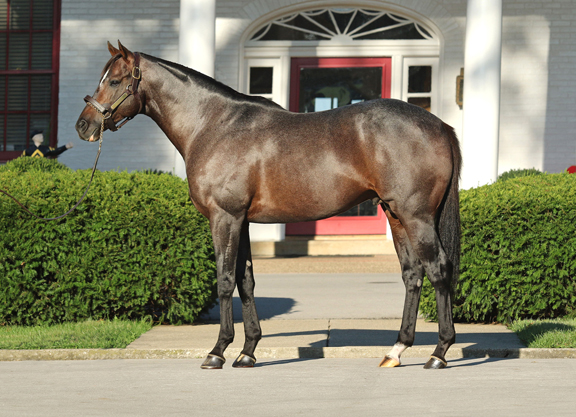
 

Oxbow | ThoroStride

Another nugget of old-fashioned virtue, and who happens to be even more closely related to a rival in this intake, is Oxbow (Awesome Again–Tizamazing, by Cee's Tizzy) at Calumet. He is by the same sire as Paynter and his dam, like Paynter, is another sister to the great Tiznow. Both horses, moreover, finished second in the GI Belmont S. But Oxbow did so after winning the GI Preakness and running sixth in the Derby, and earlier won the GIII Lecomte S. by 11 1/2 lengths. Unfortunately he derailed in his next start, but he had left no doubt as to his throwback, speed-carrying capacities and you'd be confident that his stock will mature effectively.

That's important, because his sophomores this year represent a book of 187–and they include none other than Hot Rod Charlie, 94-1 runner-up in the GI Breeders' Cup Juvenile. So these might just keep him in the game after he was reduced to a very small book last year, duly trimmed to $7,500 (opened at $20,000). His percentages are unexciting and he appears to have rather shot his bolt as a commercial sire, but that won't stop him producing another Coach Rocks (GII Gulfstream Oaks) or two.
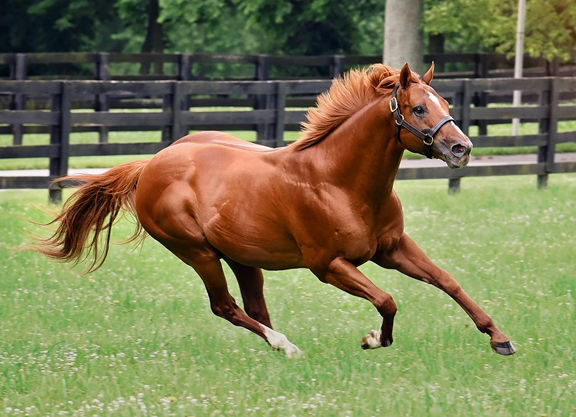
Jimmy Creed | Spendthrift

Jimmy Creed (Distorted Humor–Hookedonthefeelin, by Citidancer) represents a very different firm, in Spendthrift. But actually he has so far had nothing like the kind of industrial output sometimes associated with that farm, while having quietly established himself as a most consistent operator at $10,000, temptingly down from $15,000. In fact, his lifetime ratio of black-type winners and performers to named foals (5.2% and 11.5% respectively) is ahead of all these, even Violence (4.5% and 8.7%).

That makes him a really interesting proposition, as a lively start with his first juveniles (20 winners from 44 starters) turned round his book from 67 in 2017 to 165 in 2018. That gives him a big team of juveniles for the year ahead, including yearlings that sold for as much as $500,000 and an average $46,125, while he had another 253 covers across the next two years to keep the pipeline full. In other words, foals conceived now can hope to ride renewed headlines on the track, where he has already produced four graded stakes winners/four Grade I horses. It's all perfectly feasible of a GI Malibu winner whose dam and half-sister Pussycat Doll (Real Quiet) both won the GI La Brea S.
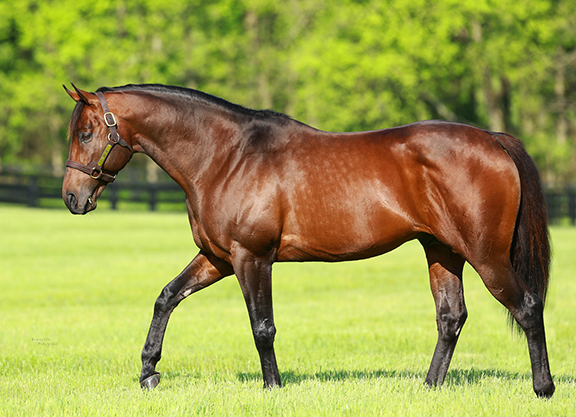
Alternation | Asuncion Pineyrua

Another by the same sire, Alternation (Distorted Humor–Alternate, by Seattle Slew) resembles Paynter with Knicks Go in needing to show that it is not all about GI Kentucky Oaks winner Serengeti Empress. Yes, he only has one other graded stakes winner to this point, but eight black-type scorers overall is a respectable percentage of only 199 named foals.

By this stage he's not really pretending to be a commercial sire but the 40 mares he entertained at Pin Oak last year were sent in the knowledge that his half-brother Higher Power (Medaglia d'Oro) has now earned a place at Darby Dan as a runaway winner of the GI Pacific Classic. Their dam is a half-sister to Canadian Horse of the Year Peaks and Valleys (Mt. Livermore) and it's a regal family all round. He has done it once and, given the chance, there's no reason why he shouldn't do it again.

The only other stallion apparently advertising a fee in Kentucky from this group is Raison d'Etat (A.P. Indy–Sightseek, by Distant View) at Calumet, off the bargain peg of $2,500. He is trading primarily on his genes, rather than the limited use he made of them on the track, but has vindicated the theory to a modest degree with a couple of stakes winners so far.

Bottom line is that some of these survivors may have a lean and hungry look, but they're a deserving bunch overall and much better value than almost all the unproven stallions who dominate the market. Here's hoping they consolidate and can earn a place, next time round, in our concluding look at Established Sires.

CHRIS McGRATH'S VALUE PODIUM: Fourth- & Fifth-Crop Sires
Gold: Paynter ($7,500, WinStar)
   Good base behind his headline act, yet cost shrinking
Silver: Cairo Prince ($15,000, Airdrie)
   Star of his class now a tempting fee
Bronze: Jimmy Creed ($10,000, Spendthrift)
   Pipeline is loaded.

The post Kentucky Sires for 2021: Fifth-Crop Stallions appeared first on TDN | Thoroughbred Daily News | Horse Racing News, Results and Video | Thoroughbred Breeding and Auctions.

Source of original post

Keeneland Releases Spring Stakes Schedule

Keeneland will present 18 stakes, featuring the 97th running of the $800,000 GII Toyota Blue Grass S. and the 84th running of the $400,000 GI Central Bank Ashland S., worth a total of $4.1 million during its 2021 Spring Meet from Apr. 2-23. Post time for the first race during the 15-day season will be 1:05 p.m. ET. Keeneland will be closed Easter Sunday, Apr. 4.

“Keeneland is excited to welcome racing back to the Bluegrass in April,” Keeneland President and CEO Shannon Arvin said. “With the cancellation of last year's Spring Meet because of the pandemic, it is critical to the Thoroughbred industry that we are able to offer our full slate of April stakes on their traditional dates. These races are key fixtures on the international racing calendar.”

“For this year's Spring Meet,” Arvin added, “Keeneland is working on plans for ticketing options under our COVID-19 safety protocols and we plan to make an announcement in the next few weeks.”

Keeneland will conduct a total of 10 stakes on grass and eight stakes on dirt while offering multiple stakes on four days during the Spring Meet.

Opening day, Friday, Apr. 2, features three stakes: the $150,000 GIII Kentucky Utilities Transylvania S., a 1 1/16-mile turf race for 3-year-olds; the $150,000 GIII Beaumont S. at seven furlongs, 184 feet, on dirt for 3-year-old fillies; and $100,000 Palisades Turf Sprint S., for 3-year-olds going 5 1/2 furlongs on the grass.

The Toyota Blue Grass and Central Bank Ashland will be contested the following day, Saturday, Apr. 3, as part of a blockbuster card of six stakes. Both are worth 180 points on the Road to the Kentucky Derby and Road to the Kentucky Oaks, respectively. The winners of each stakes will earn 100 qualifying points to the respective races. Joining the Toyota Blue Grass and Central Bank Ashland on April 3 are the $300,000 GI Madison S. for older fillies and mares at seven furlongs; $200,000 GII Appalachian S. for 3-year-old fillies at one mile on the grass; $200,000 GII Shakertown S. for 3-year-olds and up at 5 1/2 furlongs on the turf; and $200,000 GIII Commonwealth S. for older horses at seven furlongs.

For the remainder of the Spring Meet, racing will be held Wednesday through Sunday. For the entire stakes schedule, visit Keeneland.com.

The post Keeneland Releases Spring Stakes Schedule appeared first on TDN | Thoroughbred Daily News | Horse Racing News, Results and Video | Thoroughbred Breeding and Auctions.

Source of original post

Sikura Makes A Case for World of Trouble

When Hill 'n' Dale Farms announced that it would be standing World of Trouble (Kantharos) at stud, everything appeared straightforward. The horse was among the fastest of his generation and had won Grade I races on the turf and dirt. Considering the modest stud fee of $15,000 and the horse's credentials, Hill 'n' Dale President John Sikura had every reason to believe that the horse would be one of the more popular stallions at his farm.

Five months later, it all came crashing down. His trainer Jason Servis was indicted in March for allegedly using performance-enhancing drugs on his horses. Suddenly, he became a tough sell as a stallion.

Some may claim that none of this should have been a surprise to Sikura. Long before the indictments, suspicions surrounded Servis, a trainer whose accomplishments often seemed too good to be true.

“I claim naivete,” Sikura said. “I was not aware of any suspicions. It wasn't common talk in my circles. It may have been among gamblers or rival trainers, but I was never aware of any controversy swirling around him. Now I am more attuned to the subject and pay attention to it more closely. ”

Sikura decided to be proactive. He issued an open letter to the industry in the TDN defending World of Trouble and cut his stud fee in half to $7,500. Whether it will work or not remains to be seen. This is new territory for not just World of Trouble, but a handful of other stallions that were trained by Servis or Jorge Navarro, who was also indicted for allegedly using performance-enhancing drugs. Were they top race horses because of their natural ability or because their trainers may have been cheating or some combination of the two?

“If you delve into his form you'll see that this horse has always been a good horse,” Sikura said. “If he was given substances he shouldn't have been given, I won't defend that, but to say that a horse can run three quarters in six and change only because off some potion, I don't think that's a realistic position. The correlation between multiple Grade I winner and a magic potion, I don't think that is fair. I don't think it's based in fact.”

World of Trouble won the GI 2019 Jaipur S. at six furlongs on the grass in 1:06.37. Two starts earlier, he won the GI Carter H. on the dirt. Those are his two most impressive wins, but Sikura is quick to point out that World of Trouble showed promise before being turned over to Servis after his second career start. For trainer Kathleen O'Connell, he broke his maiden by 14 lengths in his first start and then was second in the FTBOA Florida Sire Affirmed S.

“Trained by Kathleen O'Connell for his first two starts as a two-year-old, World of Trouble looked like a world beater, breaking his maiden first time out by 14 lengths,” Sikura wrote in his letter.
Sikura said it's too early to tell whether or not his letter and the reduction in the stud fee will mean that World of Trouble will have a decent size book this year. Last year, in his first season as a sire, he was bred to 121 mares, most of which were booked before the indictments came out.

“It's early yet,” he said. “What we've done has stirred debate, but I don't know if it will change anybody's stance. We reduced the stud fee in half, we pointed out that he was fast before he was trained by Jason Servis and that he was fast after he was trained by Jason Servis. We don't know the specific illegal drug that was given to the horse or how, if and to what measure that affected his performance. It's an issue people feel strongly about, but a lot of it is just conjecture.”

Sikura said he has received messages of support when it comes to World of Trouble, but has also been targeted by those who he calls Internet trolls, “who hate the game and are convinced there is a conspiracy and a cover up when it comes to everything.”

Hill 'n' Dale also might have felt some concern after Charlatan (Speightstown) crossed the wire first in a division of the GI Arkansas Derby, and the farm secured the breeding rights to the Bob Baffert-trained colt. It was soon revealed that Charlatan had tested positive for lidocaine in the race, which meant he lost his lone Grade I win at the time.

But Charlatan will be fine. He came back to win the GI Runhappy Malibu S. and is the likely favorite in the $20 million Saudi Cup. He figures to be a very popular sire. As for World of Trouble, his first crop will hit the racetrack in 2023. It may not be until then that the questions swirling around World of Trouble are answered.

“We made decisions that should impact interest and increase the size of his book to some degree,” Sikura said. “What happens next, only time will tell.”

The post Sikura Makes A Case for World of Trouble appeared first on TDN | Thoroughbred Daily News | Horse Racing News, Results and Video | Thoroughbred Breeding and Auctions.

Source of original post

Triple Crown Weekend Prep Report Card: A Tale Of Two Pedigrees

Two Grade 3 races on each coast, the Holy Bull Stakes at Gulfstream Park in South Florida and the Robert B. Lewis Stakes at Santa Anita in Southern California, were run on Saturday, offering 17 Kentucky Derby qualifying points to the top four finishers (10-4-2-1).

The last time the Holy Bull Stakes winner went on to victory in the G1 Kentucky Derby was in 2006 when Barbaro, making his dirt track debut after winning his first three career starts on turf, scored by three-quarters of a length on a sloppy track. Before that, when the race was known as the Preview Stakes, Go for Gin was victorious en route to capturing the 1994 Kentucky Derby. Some very good horses have won the Holy Bull, including the 2020 winner Tiz the Law, who opened last year's disjointed Triple Crown with a win in the Belmont Stakes.

Prior to 2007, the Robert B. Lewis was known as the Santa Catalina Stakes, which was first run in 1935. It's had different conditions over the years but in recent decades has been restricted to 3-year-olds. Kentucky Derby and Preakness winner I'll Have Another won the Lewis in 2012 and Kentucky Derby winner Ferdinand won it in 1986. Like the Holy Bull, many winners of this early season race for 3-year-olds have gone on to bigger and better things.

Here's a brief look at each race, with my Report Card grade for the winner. The A to F grading system is subjective and based on my personal “eyeball test,” Beyer Speed Figures from Daily Racing Form, historical signifidance of the race and perceived quality of field.

Jan 30 Holy Bull Stakes 1 1/16 miles, Gulfstream

The 11-10 favorite in the Holy Bull was Prime Factor, a $900,000 yearling purchase and winner by 8 ¾ lengths for Todd Pletcher in his only career start while sprinting six furlongs at Gulfstream on Dec. 12. Greatest Honour, bred and owned by Courtlandt Farm and trained by Shug McGaughey, needed four starts to break his maiden, doing so in his Gulfstream debut Dec. 26 at 1-2 odds, coming from off the pace to win by 1 ½ lengths. He was the 5-2 second choice in the betting in the Holy Bull.

Jose Ortiz and Greatest Honour at the wire in the Holy Bull Stakes

Gulfstream Park is not the kind of racetrack where I expect a horse to come from far off the pace to win, and that made Greatest Honour's powerful 5 3/4-length victory that much more impressive.

Rated in seventh of nine runners early by Jose Ortiz, the Tapit colt gained ground in the run down the backstretch, made a bold move on the outside rounding the far turn, took command with a quarter mile to run and ran straight as a string down the stretch as he drew off under mild encouragement.

Final time of the Holy Bull was 1:43.19 after fractions of :23.28, :46.97, 1:11.36 and 1:36.58. The winner was given an 89 Beyer Speed Figure for the effort, an improvement from his maiden-breaking 83.

While some of the Holy Bull runners may go on to bigger and better things (Prime Factor ran a decent third in his first try around two turns), the field as a whole had not accomplished much going into the race. The lone stakes winner was Sittin On Go, who won the G3 Iroquois at Churchill Downs in his second start but then was off the board in two subsequent starts. The late-running horse from the Dale Romans barn ran sixth.

There is a lot to like about Greatest Honour's pedigree beyond him being a son of Tapit. The colt was produced from the Street Cry mare Tiffany's Honour, a half sister to back-to-back Belmont Stakes winners Jazil and Rags to Riches. Those successes led to their dam, G2 Demoiselle Stakes winner Better Than Honour, being named Broodmare of the Year by the Kentucky Thoroughbred Association/Kentucky Thoroughbred Owners and Breeders. Better Than Honour was produced by G1 Kentucky Oaks winner Blush With Pride, whose dam, Best in Show, was also named Broodmare of the Year.  When two of a horse's first four dams were Broodmare of the Year, that is a strong female family.

The year she foaled Greatest Honour, Tiffany's Honour was sold to leading Japanese breeder Katsumi Yoshida of Northern Farm at the 2018 Keeneland November Breeding Stock Sale for $2.2 million while believed in foal to Medaglia d'Oro.

Grade: A-

Jan. 30 Robert B. Lewis Stakes, 1 1/16 miles, Santa Anita

With a barn full of royally bred and expensive yearling and 2-year-old in training purchases, is it possible that trainer Bob Baffert's best prospect for the 2021 Triple Crown is a Florida-bred who changed hands for $1,000 as a yearling at the Ocala Breeders' Sales Company's 2019 Winter Mixed Sale?

That horse, Medina Spirit, a son of the Giant's Causeway stallion Protonico, increased in value but was still a bargain at $35,000 when clocker and bloodstock agent Gary Young bought him from Whitman Sales for $35,000 on behalf of Zedan Racing Stables at the 2020 OBS July Sale of 2-year-olds in training and horses of racing age.

Medina Spirit has been the “other Baffert” twice. The first time came in his debut when stablemate Democrat fizzled as the favorite and Medina Spririt won by three lengths going 5 ½ furlongs at Los Alamitos. Next out, in the G3 Sham on Jan. 2, some thought Medina Spirit (sent off at 9-1) was entered by Baffert to make sure the race would fill (only four others entered). The hotshot 1-5 Sham favorite was Life Is Good, who made a dazzling impression in his debut, getting a 91 Beyer Speed Figure (Medina Spirit got a 76 Beyer in his debut). Life Is Good looked well on his way to living up to his top billing in the Sham until Medina Spirit, racing in second throughout, gained 3 ¼ lengths on his stablemate in the final furlong, cutting the winning margin to just three-quarters of a length.

Medina Spirit (inside) fought off Roman Centurian and Hot Rod Charlie the length of the stretch to win the Robert B. Lewis Stakes

For the Lewis, Medina Spirit was the even-money favorite, with his stablemate, the $1-million yearling purchase and G2 Los Alamitos Futurity winner Spielberg, playing second fiddle in the Baffert barn. The latter was a non-factor in a race where Medina Spirit was pushed early by Wipe the Slate and Parnelli through fast fractions of :22.89 and :46.61. The third quarter was a dawdling :25.75 for six furlongs in 1:12.36 and the fourth quarter of 26.98 made the mile time 1:39.34. The times are slow on paper, but Santa Anita's main track was listed as good after heavy rains hit the previous two days.

Medina Spirit put away the chasers (they finished about 20 lengths behind him at the wire), but was under attack down the stretch from Hot Rod Charlie and Roman Centurian. The former, an Oxbow colt trained by Doug O'Neill, was making his first start since finishing second at 94-1 odds in the G1 Breeders' Cup Juvenile, beaten three-quarters of a length by champion Essential Quality. The latter, an Empire Maker colt trained by Simon Callaghan, graduated from the maiden ranks in his second start and first around two turns at Santa Anita on Jan. 3.

Both Hot Rod Charlie, racing between horses, and Roman Centurian to the outside, appeared to have all the momentum as they hooked up with Medina Spirit at the top of the stretch. But Medina Spirit never yielded, holding his two rivals at bay at the wire and then continuing to gallop out ahead of them. Roman Centurian, at 11-1, finished second by a neck, just a nose ahead of 5-2 second choice Hot Rod Charlie.

Final time for the Lewis was 1:46.26, and the top three finishers all received Beyer Speed Figures of 91.

Medina Spirit is from the first crop of foals by Protonico, who certainly has stamina in his pedigree, being by Giant's Causeway and out of an A.P. Indy mare. There's not much black type on  Medina Spirit's catalogue page (until you get to the fourth dam), but his dam, Mongolian Changa, is a daughter of the Dynaformer stallion Brilliant Speed, who won the G1 Blue Grass Stakes when Keeneland had a Polytrack synthetic surface.

Once a horse is a proven runner, pedigree doesn't matter nearly as much. I'm reminded of that when I look at the remarkable racing career and the relatively obscure pedigree of Holy Bull, a son of the Minnesota Mac stallion Great Above out of a mare by Al Hattab.

Grade B

Previously: Jan 26 Triple Crown Weekend Prep Report Card

Jan. 18 Triple Crown Weekend Prep Report Card

Jan. 3 Triple Crown Weekend Prep Report Card

The post Triple Crown Weekend Prep Report Card: A Tale Of Two Pedigrees appeared first on Horse Racing News | Paulick Report.

Source of original post

Verified by MonsterInsights