Coast-To-Coast Stakes Action, Unveiling Of Eclipse Award Finalists On TVG Saturday

TVG, America's horse racing network, will be live trackside at Santa Anita and Gulfstream Park this weekend featuring the Sunshine Million for Florida and California-bred horses alongside six stakes races from Fair Grounds including the $200,000 Lecomte Stakes (G3), an early prep race for the Kentucky Derby (G1).

At Gulfstream Park, TVG's Gabby Gaudet will be trackside with insights and interviews as the Florida breeding industry takes center stage with Sunshine Millions Day. There are four stakes races restricted to Florida-bred horses on the 12-race card including the $75,000 Sunshine Millions Classic. The race features a field of seven contenders including veteran gelding Noble Drama, winner of the 2020 edition for trainer David Fawkes. The six-year-old gelding will have Emisael Jaramillo aboard as he squares off against Quenane, winner of the Sunshine Millions Preview Stakes.

The Sunshine Millions continues in California on Saturday and the focus will shift to highlight the California breeding program throughout the 10-race California Cup Day card. Mike Joyce, Christina Blacker and Britney Eurton will be live on site at Santa Anita with expert analysis, selections and interviews. The featured event is the $200,000 Unusual Heat Turf Classic which has drawn a contentious field of 11 state-breds including graded stakes winner Acclimate who has been freshened since a fourth-place finish in the Hollywood Turf Cup Stakes (G2) in November for trainer Philip D'Amato. Tyler Baze will be in the irons.

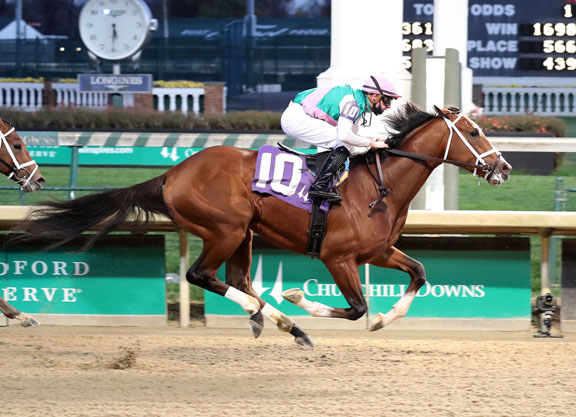
Fair Grounds has a loaded 13-race card scheduled for Saturday featuring six stakes races. The featured and final race on the card, the $200,000 Lecomte Stakes (G3) has drawn a field of 11 Triple Crown hopefuls including Mandaloun, a homebred son of Into Mischief for Juddmonte Farms. Trained by Brad Cox, he is undefeated from two starts and will be making his stakes debut under jockey Florent Geroux. The Lecomte Stakes offers 10-4-2-1 Kentucky Derby points to the top four finishers.

On Saturday, TVG will broadcast a live announcement of the finalists for the 2020 Eclipse Awards at 12:00 p.m. ET/9:00 a.m. PT. The 50th Eclipse Awards, presented by Spendthrift Farm, will be televised live on TVG on Thursday, Jan. 28 at 8:00 p.m. ET/5:00 p.m. PT.

In addition to racing from Fair Grounds, Santa Anita and Gulfstream Park, TVG will be featuring racing from Aqueduct, Tampa Bay Downs and more. Fans can tune in on TVG, TVG2 and the Watch TVG app which is available on Amazon Fire, Roku and connected Apple TV devices.

The post Coast-To-Coast Stakes Action, Unveiling Of Eclipse Award Finalists On TVG Saturday appeared first on Horse Racing News | Paulick Report.

Source of original post

Body & Soul: What Goes Around Comes Around?

Don’t let that headline throw you off–we are not about to bury anyone in keeping with the Oxford English Dictionary‘s definition of the proverb, i.e., “the consequences of one’s actions will have to be dealt with eventually.”

However, there may be a little karma being tossed around herein because of what the graphic which accompanies this essay seems to indicate.

To set the stage we take another bit of a dip into the endlessly fascinating brain of Dr. Franco Varola, for whom our admiration is shameless. He devoted Chapter 11 in The Functional Development of the Thoroughbred to how the species developed over time in each country to reflect the culture and economy of that country. His is a fascinating analysis of how breeding and/or purchasing Thoroughbreds tends to reflect the psyche, if you will, of a particular country–or at least how it likes to present itself to the world.

For example, the British tend to emphasize excellence in a royal sense–the Classics are the be-all and end-all, and one should breed a horse that comports itself royally, don’t you know. The French strive for all-around excellence but also want to see it done with style–or as Varola called it, “souplesse.” The Germans built their bloodstock on the dour professional, and it used to have to be “dunkelbraun”–dark bay or brown.

As for the Americans, well, no one can figure us out, not even Varola. But we’ll give it a try.

To bring some perspective into our thesis please note that your correspondent spent a good portion of the 1970s and part of the 1980s as a journalist with three specialties–financial matters, travel, and Thoroughbred racing. This was a wonderful gig, especially when a travel assignment coincided with locations where racetracks were located.

One might recall that the 1970s and 1980s were eras of turbulent social change and, almost forgotten today, massive financial dislocations–recessions, inflation, ruinous scandals. These two decades also saw extraordinary changes in Thoroughbred racing’s financial infrastructure beginning with the Northern Dancer mania at the sales to the development of multi-member racing partnerships to the exploratory and eventual embracing of simulcasting.

We will not need to expound upon the specifics here but instead we will share an insight which, over those years, we expounded in print: It seemed that whenever the overall international economy was disrupted for the majority, the hints were there first in Thoroughbred racing and breeding–sometimes up to two years ahead. Yearling sales went through the roof, and a year or so later inflation grabbed the news headlines–followed by market crashes. Breeders suffered through market crashes and foreign interests scooped in to nearly decimate historic broodmare bands.

In short, things went from a period of financial stability which dominated the 1950s and most of the 1960s to a push-and-pull amongst the entrenched Wall Street ways of doing things to financial innovators who invented, peddled, and profited from questionable futures as well as sometimes wild, and usually unsuccessful, tax shelter schemes.

In hindsight, we can now look back on the cultural changes, many of which evolved into political expressions, and see that what many feared was the loss of political stability at the time of John F. Kennedy’s election turned out to be just a hint of what would come. There was always a push-and-pull in American politics between conservatives and progressives but it was usually the men in the middle (without much female assistance) who held the center and prevailed. However, with the civil rights movement, the Vietnam War, women’s liberation, LGBTQ awareness–all wrapped in a mix of disco, heavy metal, rap, and country music–the push-and-pulls turned into tugs of war.

What follows logically is how the stallion population, which comes from the racing population, is shaped by the culture and economics of an era. This shaping comes into focus over one or more decades, and we noticed in a biomechanical sense that something interesting might be going on.


We present herein a graphic depicting the phenotypic distribution of the leading sires for the past five decades. One should recall that a phenotype is defined as any “detectable characteristic of an organism (i.e., structural, behavioral, etc.) determined by an interaction between its genotype and environment.” As such, we have arranged our phenotype targets in clockwork fashion by decade with the 1970s at the top. Note that stability and conformity are closest to the center, and the more traditional (i.e., Classic-oriented) is off to the right (Emphasis = Stride), while the new (Emphasis = Power) is off to the left.

Note that the distribution of phenotypes in the 2000s and 2010s appear to be congruent, but in reality we are seeing a subtle move back toward the center because the stallion population in the 2010s is relatively young and are of the type that are getting sons who might help influence that movement over the next decade.

It might not turn out to be “everything old is new again,” but it could very well be somewhat karmic.

Bob Fierro is a partner with Jay Kilgore and Frank Mitchell in DataTrack International, biomechanical consultants and developers of BreezeFigs. He can be reached at bbfq@earthlink.net.

The post Body & Soul: What Goes Around Comes Around? appeared first on TDN | Thoroughbred Daily News | Horse Racing News, Results and Video | Thoroughbred Breeding and Auctions.

Source of original post

This Side Up: Manners Maketh Mandaloun

How ironic, that a man with a nearly anguished instinct for self-effacement should have left so indelible an impression on our walk of life–one he strolled so quietly that he insisted on registering his silks, with The Jockey Club in Britain, simply in the name of Mr. K. Abdullah. How many others who covet the Turf’s great prizes, in contrast, elbow their way through the crowd in preening advertisement of their wealth and acuity?

If we learn much about such people from their presumption of some deeper dignity, from a status they cannot sustain even by a royal title, so we can surmise something of those human qualities–generally so inscrutable–that were extinguished with the loss of Prince Khalid this week. For he plainly considered “Mr.” an ample prompt to our general obligation of mutual civility; above all, perhaps, among those who constantly witness the egalitarianism that persists between Thoroughbreds themselves. Whatever advantages we seek in pedigree–the foundation, after all, of his entire Juddmonte empire–even the Prince will have seen the most regal foals reduced to the claiming ranks, or denied the throne by blue-collar upstarts.

Admittedly the courteous lineaments of his public appearances so confined his inner nature that we should perhaps hesitate before discovering some third dimension barely exposed even to those in our community who spent years in his service. For their tributes have been in much the same register as those made from a more superficial vantage. Even from the outside, any of us might ascribe to him attributes of ‘the perfect gentleman’. First and foremost, precisely that freedom from self-importance; but also his distaste for the kind of hiring and firing that we see in the Turf’s coarser patrons.

So perhaps we actually knew him better than we realized. Certainly his striking fidelities suggest an unshakable respect for those qualities that abide within those who might not appear, to more fickle judgements, in a deserving state of grace. He was just about the last man standing when Sir Henry Cecil paid with the contempt of fashion for a human brittleness in the face of adversity. And while Bobby Frankel never lost professional esteem in the same way, you suspect that few who share the Prince’s antecedents would have become quite so devoted to a cantankerous Jewish gambler from Brooklyn.

The Prince with Sir Henry Cecil in 2011 | Racing Post

The sheer breadth of humanity encompassed by those two trainers, their wildly divergent personalities united by a slender strand of genius, attested to a tolerance and empathy in the Prince that would serve us all well, not least in these rancorous times. A tragic destiny, of course, reserved for Frankel and Cecil a cruel extra bond, in their premature loss to cancer. But a happier clause in the unforgiving terms of fate was the arrival of a champion, named in memory of one, to redeem the darkest hour of the other.

Arguably the Prince surrendered something even of Juddmonte’s defining achievement to the needs of his suffering trainer. Even with his own time probably short, he delayed Frankel’s retirement as the apogee of his breeding program so that Cecil would retain a spur to his fortitude every time he went out onto the gallops. And the Prince also indulged the rather parochial priorities that somewhat hampered Cecil even in his pomp, never mind at a time when personal travel had become impractical.

The Prince must surely have asked himself, as did some of us mere bystanders, what capacities remained unexplored in Frankel as Cecil kept him, almost to the end, in the same domestic pool of outclassed milers. Constantly compared with specters of the past, Frankel was never given the chance to measure himself even against his contemporaries overseas. The Prince had a mansion just beside the Bois de Boulogne, and first became enchanted by the Turf when taken by friends to Longchamp in 1956. And he adored the Breeders’ Cup. Hopefully his enjoyment of Frankel’s wonderful start at stud was not too poignantly tempered by the reflection that the speed-carrying capacity he imparts to his stock really should have been examined either in the Arc or at the Breeders’ Cup.

A trifling quibble, by now, in a legacy that has long been secure–and will long continue to evolve. Indeed, just as Juddmonte once gave a cherished friend a critical transfusion of vitality, perhaps those grieving the Prince now will themselves find some timely succour from its bloodlines.

Mandaloun | Coady

Because none of us, surely, will be able to resist a frisson that some benign force may assist the Juddmonte colt who finds himself, on this of all weekends, dipping a toe into the Triple Crown water in the GIII Lecomte S.

The Kentucky Derby was one of the few great ambitions to elude the Prince, albeit he managed two seconds (Aptitude and Empire Maker) from only five starters. Mandaloun is by the same extraordinary sire that has just settled any doubt as to his competence to stretch his trademark speed, with the improvement in his mares, to the demands of the Derby.

The upgrading of Into Mischief‘s books was aptly measured when the Prince favored him with a visit from Mandaloun’s dam, Empire Maker’s daughter Brooch, a Group 2 and 3 winner in Ireland. Judicious introduction of external blood has been key to the constant invigoration of the Prince’s families. In this case, however, the first three dams are all by homebred stallions: Empire Maker, Dansili (GB) and Distant View. But the fourth dam is Queen of Song (His Majesty), a sister to Cormorant added to the expanding Juddmonte band for $700,000 at the 1989 Keeneland November Sale.

Brad Cox also saddles an exciting sophomore filly for Juddmonte in the Silverbulletday S. Already No. 2 in colleague Bill Finley’s TDN Oaks Top 10, Sun Path is by another commercial stallion in Munnings. In her case, however, her first three dams are all by other outside sires: Tapit, Nureyev and Nijinsky. The third is champion Chris Evert’s daughter Nijinsky Star, acquired (from the Carl Rosen dispersal) in the same ring as Queen of Song, and for the same price, two years previously.

Whereas Queen Of Song had won 14 of 58 starts for Parrish Hill Farm, Nijinsky Star appeared a very different proposition: in fact, she had a tube exiting a lung, draining fluid from a bout of pleurisy in her younger days. But that did not put off the Prince and his team, and his investment paid off with Nijinsky Star’s emergence as foundation mare. Two daughters by Nureyev did especially well: Viviana produced multiple Grade I winners Sightseek (Distant View) and Tates Creek (Rahy), while Willstar gave us not only Group 1 winner Etoile Montante (Miswaki) but Touch the Star, who has already produced Bonny South by Tapit to win the GII Fair Grounds Oaks last year; and now Sun Path.

Sun Path | Hodges Photography

So both these Classic prospects exemplify the Prince’s patient refinement of families, an artistry and precision spanning three decades. Though their breeder actually started out by breaking the European record for a yearling almost immediately–giving 264,000gns for a Grundy colt at the 1978 Houghton Sale, ultimately to little avail–he showed great discrimination in his choice of talent, both human and equine, once deciding to build up his own program. It might seem easy for a member of the Saudi royal family to buy the right quality, but it’s worth recording that wealthy rivals spent even more on 37 other mares at the sale where the Prince bought Nijinsky Star. Needless to say, few proved anything like as good an investment.

In recent times the Prince had become frail, rather than just elegantly slender, and was rarely seen even as his last champion Enable (GB) (Nathaniel {Ire}) prolonged her exuberant reign. But he had already long guaranteed a vibrant legacy to generations of horsemen to come.

For whenever they pore over pedigrees–renewing the perennial puzzle of what works and why–they will find themselves clinging gratefully to the footholds chiselled by this dignified, recessive figure. He will loom over the 21st Century breed much as Federico Tesio or the 17th Earl of Derby did before, paradoxically dragged by his own, understated passion into the applause of posterity from the anonymity he cherished.

Frankel | Juddmonte photo

Tesio’s exotic personality and beliefs were vividly chronicled, both by his own pen and others; while Derby’s public career in wartime gave him much wider profile. But this temperate Prince we respected, as much as anything, for the respect he exuded: whether in his personal bearing, or in the things he did (or, more importantly, the things he didn’t do) with the horses and horsemen in his service. In the old axiom, ‘manners maketh man’.

Sometimes a man becomes most truly distinguished by camouflage. I love to think of the young Prince, not yet 20, at Longchamp in 1956. People must have looked straight through him then, immaculately dapper though he surely must have been, unwitting of the transformational ambitions stirring in this captivated young Arab. That must have suited him just fine. But however little we really knew ‘the Prince’, and whatever complicated shades of humanity remained ever beyond our reach, we bid farewell to ‘Mr. Abdullah’ with much respect. And we will all duly celebrate success for Mandaloun, or Sun Path, simply as an immediate assurance that his bequest to the breed, whatever happens to Juddmonte now, will outlive us all.

The post This Side Up: Manners Maketh Mandaloun appeared first on TDN | Thoroughbred Daily News | Horse Racing News, Results and Video | Thoroughbred Breeding and Auctions.

Source of original post

Verified by MonsterInsights